
Coffee Raves Explained: Southeast Asia's Sober Clubbing Scene Parties by Day in Bangkok, Singapore and Manila
No alcohol, no 2am set times, just a DJ booth parked next to an espresso machine. This is where Southeast Asia's daytime, caffeine-powered answer to clubbing actually happens, city by city.
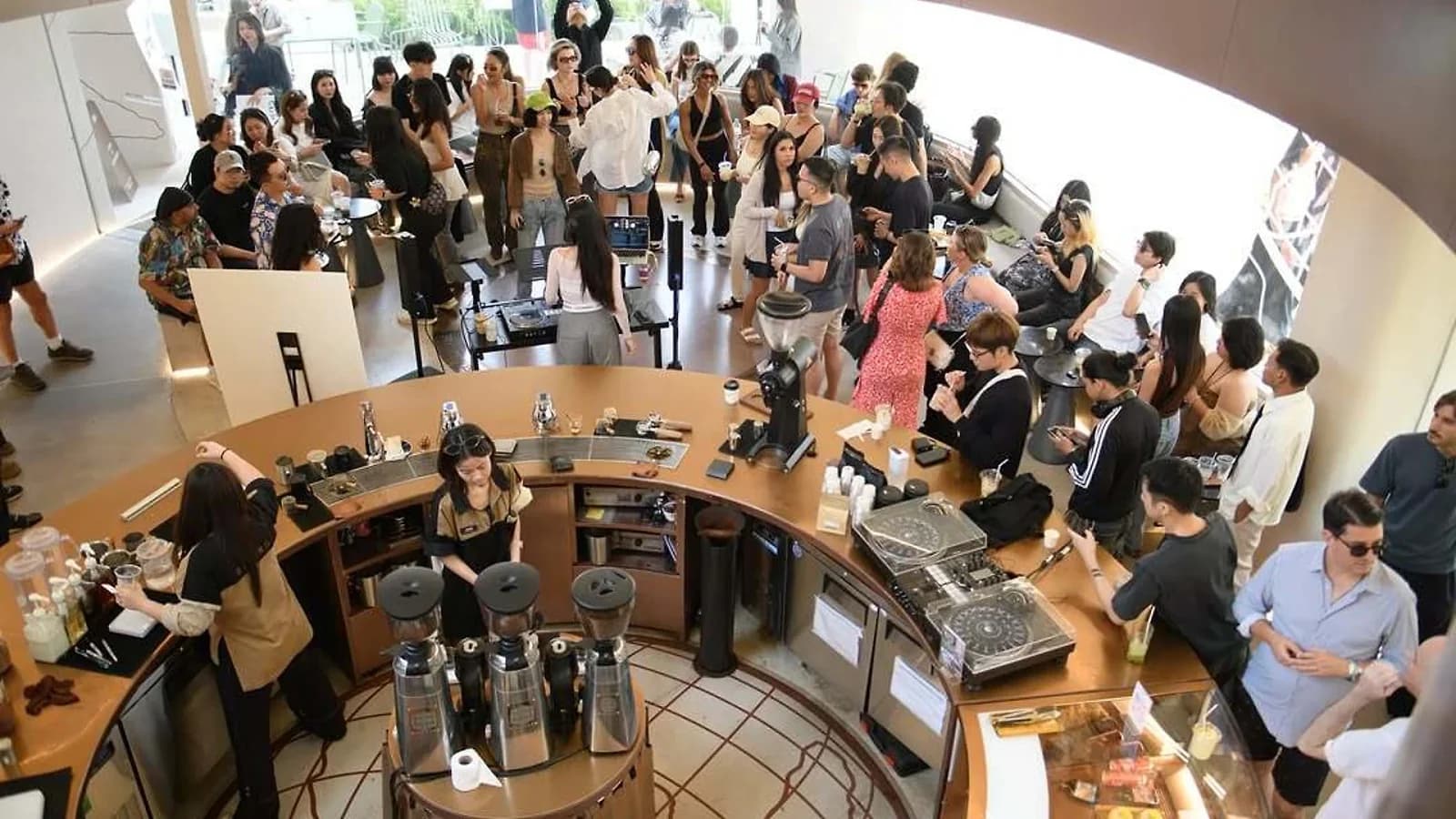
At eleven in the morning on a Saturday in June, the curved coffee counter at CRAFT, the bar inside Kimpton Maa-Lai Bangkok, had two baristas pulling shots and a DJ working a pair of turntables wedged in next to the grinders. Nobody in the crowd of twenty-somethings photographing their iced lattes was drinking anything stronger than cold brew. By five that afternoon, the party was over and everyone had gone home for dinner.
That was Sawasdee Cup Coffee Party, and it's one of a small but growing number of events across Southeast Asia built on the same idea: take the format of a club night, the DJ, the crowd, the volume, and swap the alcohol for specialty coffee. People are calling it a coffee rave. It has become a real, recurring part of the region's nightlife calendar, with its own venues, its own founders and its own house rules.
What a Coffee Rave Actually Is
Strip away the branding and a coffee rave is simple: a DJ plays a real set, usually house, amapiano or some other dance-floor genre, during daylight hours, in a space serving coffee instead of alcohol. Most run from late morning into early evening rather than midnight into sunrise. Most charge for entry or for drinks, same as a club, just priced like a cafe instead of a bar tab. The pitch to a Gen Z crowd that's drinking less isn't subtle: you get the DJ, the dancing and the social scene, you skip the hangover and the 2am cab fare home.
It's not strictly alcohol-free everywhere. Bangkok's Morning Affair, co-hosted by Rise Coffee and Tictactoe Bar, serves vodka-spiked coffees alongside the straight stuff and checks ID at the door (20+). Most of the format's Southeast Asian organizers, though, treat going dry as the actual point, not a side effect.
Singapore Got There First
Beans&Beats started as a joke. Its founders are DJ Aden Low, Ethan Lee and Matteo Lie. Ethan is a specialty coffee brewer; Matteo is the event organiser who left the nightlife scene to co-found the company. The idea began early in 2024, when Aden set up his DJ decks at his own apartment and asked Ethan and Matteo to critique his mixing over Ethan's coffee. By May 2024 the three had turned it into a company. They debuted publicly at Pearl's Hill Terrace, where the room had just two consumer-grade air conditioners. Since then they've rotated through Common Man Coffee Roasters' Alexandra outpost, lyf one-north and Trifecta. Pre-sale tickets run $20, $30 at the door, and the sets lean away from mainstream club playlists: amapiano, baile funk, Latin house, Miami bass.
The idea has enough institutional traction now that Singapore's own National Gallery booked Beans&Beats for its Light to Night 2025 festival, parking the DJ booth inside the Asian Civilisations Museum's lobby for an evening in January 2025. What began as three friends in an apartment is now a recognisable name on the city's events calendar, booked by one of its most established arts institutions.
Bangkok's Hotel Bars Got In Early
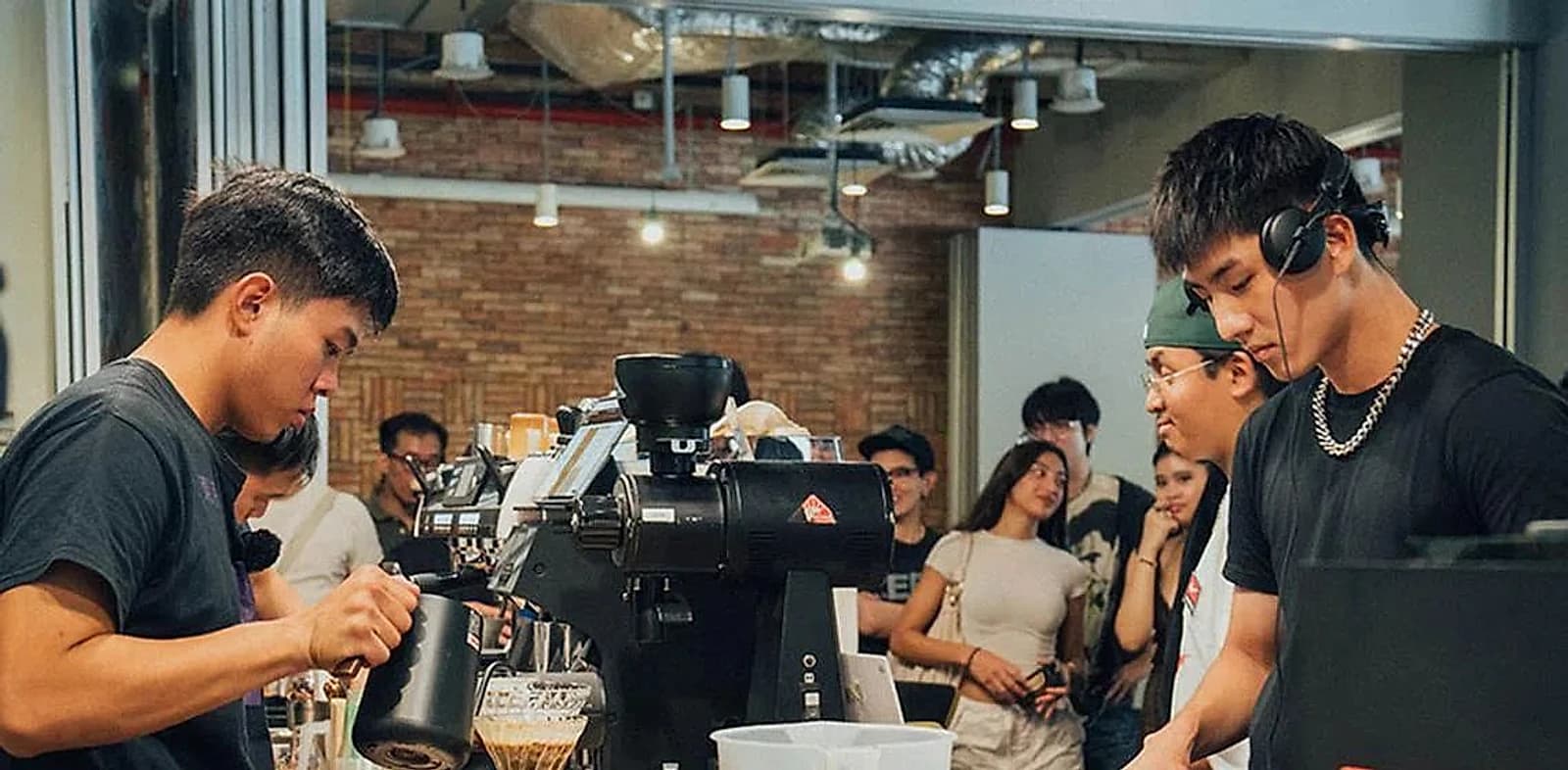
Bangkok's version runs through its hospitality scene rather than a single collective. CRAFT, the bar at Kimpton Maa-Lai, hosted a Sawasdee Cup Coffee Party on June 28, 11am to 5pm, ฿150 on the door, with house beats and artisanal brews replacing the usual shots. Separately, Before Midnight, which launched in March 2025, has run themed coffee raves including a pet-friendly "Pawffee Rave" with a dog pool on site. Morning Affair, the Rise Coffee and Tictactoe Bar collaboration mentioned above, pairs the format with Thai food (wagyu pad kra pow alongside the es yen).
The spread across a hotel bar, an indie party series and a cafe-bar crossover suggests the format has already found more than one business model in the city, not just one group testing the waters.
Manila Has Both a Grassroots and a Corporate Version
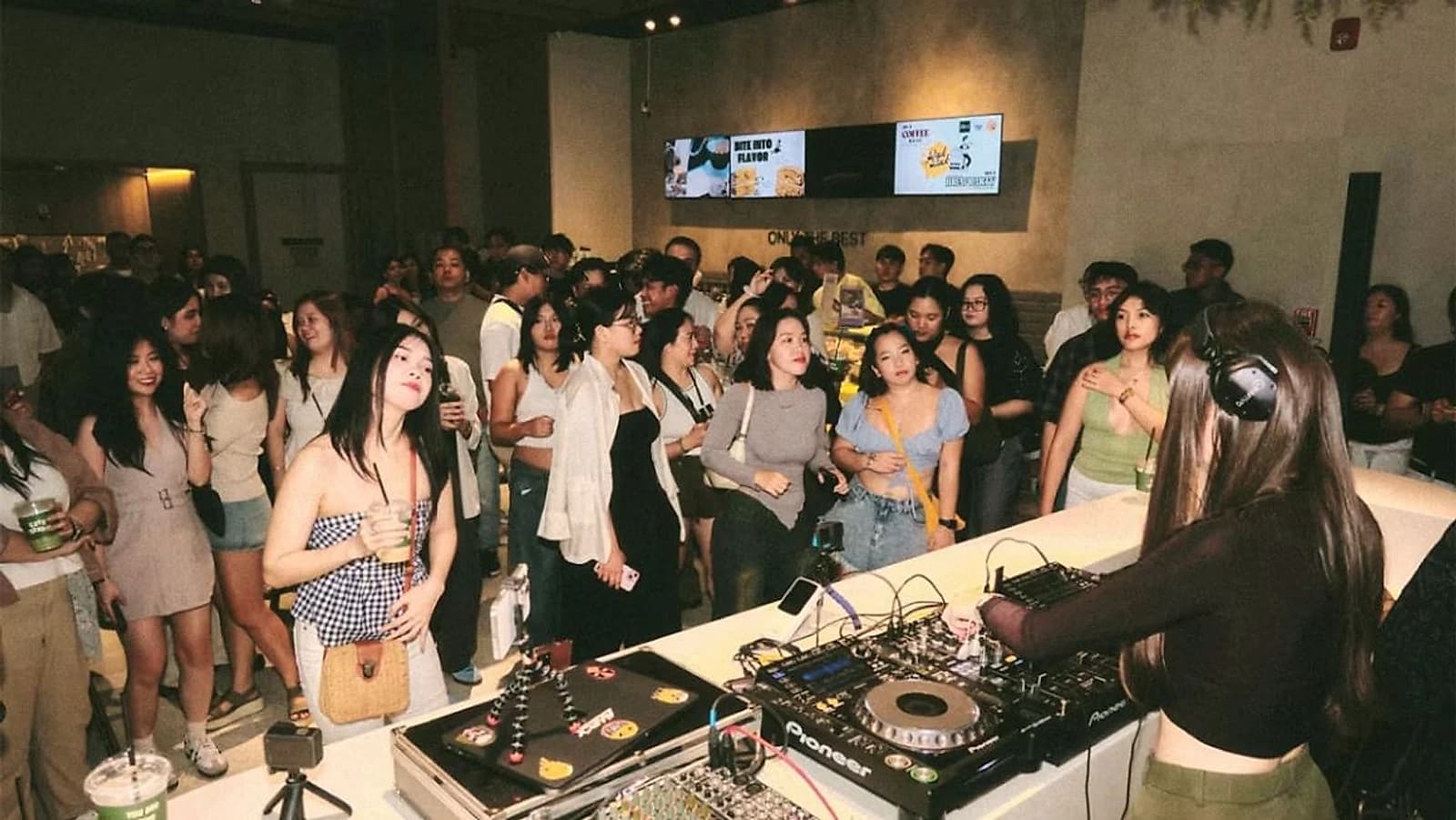
The Philippines' coffee rave scene split into two tracks almost immediately. On the grassroots side, DJ Jenil Aspiras started throwing café parties as Coffee Rave after deciding, at 40, that he couldn't keep up with the late-night club circuit. "I hit 40, stopped drinking, and realized I couldn't do the late-night club scene anymore," he's said. His events, including ones titled "Mix N Matcha" and "Beats & Beans," run 4pm to 9pm with no alcohol and sets that range from UK garage and Afrobeats to deep house and tech house. It took eleven tries before one broke through to around a hundred attendees. His framing of the format is the sharpest one on record anywhere in this piece: "Traditional clubs are built for escape. Coffee Rave is built for presence."
On the corporate side, Common Man Coffee Roasters, the Singaporean chain that's also one of Beans&Beats' own Singapore venues, brought its own branded "Beans N' Beats" coffee rave to Manila, first at Ayala Triangle Gardens and again to open its second Philippine cafe at West Gallery Place in BGC. "We really see that coffee raves will be a thing of the now and a thing of our near future here in the Philippines," CMCR's head of marketing, Karole Santos, said, adding the chain hopes to run the format quarterly at the BGC location.
What's Not on This List
Nothing verifiable turned up for Indonesia, Vietnam, Malaysia or Cambodia. Bali, of all places, is a conspicuous gap given how hard its day-party scene already leans on a sober-curious tourism pitch, but no dedicated coffee rave series there could be confirmed against a real source. Hong Kong and Seoul both have their own, more established scenes (Hong Kong's Social Club Series, Seoul's Paccha Coffee Party), and sit just outside Loopliner's core beat, but they're worth knowing about if the format keeps spreading the way it has in the last eighteen months.
If You Want to Go
Treat it like a regular club night with the clock moved up: check the organiser's Instagram for the next date and venue, since most of these run as pop-ups rather than fixed weekly slots. Expect to pay a cover somewhere between a cafe bill and a club door charge. Bangkok's CRAFT runs ฿150. Bring cash or a card for coffee on top of any entry fee, and don't expect a bar at all. Go in the afternoon expecting an afternoon's worth of energy. Nobody's pulling an all-nighter on oat milk.
FAQ
What is a coffee rave?
A coffee rave is a daytime party built on the format of a club night, DJ, dancing, a real crowd, but serving specialty coffee instead of alcohol, usually running from late morning into early evening rather than overnight.
Where can I find a coffee rave in Southeast Asia?
Singapore's Beans&Beats, founded in 2024, is the region's most established name and rotates between venues including Common Man Coffee Roasters Alexandra and Trifecta Singapore. Bangkok has run them through CRAFT at Kimpton Maa-Lai, Before Midnight and Morning Affair. Manila has both Coffee Rave's grassroots parties and Common Man Coffee Roasters' own "Beans N' Beats" events.
Is alcohol ever served at a coffee rave?
Mostly no. Most organizers treat going alcohol-free as the point of the format. One Bangkok exception, Morning Affair, does serve vodka-spiked coffee alongside the regular menu and checks ID at the door.
How much does a coffee rave cost?
Prices run closer to a cafe bill than a club bar tab. Bangkok's CRAFT event charged ฿150.
What music do coffee raves play?
It varies by city and organizer, but the common thread is dance-floor genres outside the mainstream club rotation. Singapore's scene leans amapiano, baile funk, Latin house and Miami bass. Bangkok keeps it to house, playing before noon to a sunlit crowd. Manila ranges from UK garage and Afrobeats to disco and tech house.
Read Next
Stay in the loop
Asian electronic music, weekly