
How Door Policy Actually Works at Tuff Club, Savaya and Southeast Asia's Toughest Clubs
Tuff Club takes reservations by text and nothing else. Savaya's free guest list can be cancelled without warning. Here's how the region's door policies, age limits and guestlists really work, venue by venue.
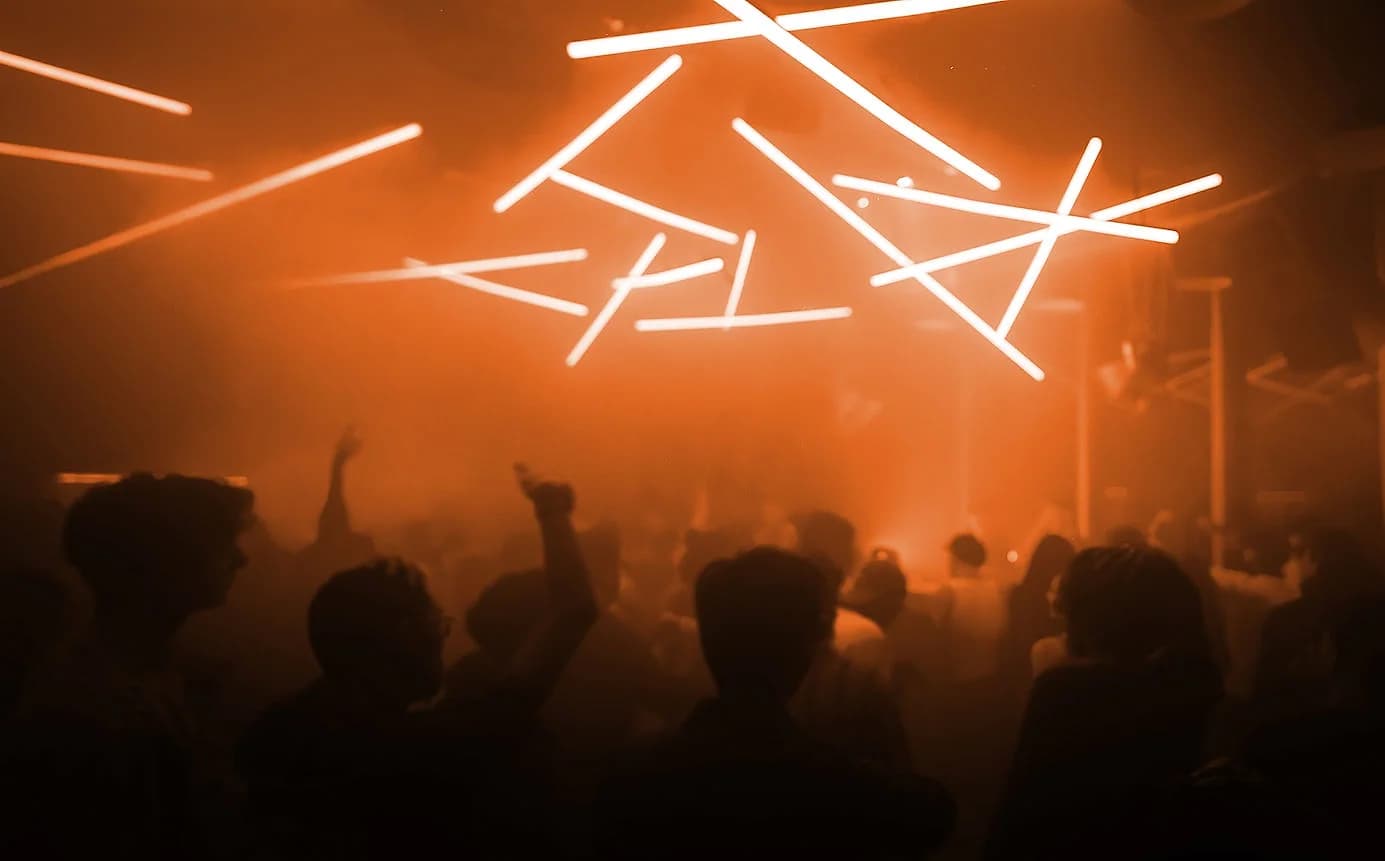
Tuff Club sits on the 19th floor of a Singapore office tower, the kind of building that's dead quiet by 7pm on a weeknight. By 11pm on a Friday it's running a Funktion-One rig under a web of lighting rigged to mirror the music, playing house, jungle, UK garage and techno above the CBD skyline. There's one catch if you just show up: there's no door to walk up to. You text ahead, or you don't get in.
That's the extreme version of something true across the whole region: getting into a club in Southeast Asia is rarely about just turning up in the right shoes. Dress code is only one filter, and we've already gone through that one in what actually gets you turned away for wearing the wrong thing. This is about the layer under that: who gets a reservation, whose name is actually on a list, and why a club can say yes to your guestlist request and still turn you away at 1am.
The Text-Only Door: Tuff Club, Singapore
Tuff Club operates by day as a restaurant and flips into a club at night, open Friday, Saturday and public holidays from 10:30pm, according to its own site. It's one of three rooms run by the Thugshop group alongside Higher Ground and MDLR, and the venue's own booking instructions are blunt: reservations by text only, no separate box office, no online ticketing widget. Local guides including Time Out Singapore and The Best Singapore go further and describe walk-ins as simply not accepted, full stop, regardless of how empty the room looks from the lift lobby. Whether that's a hard rule or a soft one on a slow Tuesday, the safe assumption is the same: text first.
This is more common than it looks from outside the region. A club that seats under a few hundred people doesn't need a queue system when a phone can do the job, and it lets a small room control its own crowd without hiring extra door staff. The tradeoff is obvious too: if you don't have a local number or don't know to ask, you can stand outside a great club and never get past the lobby.
A Guestlist Is Not a Promise: Savaya, Bali
Savaya, perched on the Uluwatu cliffs, runs the opposite model: a public guest list anyone can sign up for, free before 6pm with a discount after. Sounds generous, until you read the venue's own FAQ, which says plainly that signing up for guest list does not guarantee entry and that the list can be cancelled at any time by the venue. Tickets, when they're needed, are sold exclusively through Savaya's Megatix channel; the club's FAQ warns that anything bought elsewhere isn't valid. Third-party booking site Discotech tracks the door charge at roughly 250,000 to 400,000 rupiah depending on the night, though Savaya itself doesn't publish a fixed number.
The dress code is smart casual, or as Savaya puts it, beach chic: no beer-branded shirts, no cut-offs, nothing athletic. The age policy is not a suggestion. Savaya enforces 21 and up strictly and wants a passport or driver's licence at the door, not a photo of one. Bags get searched, and the banned list includes drones and professional cameras, which explains why so much of the club's own footage looks the same from party to party. If you're relying on the free list, treat it as a maybe, not a booking.
One Venue, Three Age Limits: Zouk Group, Singapore
Zouk's Singapore complex is really three rooms under one roof, and the group's own FAQ sets a different bar for each. Zouk and Phuture let you in from 18. Capital, the group's more upscale room, wants men 21 and up and women 19 and up, which is an odd split to see written down this plainly, but there it is. Dress code shifts room to room too: Zouk and Phuture allow shorts and bermudas as long as your shoes are closed-toe, banning cut-offs, singlets, sandals and slippers, while Capital asks for a smart dress code outright and drops shorts and slippers entirely.
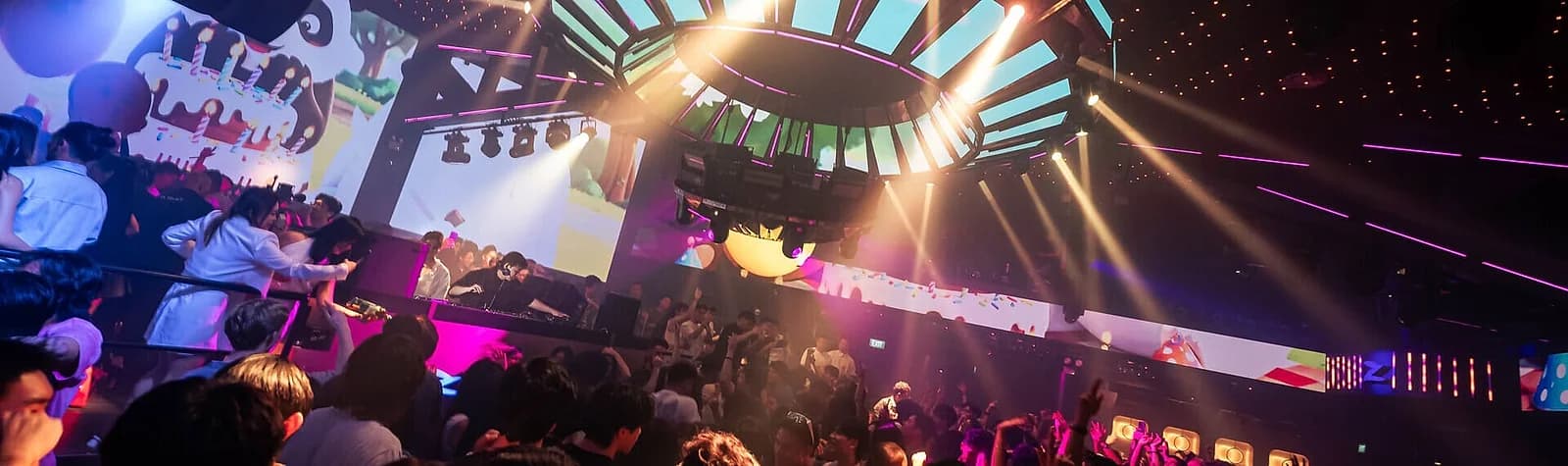
ID is non-negotiable across all three, current and government-issued, and Zouk's FAQ is explicit that showing up without one means denial at the door with no refund on whatever you already paid. It's a small detail that matters more than it should: a lot of visitors assume a hotel keycard or a phone photo of a passport will do. It won't.
Buying Your Way Past the Line
The one door policy every big room in the region respects is money. A table reservation moves you past whatever guestlist chaos is happening at street level, and we've broken down what that actually costs city by city, from a few hundred dollars in Bangkok to well over a thousand for a good spot in Singapore or Bali on a big night. It's not a guarantee either. Savaya's own table form comes with no published minimum spend, which in practice means the number gets negotiated by email or WhatsApp, and a table booked for ten people who show up as fifteen is still the promoter's call to seat or refuse.
What Actually Gets You Turned Away
Strip out the paperwork and most refusals in this region come down to the same handful of things: no ID, the wrong ID, sandals at a venue that bans them, showing up already too drunk to stand at the door, or simply a room that's at capacity and isn't taking one more person regardless of what your phone screenshot says. None of it is written down as clearly as Zouk's FAQ, and most Southeast Asian clubs leave the final call to whoever is working the door that night. Our clubbing etiquette guide covers the softer version of this, the stuff that gets you side-eyed rather than refused. This is the harder edge of the same problem.
A Short Checklist Before You Go Out
Bring the physical ID, not a photo of it, and make sure it hasn't expired. If a venue only takes reservations by text or Instagram DM, like Tuff Club, send that message the same day, not a week out. Check the dress code for the specific room you're headed to, not just the venue's Instagram bio, since a group like Zouk runs three different rules under one address. And if you're counting on a free guest list to get a group of six into a packed room on a Saturday, have a backup plan, because the venue's own paperwork usually says that list was never a promise to begin with.
FAQ
Do nightclubs in Southeast Asia require reservations?
It depends entirely on the venue. Tuff Club in Singapore takes reservations by text only and effectively doesn't accept walk-ins, while Savaya in Bali and Zouk in Singapore sell tickets or run guest lists but still allow entry on the night, capacity permitting.
What's the minimum age to get into clubs in Singapore?
It changes by room even within the same group. Zouk and Phuture allow entry from 18, while Capital, part of the same Zouk complex, requires men to be 21 and up and women 19 and up.
Does signing up for a guest list guarantee entry?
No. Savaya's own FAQ states that its free guest list does not guarantee entry and that the venue can cancel the list at any time, and most Southeast Asian clubs treat guest lists the same way.
What ID do clubs in the region actually accept?
A current, non-expired, government-issued ID such as a passport or driver's licence. Zouk's FAQ specifically warns that arriving without valid ID results in denial at the door with no refund.
Can booking a table guarantee I skip the line?
It improves your odds significantly and is the closest thing to a reliable door policy in the region, but it's not absolute. Venues like Savaya negotiate table terms directly with no published minimum, and a promoter can still cap numbers at their own discretion.
Cover photo: Tuff Club's dancefloor, via thugshopsg.com. Credit: Thugshop.
Read Next


Stay in the loop
Asian electronic music, weekly