What Is Molam, Explained: Laos Gave Isan the Khene, Bangkok's Paradise Bangkok Took It to Glastonbury
Molam is Lao and Isan folk music built on the khene mouth organ, and a Bangkok record shop spent a decade running it through dub, house and techno until it played Glastonbury. This is what it actually is, where it came from, and where to hear it in Thailand today.
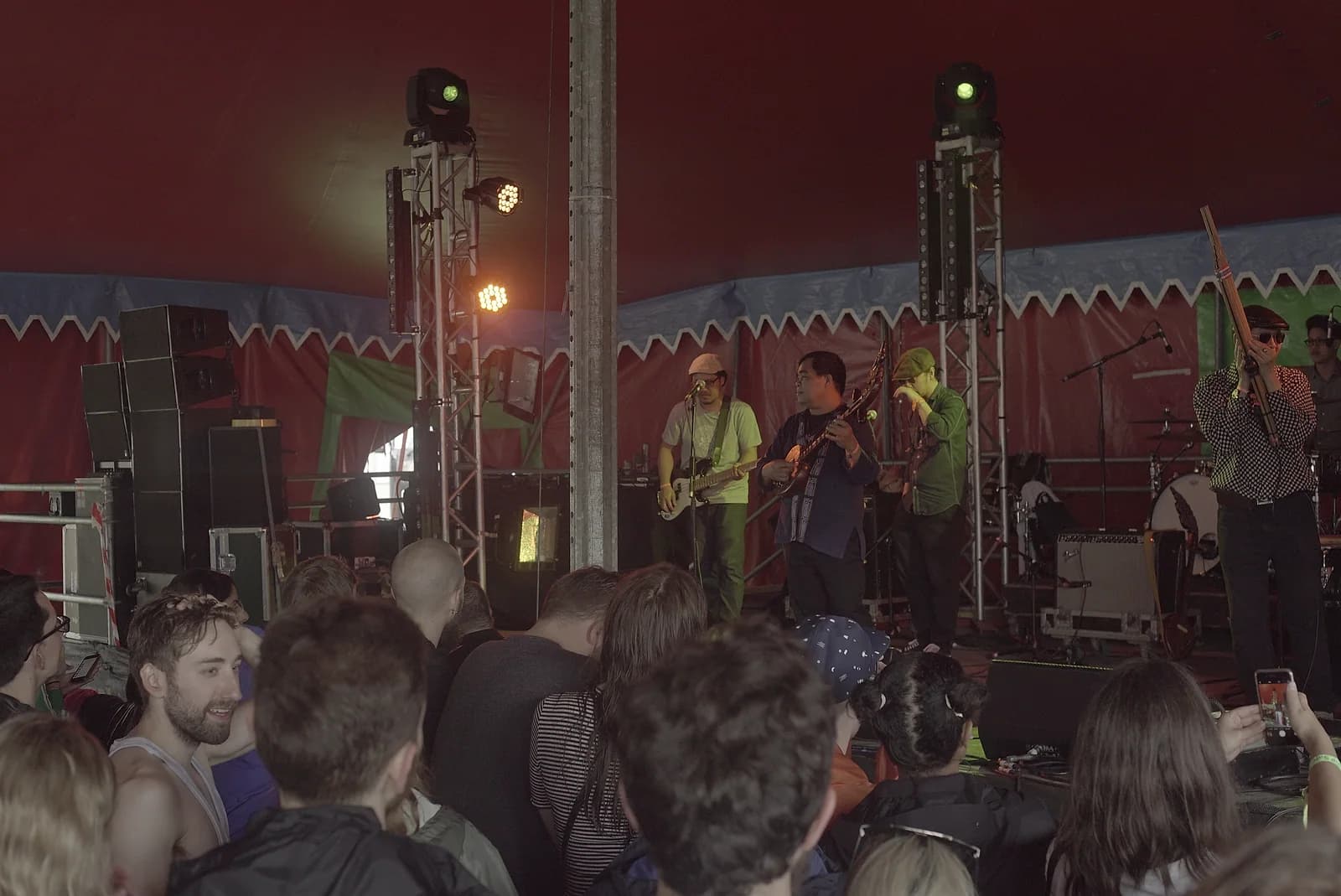
A roadie checks a monitor wedge, a bass player tunes up, and then a man in a checked shirt lifts something that looks like a bundle of bamboo flutes to his mouth and the whole tent changes key. It is the khene, a free-reed mouth organ that's been the backbone of Lao and Isan Thai music for centuries, sharing a stage on this particular afternoon with an electric guitar and a drum kit at a festival in the English countryside. The band is Thai. The sound is called molam. Almost nobody outside Southeast Asia had heard of it twenty years ago.
Molam (sometimes written mor lam, mor lum or maw lam) isn't a genre in the Western sense, it's a regional vocal tradition. The word itself breaks down to "mo," meaning master or expert, and "lam," the singing style, so a molam performer is literally an expert of the lam style. It comes out of Isan, the vast, largely rural northeastern region of Thailand that borders Laos and shares its Lao ethnic roots, language and music more than it shares anything with Bangkok four hundred kilometres south. There's no single definitive list of its regional variations, which tells you this was never one thing to begin with.
The Khene Is the Whole Point
Strip molam back to its traditional form and you get a singer, often improvising verses on the spot, backed by a khene player working a reed mouth organ that functions a bit like Scottish bagpipes: it holds a drone while carrying the melody, powered entirely by circular breathing. Traditional performances were unhurried, built for festivals and ceremonies, singer and khene player often seated with a small crowd gathered close. The lyrics were witty, sometimes flirtatious, sometimes mournful, and built to be understood by everyone in the room, not just musicians.
That changed as Isan's population moved toward the cities over the past century looking for work, carrying the music with them. Modern mor lam picked up electric guitars, bass, brass and keyboards along the way, plus a jolt of Cold War-era jazz, rock and blues that filtered into Thailand through American bases and radio. "Mor lam sing," a faster, funnier offshoot named for Isan's motorcycle-racing culture, folded in comedy routines and medleys. By the time it reached Bangkok, molam had already become a hybrid.
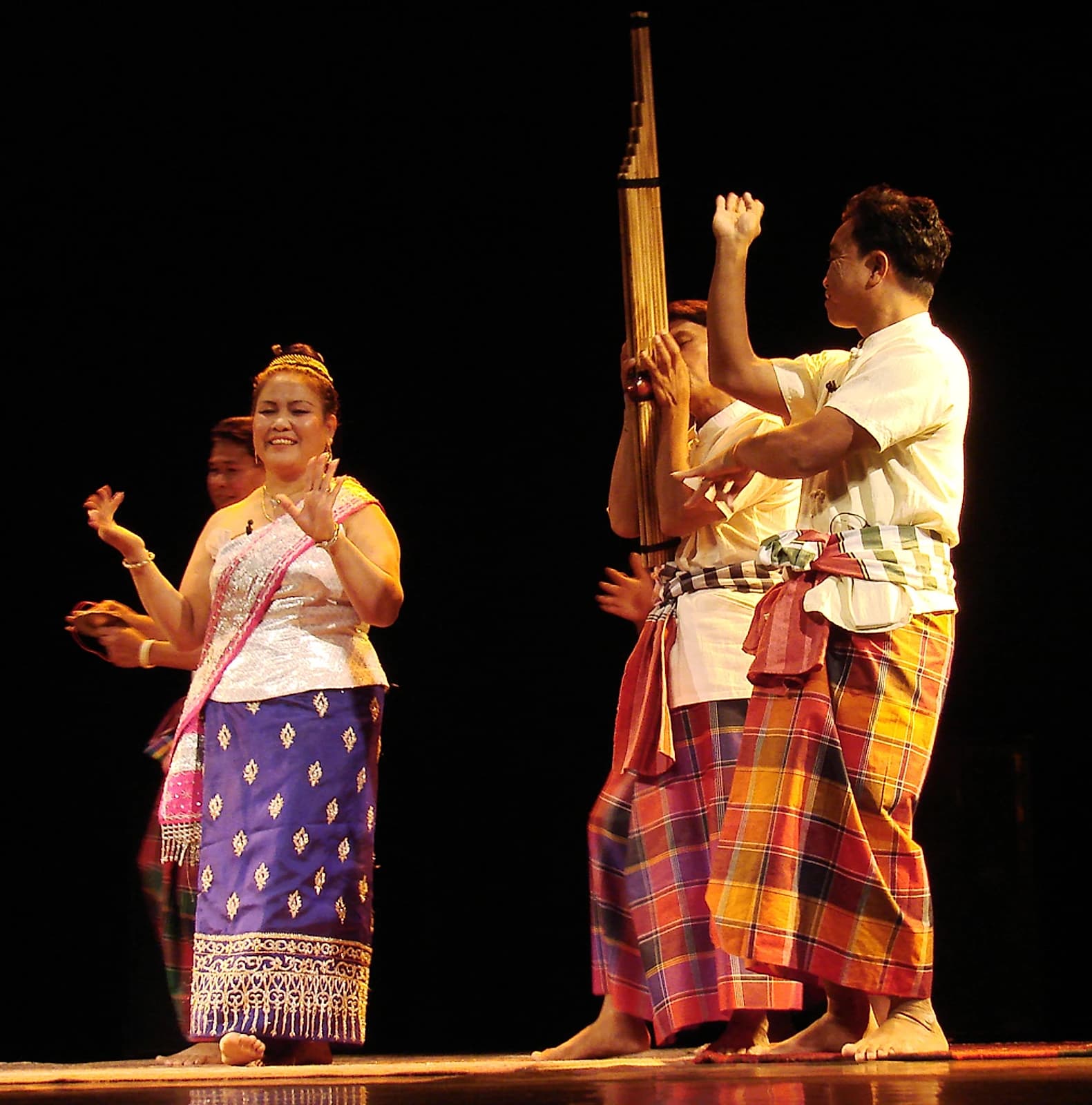
A Record Shop on Soi 51 Did the Rest
The reason an English festival crowd was listening to khene through a PA system traces back to one record shop. ZudRangMa Records, run out of 51 Sukhumvit Road in Bangkok by DJ Maft Sai (Nattapon Siangsukon), started as a hunt through secondhand vinyl bins for the Isan 45s and psychedelic luk thung records that Thai collectors themselves had mostly forgotten. In 2009, Maft Sai started throwing Paradise Bangkok nights, playing the old vinyl out alongside dub and funk. By 2012, the regular DJ night had grown into an actual band, and Studio Lam, the club next door to the record shop, became its home base, a room built specifically so Bangkok could hear contemporary molam artists play live rather than off a 45.
That band is The Paradise Bangkok Molam International Band, six players including Maft Sai himself, Chris Menist, Kammao Perdtanon, Phusana Treeburut, Piyanart Jotikasthira and Sawai Kaewsombat, running khene and phin (a three-stringed lute, molam's other core instrument) through dub, funk and the occasional stretch of straight house and techno. Their debut album, 21st Century Molam, came out in 2014. Planet Lam followed in 2016. Araya Lam followed, reviewed by Songlines in 2024. In between, they've played Glastonbury, Field Day and Off Festival in Poland, taking a regional folk tradition most of Thailand's own capital had stopped listening to and putting it on major European festival stages instead.
Where to Actually Hear It
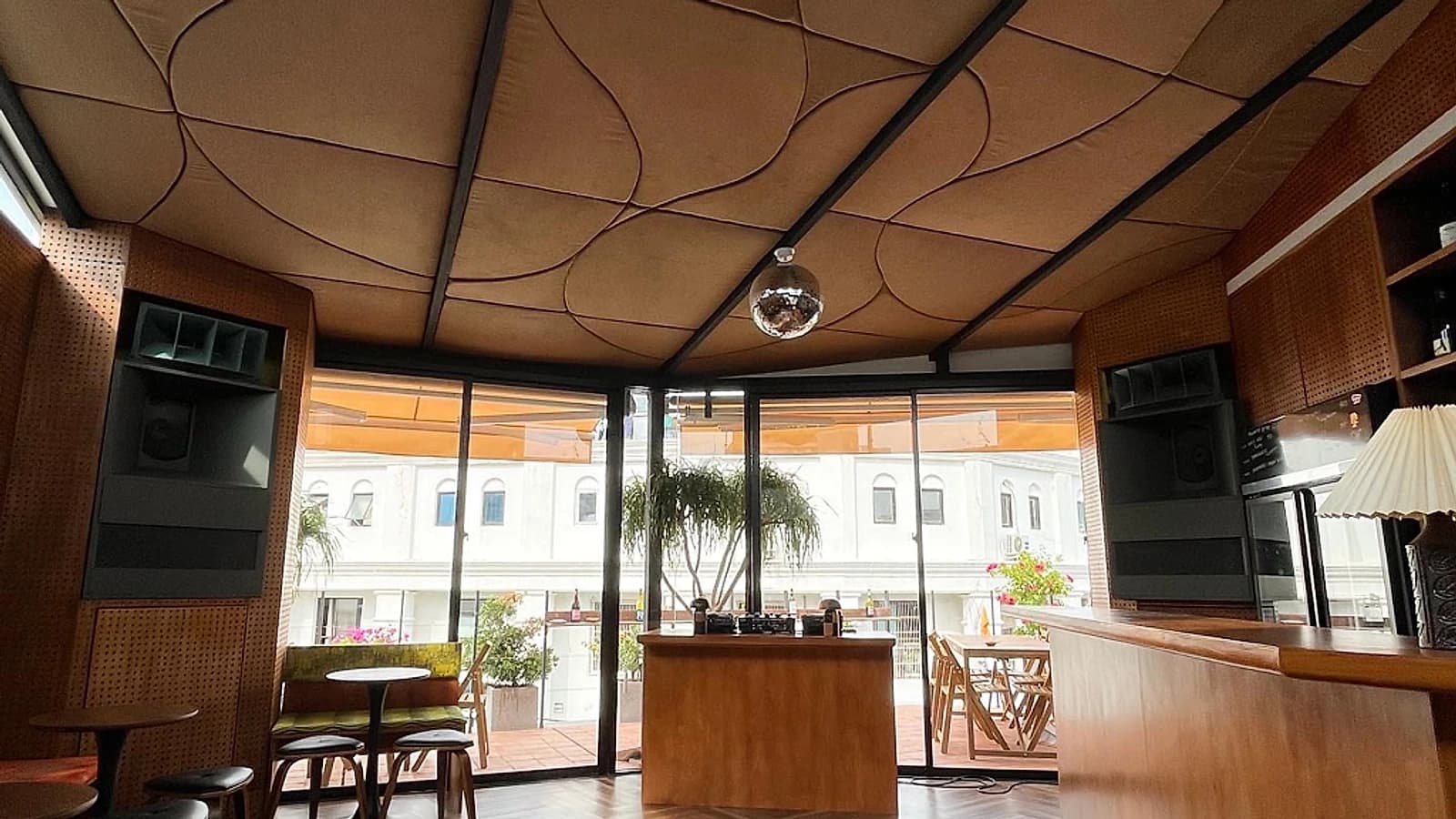
Studio Lam, next to the ZudRangMa shop on Sukhumvit Soi 51, ran a rotating booking of contemporary molam acts for twelve years, the most reliable room in Bangkok for this specifically, until it closed for good on February 28, 2026. The record shop itself is worth the trip on its own merits even if you don't catch a show; it's one of the few places in the city where you can flip through original Isan 45s pressed decades before anyone thought to put them on a festival stage.
Outside the capital, Wonderfruit, the farm-set festival in Chonburi province that's become one of the region's biggest annual electronic music gatherings, has booked a dedicated "Molam World" area, running everything from straight traditional sets to the electric-inspired end of the spectrum the festival's own programming notes describe. It's a reasonable yearly checkpoint if Bangkok's club calendar doesn't line up with your travel dates.
None of this makes molam a Southeast Asian house or techno genre, and it would be dishonest to pretend otherwise; it's a folk tradition that a handful of Bangkok musicians and DJs kept alive by running it through the same sound systems and the same dub and funk influences that shaped club music elsewhere. But the overlap is real and it runs both ways. Thailand's own house and techno scene traces part of its identity back to exactly this: a record shop that refused to let Isan's music stay forgotten, and a club night that grew into a band good enough to headline rooms that have nothing to do with Thailand at all.
For background on how that threads into Bangkok's wider club scene, see Loopliner's guide to Thailand's house and techno scene. For where to actually buy the records, the region's best record stores for DJs includes ZudRangMa itself.
FAQ
What does molam mean?
"Molam" (also written mor lam) combines "mo," meaning master or expert, with "lam," the name of the singing style, so it literally means an expert of the lam tradition. It refers to both the music and the performer.
Where does molam come from?
It originates in Laos and spread through Isan, northeastern Thailand's Lao-speaking region, where it remains the dominant folk music tradition.
What instrument defines molam?
The khene, a free-reed bamboo mouth organ played with circular breathing that provides both melody and drone, alongside the phin, a three-stringed lute used in its more modern, electrified forms.
Is molam the same as Thai house or techno?
No. Molam is a folk tradition, not an electronic genre. Bangkok's Paradise Bangkok Molam International Band and ZudRangMa Records run it through dub, funk and club production, which is why the two scenes overlap without being the same thing.
Where can I hear molam in Thailand today?
Studio Lam, next to ZudRangMa Records on Sukhumvit Soi 51 in Bangkok, closed for good on February 28, 2026, after twelve years.
Cover photo: The Paradise Bangkok Molam International Band performing at Field Day festival, London, 2016. Jwslubbock, CC BY-SA 4.0, via Wikimedia Commons.