
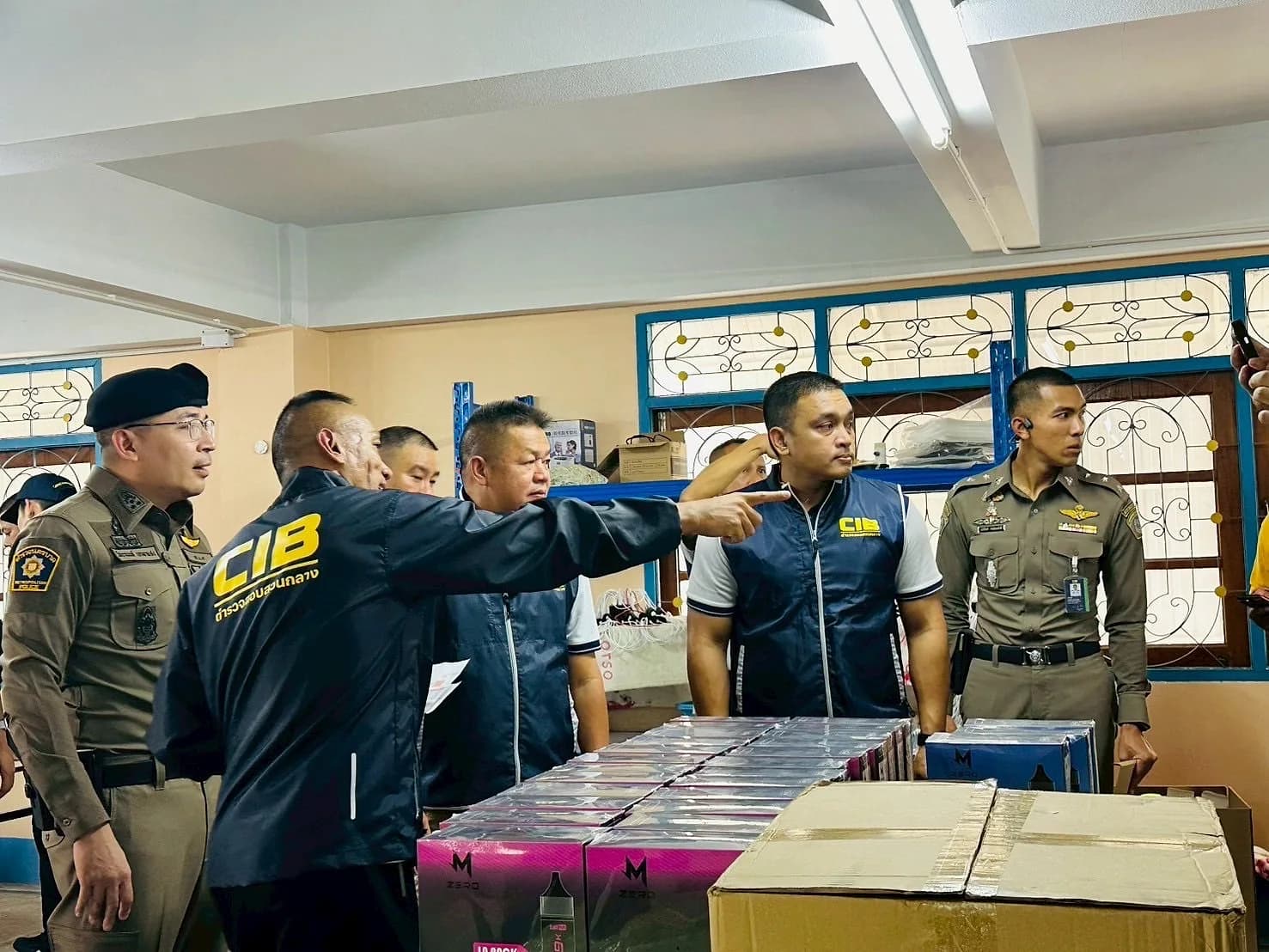
Thailand and Vietnam Ban Vaping Outright: What You Can (and Can't) Smoke in Southeast Asia's Clubs
Southeast Asia's six biggest clubbing countries split almost evenly on vaping: Thailand and Vietnam ban it outright, Singapore fines you heavily for it, and Malaysia, Indonesia and the Philippines sell it legally. The law, country by country.
In September 2025, Thailand's Economic Crime Suppression Division stacked roughly 370,000 confiscated e-cigarettes behind them for the cameras, seized from a Bangkok warehouse and a second site in Saraburi that had been feeding dealers across the country. Thirteen people were arrested, two Chinese nationals and eleven Myanmar nationals. None of it stopped a single vape pen from showing up on a dancefloor that weekend. Enforcement in Thailand runs in waves, and the law itself hasn't moved in over a decade: vaping has been illegal here since 2014.
Visitors get caught in between. Southeast Asia's six biggest clubbing countries split almost evenly on vaping and smoking, and the split runs straight through the cities this site covers. Three ban it outright. Three regulate and sell it legally. None of them explain the difference at the airport, and the split sits alongside another one worth knowing before you land: who can legally drink when varies by country too.
Thailand: A Decade-Old Ban, Still Actively Enforced
Thailand banned the import of e-cigarettes under a 2014 Ministry of Commerce notification, and a Consumer Protection Act notification bars domestic sale on top of it. Nothing has softened since. Importing one carries up to 10 years in prison and a fine of up to 500,000 baht (around $14,000); selling it carries up to 5 years and the same fine. Customs treats an undeclared vape in your luggage as an import offense, not a travel mishap.
There's no tourist exemption and no personal-use allowance written into the law. The September 2025 raid is one data point in a steady pattern: Thai police run busts like it in nearly every province, and the Economic Crime Suppression Division, the unit pictured above, operates under the Central Investigation Bureau. If you already own a vape, leave it at home. If you're caught, the realistic outcome for a tourist is confiscation and a reduced fine, but "realistic" is doing a lot of work in that sentence, and plenty of people have spent a night in a cell finding out otherwise.
Vietnam Banned It Too, and the Ban Is Brand New
Vietnam's National Assembly passed a resolution on 30 November 2024 banning the production, trade, import, storage, transport and use of e-cigarettes and heated tobacco products, effective from 1 January 2025. Enforcement tightened further on 31 December 2025, when authorities moved from a warning period into active penalties. Vietnam is the sixth Southeast Asian country to ban e-cigarettes outright.
The fines are modest next to Thailand's: an individual caught using one pays 3 to 5 million dong (roughly $115 to $190) and has to destroy the device on the spot. But the law reaches further than Thailand's does. A bar, café or nightlife venue that lets a customer vape on the premises can be fined 5 to 10 million dong (around $190 to $385), with organizations facing double that.
That venue-level fine matters if you're planning a night out in Ho Chi Minh City or Hanoi. The bar isn't going to let you vape at the table even if nobody asks what's in your pocket at the door, because it's the venue's license on the line, not just yours.
Singapore Just Raised Its Fines Sixfold
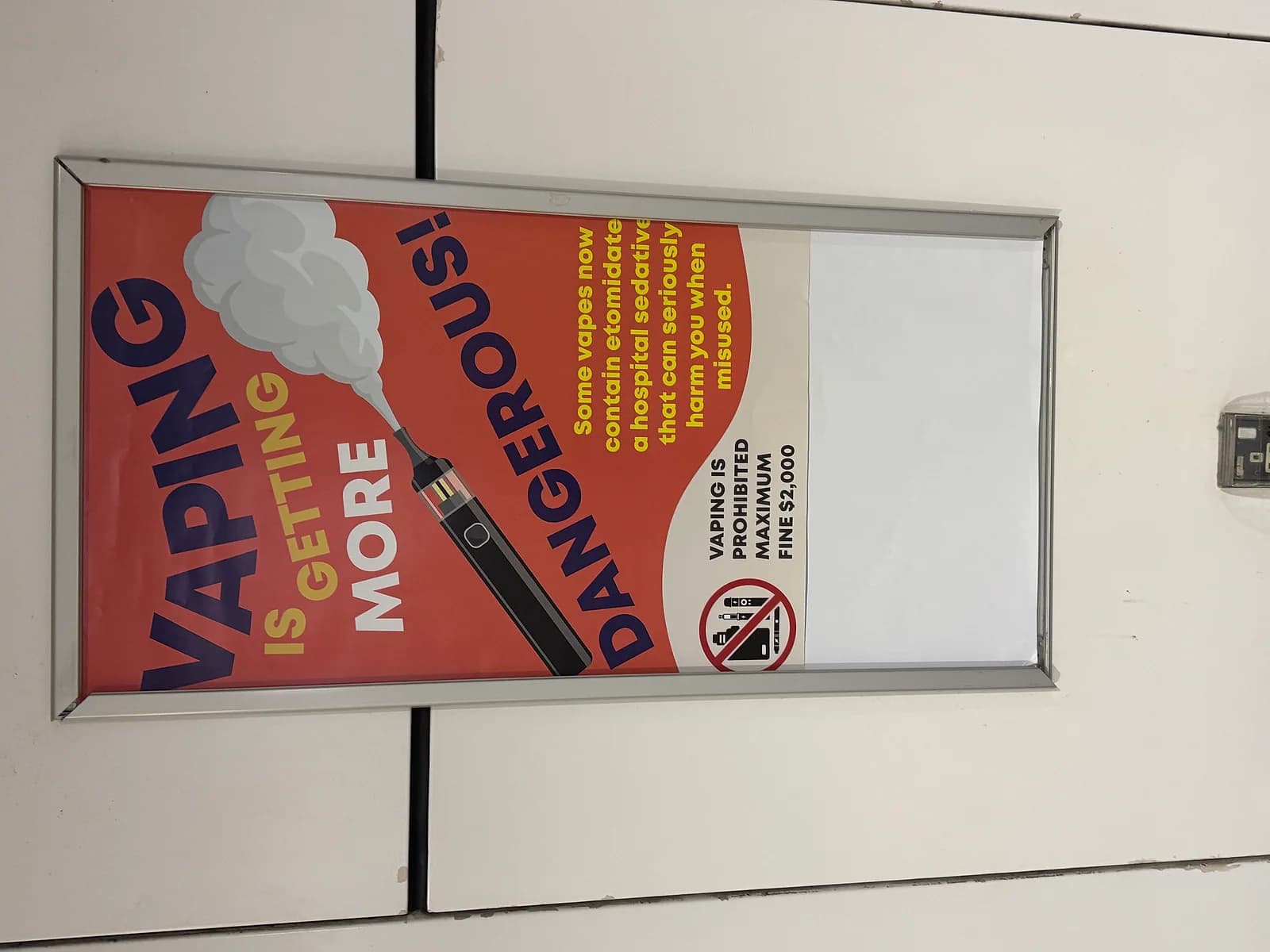
Singapore has banned the purchase, possession and use of vapes for years under the Tobacco Act, but the number on this MRT poster, a $2,000 maximum fine, is the old regime. The Tobacco and Vaporisers Control Act (TVCA) raised that ceiling to $10,000 for individual users when its enhanced penalties took effect on 1 May 2026. Suppliers now face up to six years in prison and a fine of up to $200,000; importers face up to nine years and a fine of up to $300,000.
The sign's warning about etomidate reflects a real and fairly recent problem. Vapes laced with the sedative, sold as a cheap high, have become common enough that Singapore now treats them as a separate category: possession or use of an etomidate-laced vape carries a fine of up to $20,000, up to ten years in prison, or both, and trafficking one can mean caning on top of a prison term. An ordinary nicotine vape doesn't carry that risk, but there's no way to tell the difference by looking at the device, which is part of why the penalties got so much steeper this year.
Malaysia, Indonesia and the Philippines: Legal, but Don't Assume Anything
The other half of the region takes a different approach entirely. Malaysia passed the Control of Smoking Products for Public Health Act in late 2023, now Act 825, which regulates vape sales through registered retailers. It dropped a proposed generational ban, a clause that would have barred anyone born after 2007 from ever legally buying tobacco or vape products, after the Attorney-General warned it could fail a constitutional equality challenge. Vaping is legal in Malaysia.
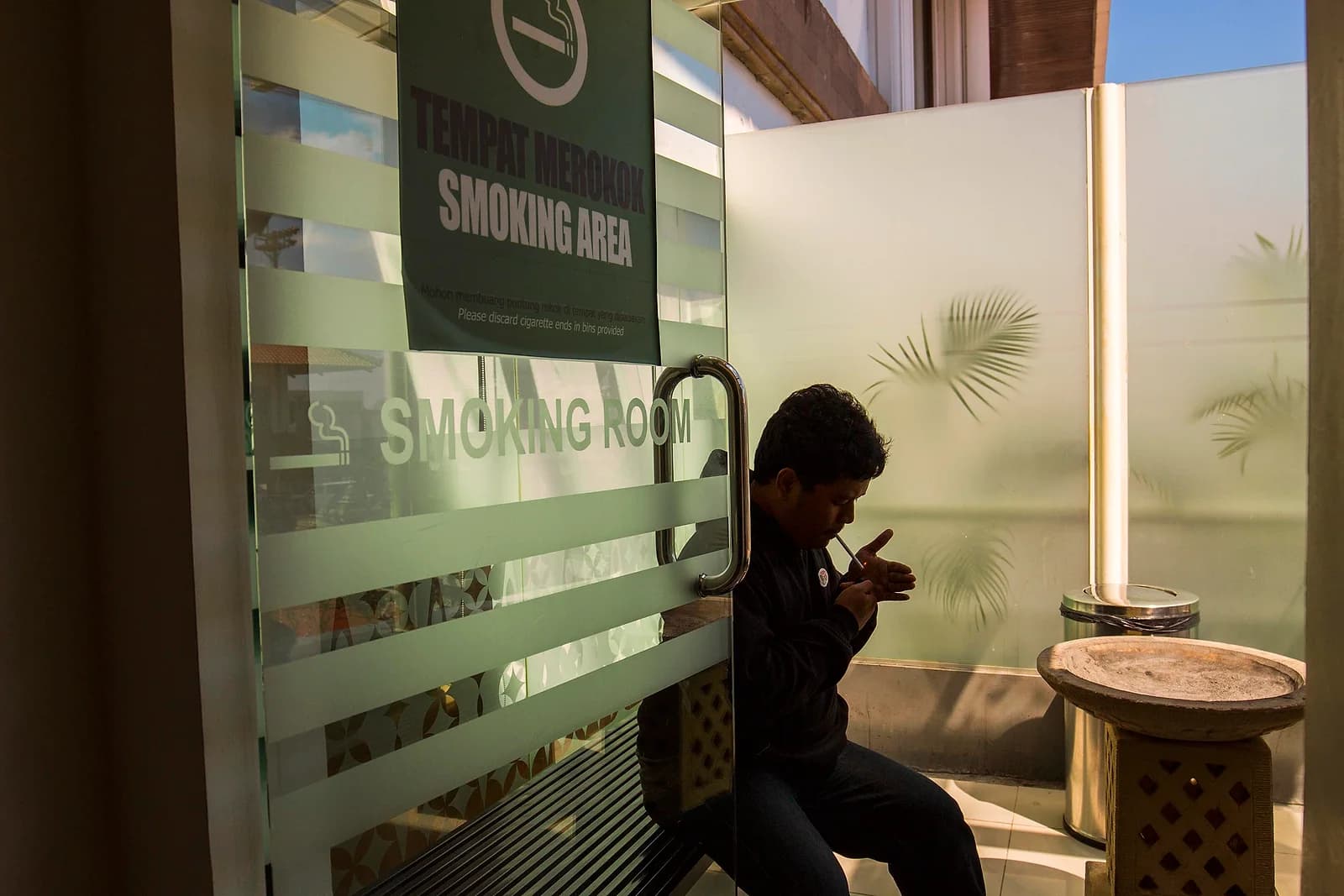
Indonesia treats e-cigarettes and heated tobacco the same as ordinary cigarettes under a 2024 government regulation (PP 28/2024): legal, taxed and sold everywhere, with smoking rooms like the one at Bali's airport a normal fixture rather than an afterthought. Bali's clubs and beach bars generally allow smoking or vaping in designated outdoor sections. Ask at the door if you don't see one.
The Philippines legalized and regulated vaping under Republic Act 11900 in 2022, with age limits and marketing restrictions attached. The Department of Health has pushed for a total ban twice in the past year, in November 2025 and again in March 2026, citing the country's first recorded death linked to e-cigarette or vape-associated lung injury. Nothing has changed in the law yet, so vaping remains legal in Manila as this is published, but it's the one country on this list where that could flip without much warning.
What a Club's Own Rules Add on Top
National law is the floor, not the whole picture. Most indoor venues across the region, in every country on this list, ban smoking and vaping indoors regardless of what's legal outside, because fire codes and air-conditioning systems don't care about tobacco policy. Where Southeast Asian clubs allow it at all, it's almost always in an open-air section or a dedicated terrace, the same way Bangkok's listening bars and Bali's beach clubs already handle it. Check at the door rather than assuming your habits at home travel with you.
What's Not on This List
This piece covers the six countries Loopliner covers most closely: Thailand, Vietnam, Singapore, Malaysia, Indonesia and the Philippines. Brunei also bans vaping outright, which makes it a fourth prohibition country in the wider region, but it has no club scene for this to matter to. Cambodia, Laos and Myanmar's vaping and smoking laws weren't verifiable through sources solid enough to print here. Treat them as gaps rather than assume either a ban or a free-for-all.
FAQ
Can tourists bring a vape into Thailand?
No. There's no personal-use allowance or tourist exemption. An undeclared vape at customs is treated as an import offense, and using one in public can lead to confiscation and a fine.
Is vaping legal in Bali?
Yes. Indonesia regulates e-cigarettes the same way it regulates cigarettes, so vaping is legal, taxed and widely sold, including in Bali.
How much can Singapore fine you for vaping now?
Up to $10,000 for individual possession or use, since the Tobacco and Vaporisers Control Act's enhanced penalties took effect on 1 May 2026, up from the previous $2,000 cap.
Has Vietnam really banned vaping nationwide?
Yes, since 1 January 2025, with stricter enforcement from 31 December 2025. Individuals face fines of 3 to 5 million dong, and venues that allow vaping on the premises can be fined 5 to 10 million dong.
Which Southeast Asian countries still allow vaping?
Malaysia, Indonesia and the Philippines all regulate and legally sell vapes, though the Philippines' Department of Health has pushed twice in the past year for a total ban.
Cover photo: Thailand's Economic Crime Suppression Division displays e-cigarettes seized in a September 2025 Bangkok raid. Credit: Royal Thai Police, via Khaosod English.
Read Next
Thailand Scrapped Its Decades-Old Afternoon Alcohol Ban: What You Can (and Can't) Legally Drink Across Southeast Asia

Wonderfruit Picked December on Purpose: How Monsoon Season Shapes Southeast Asia's Clubbing Calendar
Bangkok's Underground House Scene Explodes: Hard In Zight 3 Festival Brings Raw Hardstyle Energy to AVVE Bar in March 2026
Stay in the loop
Asian electronic music, weekly