
What Is Vinahouse? Vietnam's Homegrown Dance Music, Explained
Before Vietnam had a techno scene, it had this: pop songs sped up, chopped and slammed onto a four-on-the-floor kick until the whole street shook. Here's where Vinahouse came from, and why the country's newest DJs are trying to outrun it.
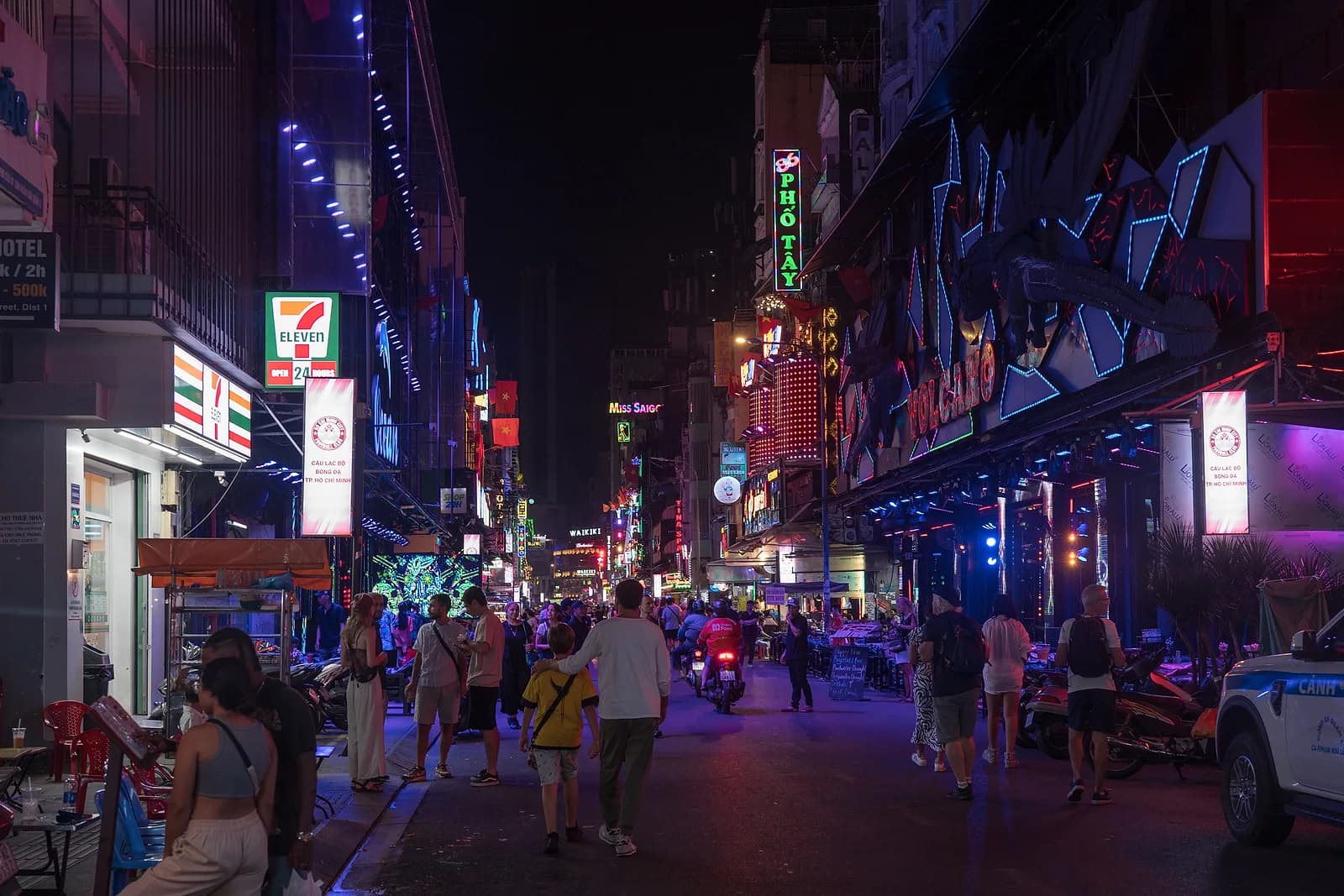
Walk down Bui Vien Street in Ho Chi Minh City after 9 PM and you don't so much hear the music as feel it arrive a half-second before you reach the speaker. A pop song you might half-recognize gets chopped, sped up and slammed onto a kick drum that never lets up. Every bar is doing it at once, competing for the same stretch of sidewalk, so the effect is less a soundtrack than a wall you walk through. That sound has a name: Vinahouse. It's Vietnam's own strain of dance music, and it's been the loudest thing in the room for thirty years, whether the rest of the electronic music world was paying attention or not.
Where It Started
The genre traces back to the late 1990s, when DJs working Hanoi and Ho Chi Minh City's clubs started remixing Vietnamese and Chinese pop hits into something built for a packed floor rather than a living room. Before anyone called it Vinahouse, it went by nhạc bay (flying music), nhạc sàn (floor music) or nhạc vũ trường (ballroom music), names that describe a function more than a genre. The track usually credited as the starting point is a pair of “999 Roses” remixes by DJ Thái Hoàng and DJ Nam Tào, who took a Chinese pop ballad and gave it a four-on-the-floor pulse and a bass line with somewhere to go. The name Vinahouse, once it stuck, did the obvious thing: Vina, short for Vietnam, plus house.
What It Actually Sounds Like
Vinahouse runs hot: 125 to 140 BPM is the normal range, well past the 120-126 most house DJs live in, with a hard, driving kick and simple synth riffs built to sit under a vocal rather than compete with it. That vocal is the whole point. Producers lift hooks straight from V-Pop, Mandopop and decades-old Vietnamese ballads and run them through pitch and time changes until a song about heartbreak sounds like it's daring you to dance through it. Resident Advisor once summed it up as a style of EDM that jacks up local pop with blistering bass, which is accurate and also undersells how relentless it is at full volume in a room built for a quarter as many speakers.
The King of Vinahouse
Every genre needs a face, and Vinahouse's is DJ Hoàng Anh, who spent the 2000s entering DJ battles across Asia and picking up the nickname before anyone had a chart to put him on. In 2004, Tiësto picked him as the first-ever winner of the Heineken DJ Contest, a rare moment of the international circuit noticing a genre it otherwise ignored completely. If you want to hear what put Vietnam's clubs on this path, a Vinahouse set built around his sound is still the clearest way in: a wall of chopped pop hooks and sub-bass, no gaps, no apologies.
Then Saigon's Underground Turned on It
Vinahouse conquered the clubs its founders were playing, then produced its own opposition. In 2012, a Saigon promotion outfit called Heart Beat, run by DJs from Germany, Thailand, France and Vietnam, started throwing nights built around Detroit techno and European tech house instead, a deliberate break from the pop-remix formula that dominated everywhere else. It wasn't easy going: co-founder Paul Tonkes has said authorities demanded a full tracklist in advance from every DJ and charged $300 to $500 a night in copyright fees, so Heart Beat ran some of its earliest parties past curfew and off the books rather than play by those terms.
That DIY instinct is still the engine of Saigon's current underground. Nhạc Gãy, a collective founded in 2019 by filmmaker Anh Phi Tran alongside DJs Abi Wasabi and km95, throws parties at addresses coded into Vietnamese poems on the flyer, precisely to keep them out of anyone's hands but the crowd's. Its name means broken, and the music matches: gabber, hard trance, hip-hop and traditional Vietnamese instrumentation stacked against each other without much concern for purity. One member, Nodey, runs European gabber straight into kèn đám ma, the reed instrument traditionally played at Vietnamese funerals, which is either the most disrespectful or the most honest thing anyone's done with Vinahouse's habit of sampling anything Vietnamese and pop. Anh Phi's own framing is blunter: Vietnam challenges the East-West paradigm, he's said, pointing at a culture that's been absorbing outside sounds and remaking them for a century, Vinahouse very much included.
Vinahouse Never Actually Left
Here's the part the techno converts don't love admitting: none of this replaced Vinahouse, it just built a second scene next to it. The genre spread with the Vietnamese diaspora into California and Australia decades ago and never really receded at home, where it remains the default sound of a big night out for most of the country, not a retro curiosity for crate-diggers. It's also still generating export moments the underground can't claim: mess. became the first Vietnamese woman to play Tomorrowland this year, carrying Vinahouse's DNA into a mainstage set, while acts like NotYuTing pull from the same well of Vietnamese pop and dance-floor tradition to build something that isn't quite either genre. Vinahouse, techno, whatever comes after: they're not really in competition, they're two answers to the same question about what a Vietnamese dancefloor should sound like.
Where to Actually Hear It
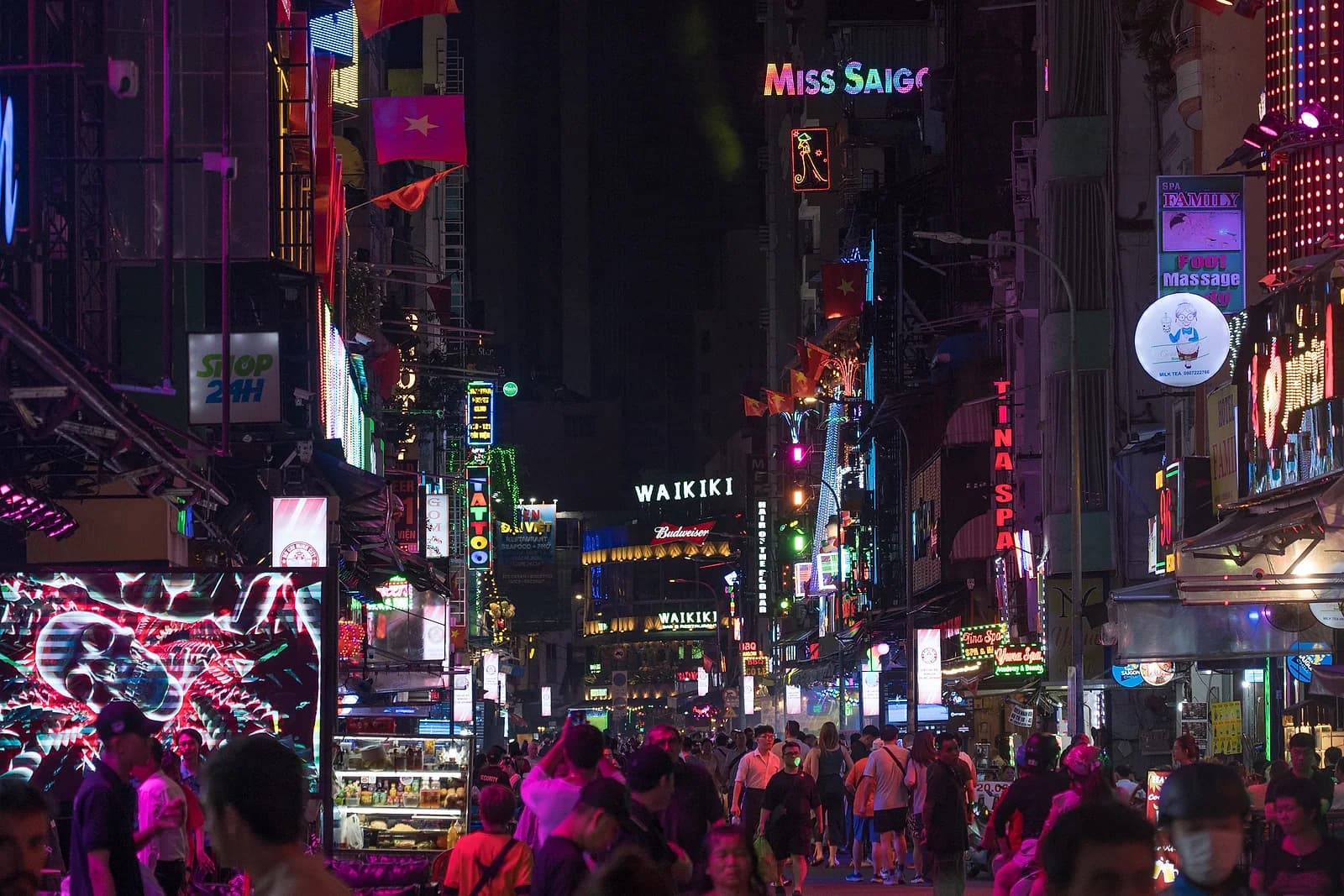
If you want the unfiltered, commercial version, Bui Vien Street in Ho Chi Minh City is still the place: a few hundred meters of competing bars each running their own system at a volume nobody's checking. It's louder than it is good, and it's built for tourists as much as anyone, so don't mistake it for the cutting edge.
For the scene that actually made this music worth writing about, you're looking at word-of-mouth collectives like Nhạc Gãy or the techno-leaning promoters descended from Heart Beat's original run, both of which announce locations the day of the party and expect you to already be plugged in. Nobody's publishing their calendar for search engines to find, which is either frustrating or the whole point, depending on how you feel about nightlife that still has to hide a little.
Cover photo: Bui Vien Street at night, Ho Chi Minh City, by Alexkom000, CC BY 4.0, via Wikimedia Commons.
Read Next


Stay in the loop
Asian electronic music, weekly