
What Time Do Clubs Actually Close in Southeast Asia, Country by Country
Every country in the region regulates when a club can serve its last drink. Almost none of them enforce it the same way twice. A country-by-country look at Southeast Asia's real closing times, law versus practice.
In Hanoi, the law says every bar closes at midnight. On Ta Hien street, the city's loudest beer corner, police walk through around 11:45pm, staff pull the metal shutters halfway down, the music drops to a whisper, customers stay put, and twenty minutes later the shutters go back up and the beer keeps flowing until two or three in the morning. The law didn't change. Nobody enforced it that night.
That gap, between what the regulation says and what actually happens on the street, is the real story of nightlife hours in Southeast Asia. Every country in the region regulates when a club can serve its last drink. Almost none of them enforce it the same way twice. What follows is what's actually on the books, city by city, and where the real closing time diverges from it.
Thailand: Zones, Not a Blanket Rule
Thailand's Entertainment Places Act, in force since 1966, sets the baseline: venues without an entertainment license close at midnight, and those holding the standard Article 3 license can run until 2am anywhere in the country. Bangkok carved out exceptions on top of that. Ratchadaphisek, Silom and Patpong, and the Royal City Avenue strip along New Phetchaburi Road are designated entertainment zones where a licensed venue can legally serve until 4am. Thonglor, despite its reputation as the late-night neighborhood, isn't one of them, and still closes at 2am.
Sitting inside a 4am zone doesn't mean a club holds the extended permit; it has to post that near the entrance, and most don't advertise which one they're running on. The zone system isn't just a Bangkok thing. Phuket's Patong area has six of its own licensed 4am zones, one of them Soi Bangla, covering more than 150 venues, which is why a club like Illuzion, on Bangla Road, can keep a floor full long after a venue without that permit would have to close.
Singapore: Grinding Toward 4AM
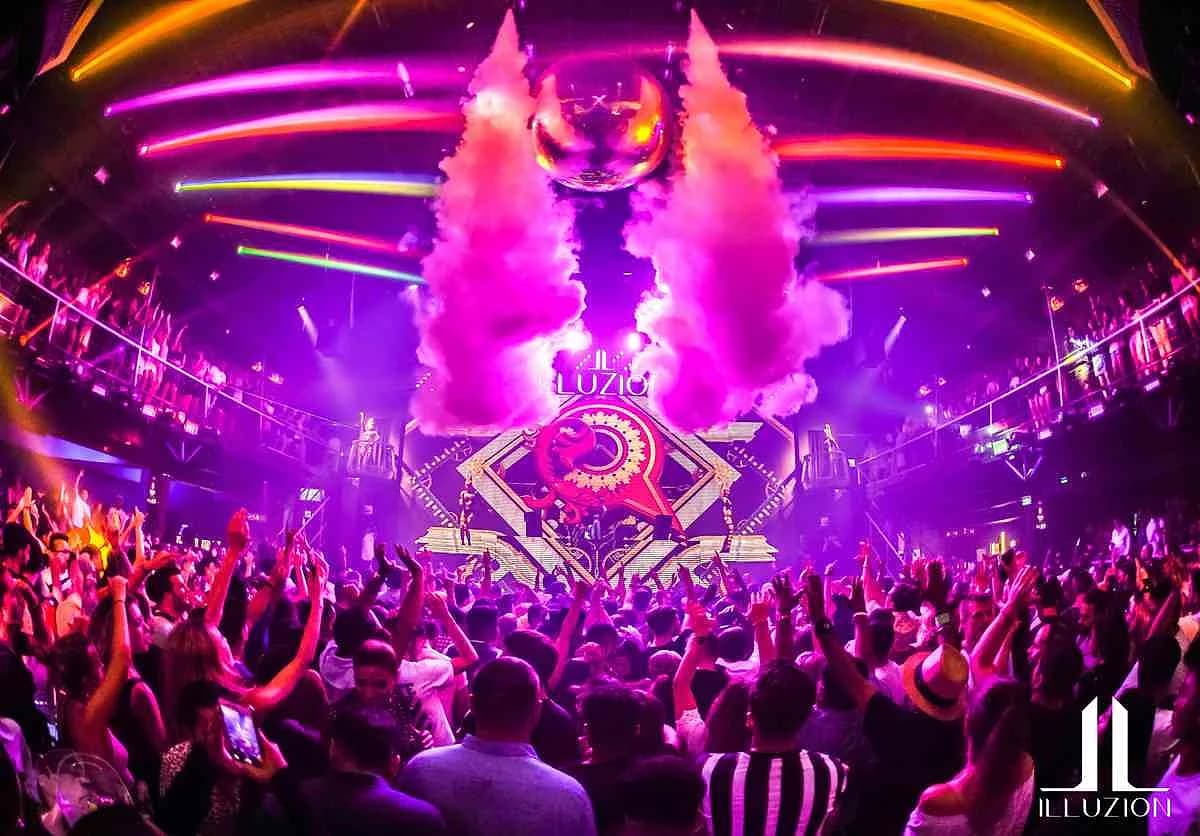
Singapore tightened its hours in 2013, pulling standard liquor licensing back to 3am on weeknights and Sundays, with Saturdays and public holiday eves allowed to run to 4am. That held for over a decade. In August 2025 the government began a year-long pilot letting venues in the Boat Quay, Clarke Quay and Upper Circular Road zones apply to sell alcohol until 4am on Thursday and Friday nights. On August 18, 2026, the pilot was formalized into standing policy for those three zones.
Everywhere else, the old rules still apply. Singapore's 2015 Liquor Control Act separately bans drinking in public and buying alcohol from shops after 10:30pm islandwide, which has nothing to do with licensed clubs but trips up visitors who assume it does.
Malaysia: Decided City Hall by City Hall
Malaysia has no national closing time for nightclubs; hours are set by local council license. A 2018 city hall proposal for a blanket 1am closing across KL's entertainment strips never took effect, and the patchwork has stayed the system since.
Indonesia: Jakarta's Seasonal Shutdown, Bali's Noise War
Jakarta's rule is seasonal. Jakarta's Tourism and Creative Economy Office orders nightclubs and discotheques closed from the eve of Ramadan until two days after Eid al-Fitr. Four- and five-star hotels and designated commercial zones can stay open if they're not close to residential areas, houses of worship, schools or hospitals. Outside Ramadan, Jakarta's clubs run on ordinary municipal licensing.
Bali's fight is really about noise, not licensing hours. After a resident petition over beach club noise in Canggu drew thousands of signatures, Bali's Satpol PP public order agency set a hard line: venues have to keep sound under 70 decibels and stop by 1am. Nearby, complaints from the community got Imani Rooftop Bar's rooftop parties shut down. Officials who investigated also found the venue lacked permits for hosting events on the roof.
Vietnam: Midnight on Paper, Later in Practice
Vietnam's national Decree 54/2019 sets midnight as the closing time for karaoke venues. Discotheques and dance halls must close by 2am under the same decree. What happens after midnight depends on the street. On Ta Hien, the shutter ritual plays out nightly. Elsewhere in the Old Quarter, clubs lock their front doors at midnight but keep serving whoever's already inside until 2 or 3am, while the expat-heavy Tay Ho district routinely runs to 4 or 5am with looser enforcement.
The Philippines: No National Rule at All
There's no Philippine national law governing when a bar or club has to close; it's set ordinance by ordinance, and the results don't line up. Iloilo City imposed a strict 2am closing on every establishment serving alcohol after a string of intoxication-related incidents. Metro Manila's curfew ordinances, by contrast, mostly target minors, with a 10pm-to-4am restriction for anyone 17 or under rather than a shutdown for adults. Iloilo City ran that 2am mandate from 2017 to 2019 before repealing it for voluntary bar-safety guidelines.
Cambodia: The Loosest Enforcement in the Region
Cambodia's recent history runs from one extreme to the other. In 2001, Prime Minister Hun Sen ordered a nationwide shutdown of nightclubs, discos and karaoke parlors over violence and drug trafficking. A Phnom Penh governor once told bars and restaurants they could stay open 24 hours as long as they kept the peace with their neighbors. There's no single closing law worth printing as fact here, only a government willing to shut the whole scene down overnight if it decides to, and otherwise mostly leaving operators alone.
What This Means If You're Planning a Night Out
Don't treat any of this as a guarantee. A zone designation, a hotel exemption, a casino license: these set the ceiling a venue is legally allowed to reach, not what it's actually doing the night you show up. Ask at the door, or check the venue's own social accounts first. The pattern that holds across all seven countries: when a government wants nightlife quiet, it has the legal tools to make that happen immediately, licensed hours or not.
For Bangkok specifically, see Loopliner's full breakdown of who actually gets to 4am. For how the region's drug laws compare the same way, read Southeast Asia's Drug Laws for Clubbers, Country by Country.
FAQ
What time do clubs legally close in Bangkok?
The baseline is 2am for venues with a standard entertainment license. Ratchadaphisek, Silom and Patpong, and the RCA strip are designated zones where licensed venues can run until 4am; Thonglor is not one of them and still closes at 2am.
Can clubs in Singapore really serve alcohol until 4am now?
Venues in the Boat Quay, Clarke Quay and Upper Circular Road zones can apply to extend sales to 4am on Thursday and Friday nights. That policy took effect on August 18, 2026. Everywhere else, the standard 3am (4am on Saturdays and eves of public holidays) still applies.
Is there one closing time for all of Malaysia?
No. Closing times vary outlet by outlet: of the roughly 627 entertainment outlets around Kuala Lumpur, about 173, mostly in the suburbs and outlying districts, close between 3am and 5am, while the rest close at midnight, 1am or 2am depending on category and location.
Do bars in Vietnam actually close at midnight?
Midnight is the legal default in both Hanoi and Ho Chi Minh City, but enforcement varies block by block. Hanoi's Ta Hien street does a theatrical half-shutter pause around 11:45pm before reopening, while some Tay Ho venues run openly to 4 or 5am.
Where does the region's earliest closing time apply?
Canggu, Bali. Beach clubs there have to keep noise under 70 decibels and stop by 1am under a curfew Bali's public order agency introduced after a resident noise petition.
Read Next
Southeast Asia's Legal Drinking Ages: Where You Can Drink at 18, and Where It's 21
Southeast Asia's Drug Laws for Clubbers, Country by Country
Bangkok's Underground House Scene Explodes: Hard In Zight 3 Festival Brings Raw Hardstyle Energy to AVVE Bar in March 2026
Stay in the loop
Asian electronic music, weekly