

How to Buy Festival Tickets Safely in Southeast Asia and Avoid Getting Scammed
In May 2026, Sarawak's tourism board had to warn the public that a near-perfect copy of a festival's own ticketing site was fraudulent. It won't be the last time. Here's how to buy real tickets to Southeast Asia's biggest festivals, country by country, and what to do if you already paid a scammer.
On May 23, 2026, the Sarawak Tourism Board had to tell the public something that shouldn't need saying twice: the Rainforest World Music Festival website you just clicked through a Facebook ad was not the Rainforest World Music Festival. Scammers had built a site that mimicked both the festival's own page and its official ticketing partner, Ticketmelon, closely enough that STB had to check with Ticketmelon directly before it could confirm the fake. "These sites are not legitimate and have no affiliation with either Ticketmelon or the Rainforest World Music Festival," the board said in its alert.
That's the pattern across the region's fast-growing festival market. Demand outpaces supply for a handful of big names, resale groups fill the gap on Facebook and Telegram, and somewhere in that chain a screenshot gets sold as a ticket. Southeast Asia doesn't have one clearing house for festival tickets the way the US has Ticketmaster. It has six or seven national platforms, each trusted for good reason and each an easy thing to fake. This is a country-by-country guide to where you should actually be buying, what a scam site looks like before you've handed over your card details, and what to do if you already have.
The Scam Playbook: What a Fake Ticket Site Actually Looks Like
The RWMF case followed a script that shows up under different festival names every season. A post appears on Facebook or Instagram, often boosted as an ad, pointing to a domain that looks close enough to the real one to pass a glance: a doubled letter, a different extension, a word inserted. The page itself is often a convincing clone, sometimes built on templates that make it fast to stand up and fast to tear down once it's been reported.
The giveaways are consistent once you know to look. A countdown timer pushing you to buy before tickets "sell out" in the next few minutes. A request for information a real ticketing site never needs, passport scans, biometric selfies, anything beyond a card and an email. Payment that routes somewhere other than the platform's own checkout, a personal bank transfer, a crypto wallet, a gift card code you read out over chat. Legitimate Southeast Asian platforms, Ticketmelon, Loket, Ticketbox, SM Tickets, all process payment on their own domain or through recognizable processors like Stripe or a local bank gateway. If a seller wants you to step outside that, stop.
Where to Actually Buy: Country by Country
Thailand runs mostly through Ticketmelon, which handles everything from club nights to S2O and large festivals, alongside Zipevent and ThaiTicketMajor for bigger commercial shows. Wonderfruit, the country's best-known boutique festival, sells directly through its own site rather than a third party, which is worth knowing because a "Wonderfruit reseller" you find elsewhere isn't one. Our first-timer's guide to Wonderfruit has the ticket tiers and what each one gets you.
Indonesia centers on Loket, the platform behind Djakarta Warehouse Project and most of the country's major electronic events. DWP has been explicit for years that Loket is its only authorized partner, precisely because the festival is big enough to attract the resale chaos this guide is about. Our coverage of DWP 2026's lineup and ticket tiers links straight through to Loket.
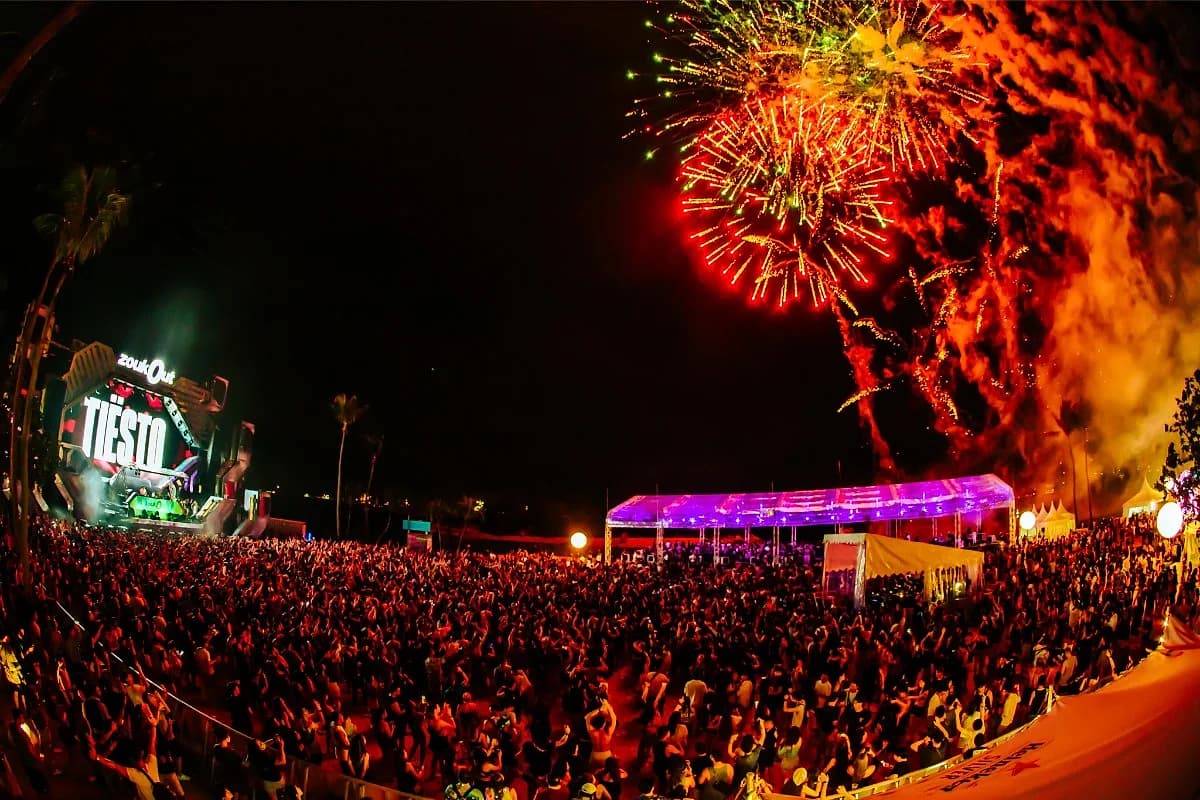
Singapore splits between a festival's own site and a small set of authorized partners. ZoukOut sells primarily through the official ZoukOut site with Sistic, Klook and Eventbrite listed as authorized resellers; anything sold outside those channels, however official it looks, isn't backed by Zouk Group. Read the full breakdown in our guide to ZoukOut's tickets and tiers.
Malaysia doesn't have one dominant platform. Ticketmelon operates across the border and handled the real RWMF tickets in Sarawak; Ticket2u and venue-direct sales cover much of Kuala Lumpur's club and festival calendar. When in doubt, the safest move is the organizer's own Instagram bio link, not a search result.
Vietnam's market runs largely through Ticketbox, used for everything from Hanoi and Saigon club nights to larger touring shows. The Philippines leans on SM Tickets, now expanded through a Ticketmaster partnership as SM Ticketmaster, which covers most arena and festival-scale electronic bookings in Manila.

Reselling and Buying Resale Without Getting Burned
Sold-out doesn't mean gone. It means the safest path to a ticket gets narrower. Some platforms build resale in: Ticketmelon lets sellers relist through the same account system, and third-party marketplaces like Tixel operate specifically to cap resale at or near face value and verify tickets before money changes hands, which is a real improvement over a stranger's screenshot in a Telegram group. If a festival runs its own name-change system, and several of the bigger international festivals in the region now do, that's always the safer route over an unofficial reseller: the ticket only becomes valid once it's transferred inside the platform, not the moment someone sends you a QR code.
What you should avoid outright: Facebook Marketplace listings with no verification step, Telegram or WhatsApp groups selling "extra" tickets at inflated prices during a sellout week, and anyone who wants payment before showing proof the ticket exists in their name. A PDF or screenshot proves nothing. A festival can and does deactivate a ticket the moment it's reported resold outside official channels, which means you can pay full price for something that gets voided at the gate.
Five Red Flags That Should Stop You Before You Pay
A countdown timer claiming tickets vanish in minutes. A request for a bank transfer, cryptocurrency or gift card instead of a card payment on the platform's own checkout. Any request for a passport scan or "biometric registration" to receive a barcode, which is an identity-theft step dressed up as security. A URL that's almost right but not quite, extra letters, a wrong extension, a word swapped in. And a price that's suspiciously close to face value from someone you've never dealt with during a week when the show is officially sold out; real resale at face value exists, but it's rare enough that it should make you double-check rather than relax.
If You Already Paid a Scammer
Contact your card issuer or bank immediately and dispute the charge; this is the single most effective recovery step and the reason security researchers keep telling people to use a credit card rather than a bank transfer for anything ticket-related. Report the page to the platform it impersonated, Ticketmelon, Loket and the others all have abuse-reporting channels, and to the festival's own social accounts, since organizers are usually already tracking these sites and can get them taken down faster with more reports. In Malaysia and Singapore, both countries have consumer-fraud reporting lines through their police forces; use them, even if you don't expect the money back, because the report is what eventually gets a domain blacklisted.
FAQ
Is it safe to buy festival tickets from Facebook or Instagram ads?
Not on its own. Scammers routinely buy ads pointing to cloned sites, as happened with the fake Rainforest World Music Festival page in May 2026. Treat an ad as a lead to the event, then navigate to the organizer's verified site or official platform yourself rather than clicking through.
What's the official ticketing platform for Southeast Asia's biggest festivals?
There isn't one regional platform. Thailand runs mostly through Ticketmelon, Indonesia through Loket, Vietnam through Ticketbox, the Philippines through SM Tickets, and Singapore's ZoukOut sells direct with Sistic, Klook and Eventbrite as authorized partners.
How can I tell a fake ticketing website from a real one?
Check the URL character by character for doubled letters or extra words, be suspicious of countdown timers pressuring an immediate purchase, and never pay through a bank transfer, crypto wallet or gift card outside the platform's own checkout.
Is it safe to buy resale tickets for a sold-out festival?
It's safer through a platform built for it, like a festival's own name-change system or a verified marketplace such as Tixel, than through Facebook Marketplace or a Telegram group, where a screenshot or PDF proves nothing and a ticket can be voided if it's later reported resold.
What should I do if I bought a fake ticket?
Dispute the charge with your card issuer immediately, report the site to the platform it impersonated and to the festival's official social accounts, and file a report with local police fraud lines where available, since reports are what eventually get scam domains taken down.
Read Next

Stay in the loop
Asian electronic music, weekly