
How to Get Home After Clubbing in Bangkok: BTS, MRT and Grab After Closing Time
The Skytrain closes around 1am. Standard clubs close at 2am, and RCA, Thonglor and Khao San run to 4am. Here's what actually gets you home in between, and what to watch for.
It's 2am, the club just cut the lights, and the last BTS train left Siam an hour ago. This is not a design flaw anyone in Bangkok is rushing to fix. It's just the gap you plan around: the city's rail network shuts down for the night before its nightlife does, and closing time only gets later from there. RCA, Thonglor and Khao San hold licenses that let venues run to 4am, which means a decent chunk of the crowd is leaving hours after the trains stop and well past the point where flagging a random cab is a good idea. None of this is complicated once you know the shape of it. Here's what actually works.
The Trains Stop Before the Clubs Do
Budget for this now, not at 1:45am. According to BTS's own posted service hours, trains run 05:00 to 01:00, with the last train from the Siam interchange departing at 00:02 and a handful of extended departures, to Samrong, Ha Yaek Lat Phrao, Bang Wa and National Stadium, going as late as 00:15. The MRT's Blue Line effectively ends earlier: trains reach their terminus stations around 12:30am, seven days a week, no later Friday or Saturday schedule. There's no rail-replacement night bus network picking up the slack once both systems shut. If you're leaving a venue that follows the standard midnight-to-2am license, you'll likely make the last train if you're out the door before midnight. If you're at one of Bangkok's 4am zones, the trains are not part of the plan at all.
Grab Is the Default, and It Gets Slower at 2am
Grab is what most people actually use, and for good reason: Thailand's rollout includes GPS trip-sharing, an in-app emergency button that alerts authorities or a saved contact, and driver background checks the company advertises as a 25-point process. None of that is unique to nightlife hours, but it matters more at 2am than at 2pm. What you should expect at closing time is a slower match and a pricier fare. Every club in a given neighborhood empties out within the same twenty-minute window, so demand spikes exactly when the app has to pull drivers from further away. Open the app before you're actually ready to leave, not after you're standing on the curb. If your group is scattering in different directions, it's often faster to walk two minutes to a busier road than to wait outside the venue itself, where a cluster of other people are already summoning cars to the same spot.
Street Taxis: Insist on the Meter or Walk
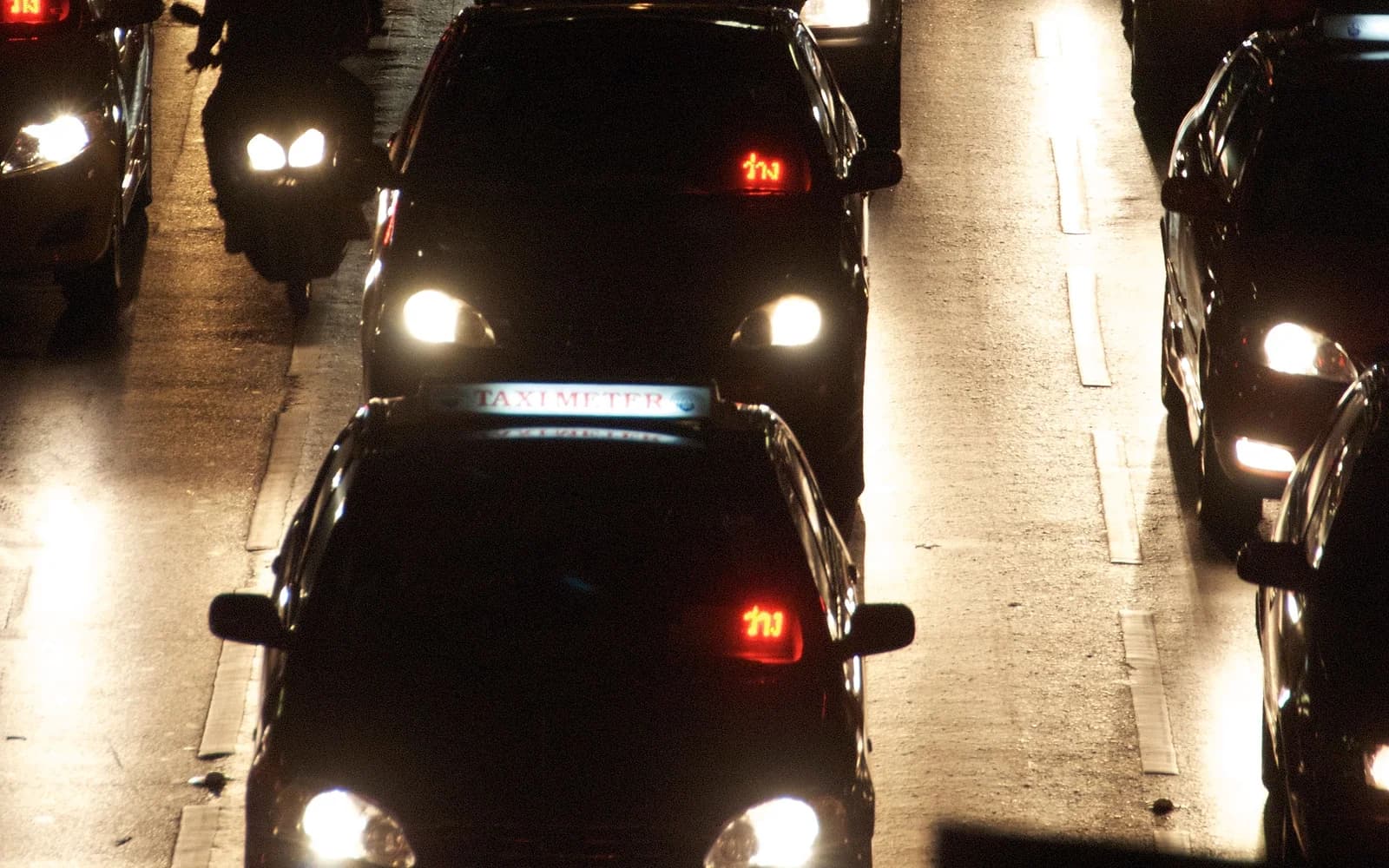
Bangkok's metered taxis are legally required to run the meter within city limits, and late at night, near a club exit, is exactly when some drivers decide not to. It's a long-documented enough problem that the standard advice hasn't changed in years: ask for the meter before you get in, and if the driver won't use it or names a flat rate instead, get out and find another cab or an official taxi rank. It's rarely worth arguing on the pavement at 3am. If a driver won't budge and you think you're being taken for a ride in the other sense, Thailand's tourist police are reachable 24/7, in English, at 1155, and most drivers would rather renegotiate than deal with that call. Taxi ranks outside major malls and hotels tend to run straighter than cabs cruising nightlife strips looking for exactly this kind of fare.
Motorbike Taxis: Fast, Cheap, and Only for Short Hops
The motorbike taxis clustered at soi mouths, easy to spot by their numbered vests, will get you down a single street faster than anything on four wheels, for something like 20 to 60 baht depending on the distance. They're registered and regulated, and for a short, sober hop from a main road to your hotel door they're genuinely useful. They are not the move after a heavy night: passenger helmets are often the bare minimum required by law rather than anything you'd trust in an accident, and asking a driver to weave through traffic while you're not steady on the back seat is how the good stories about Bangkok nights turn into bad ones. Save them for the daylight errand, not the 3am ride home.
The 4am Zones Change the Math
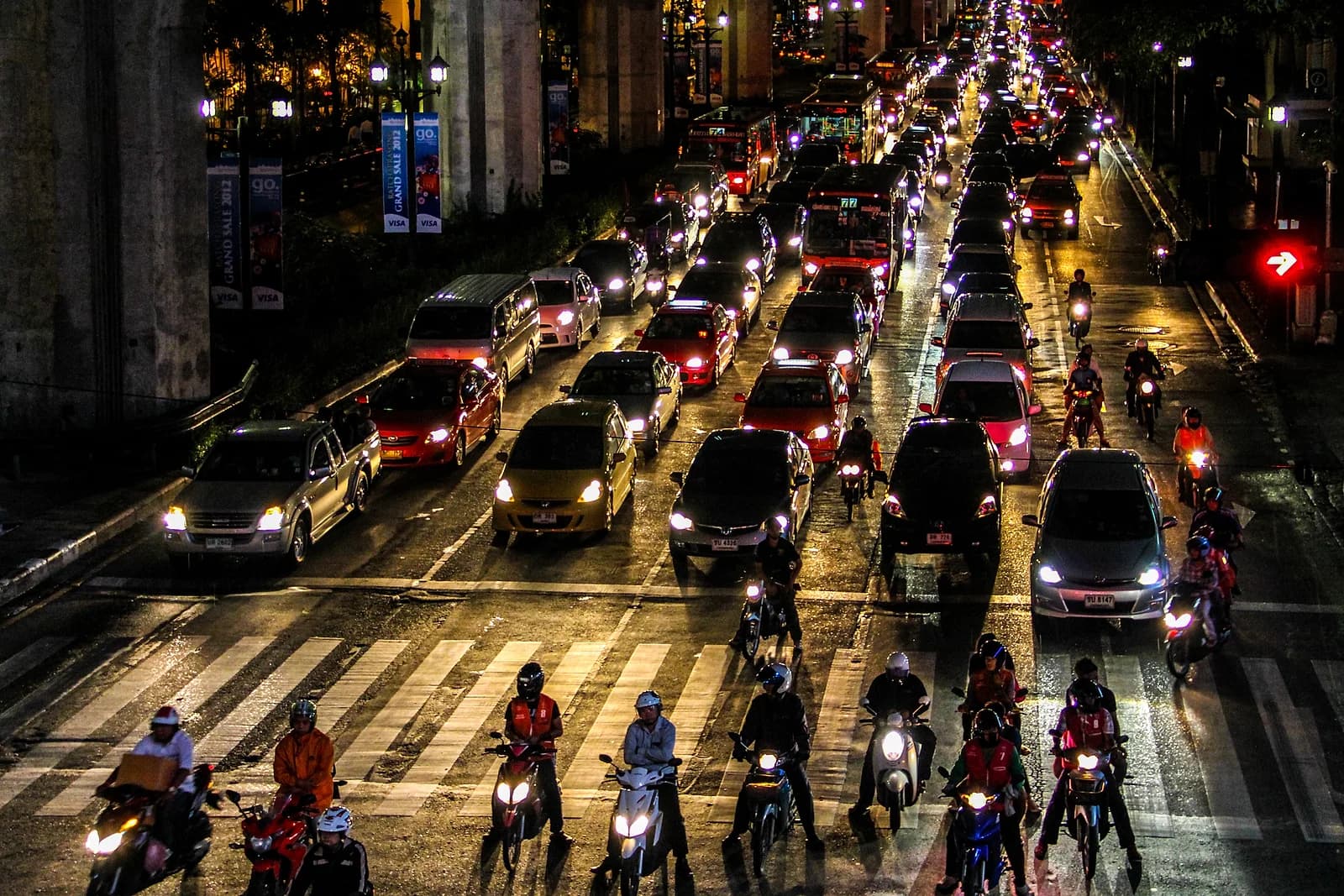
RCA, Thonglor and Khao San aren't just later, they're further from wherever the trains would have dropped you anyway. By 4am you're competing for cars with everyone else leaving the same strip at once, on top of the general thinning of driver supply that happens deep into the night. If you know you're closing out a venue in one of these zones, it's worth booking a ride a few minutes before last call rather than after, and telling the app your actual destination rather than a nearby landmark, since a driver arriving to the wrong side of a packed street adds ten minutes you don't have.
A Few Things Worth Doing Before You Leave the Venue
Keep your phone charged past midnight, not just past dinner. Screenshot your hotel's address in Thai script before you go out, since typing it one-handed at 3am rarely goes well. If you're heading home alone, share your Grab trip with a friend, the same instinct covered in our guide to clubbing alone in Southeast Asia, and keep a little cash on you in case a card reader or app payment fails at the worst possible moment. None of this is dramatic. It's the same logic as knowing the last train time before you leave home in the first place, just applied to a city where the trains quit a lot earlier than the party does.
Cover photo: Brian Bukowski (BriYYZ), CC BY-SA 2.0, via Wikimedia Commons.
FAQ
When do Bangkok's trains stop running at night?
BTS trains run 05:00 to 01:00, with the last train from the Siam interchange departing at 00:02 and a few extended departures going as late as 00:15. The MRT Blue Line effectively ends earlier, with trains reaching their terminus stations around 12:30am every day of the week.
What should you do if a Bangkok taxi driver refuses to use the meter?
Metered taxis are legally required to run the meter within city limits, so ask for the meter before you get in and, if the driver names a flat rate instead, get out and find another cab or an official taxi rank. Thailand's tourist police are reachable 24/7 in English on 1155.
Are motorbike taxis a good way home after clubbing?
They are useful for a short, sober hop from a main road to your hotel door, for something like 20 to 60 baht depending on the distance. They are not the move after a heavy night, because passenger helmets are often the bare legal minimum.
Read Next
Stay in the loop
Asian electronic music, weekly