
Phnom Penh's Underground Scene Is Rebuilding Itself From Nothing
Cambodia's dance music culture was erased once already. Now a handful of promoters, one industrial techno DJ and a bar-lane venue are building it back, this time for Cambodians first.
Pontoon, Phnom Penh's floating nightclub, sank on its opening night. Too many people rushed to one side of the barge for a photo, the whole thing tipped, and Cambodia's most talked-about new venue spent its first evening as a cautionary tale instead of a party. Eddie Newman, the promoter who ran it and who'd go on to found Code Red Agency, still calls 2008 to 2013 "the golden era" of Phnom Penh nightlife, back when a handful of rooms were built around music instead of bottle service.
That the scene has a golden era at all, and that it sank, quite literally, and kept going, tells you something about how dance music culture works in this country. It isn't inherited. It's rebuilt, deliberately, by people who know exactly how thin the ground under them is.
Year Zero, Twice
Cambodia had a scene before, a proper one. In the 1960s and 70s, Phnom Penh's psychedelic rock and pop culture was good enough that people called the city the Pearl of Asia. Then the Khmer Rouge declared Year Zero, smashed the instruments and the records, and killed a generation of the musicians who made them. Culture here didn't evolve out of that. It had to start over from an actual blank page, and it didn't get moving again until the 1990s.
Electronic music arrived on top of that rebuild, not underneath it, which is part of why it still feels fragile. There's no local tradition to lean on, no older generation of club owners passing down a sound system or a mailing list. Everything, from the DJ mixers to the audience's taste, had to be imported and then translated.
Bassac Lane and the Judgment-Free Zone
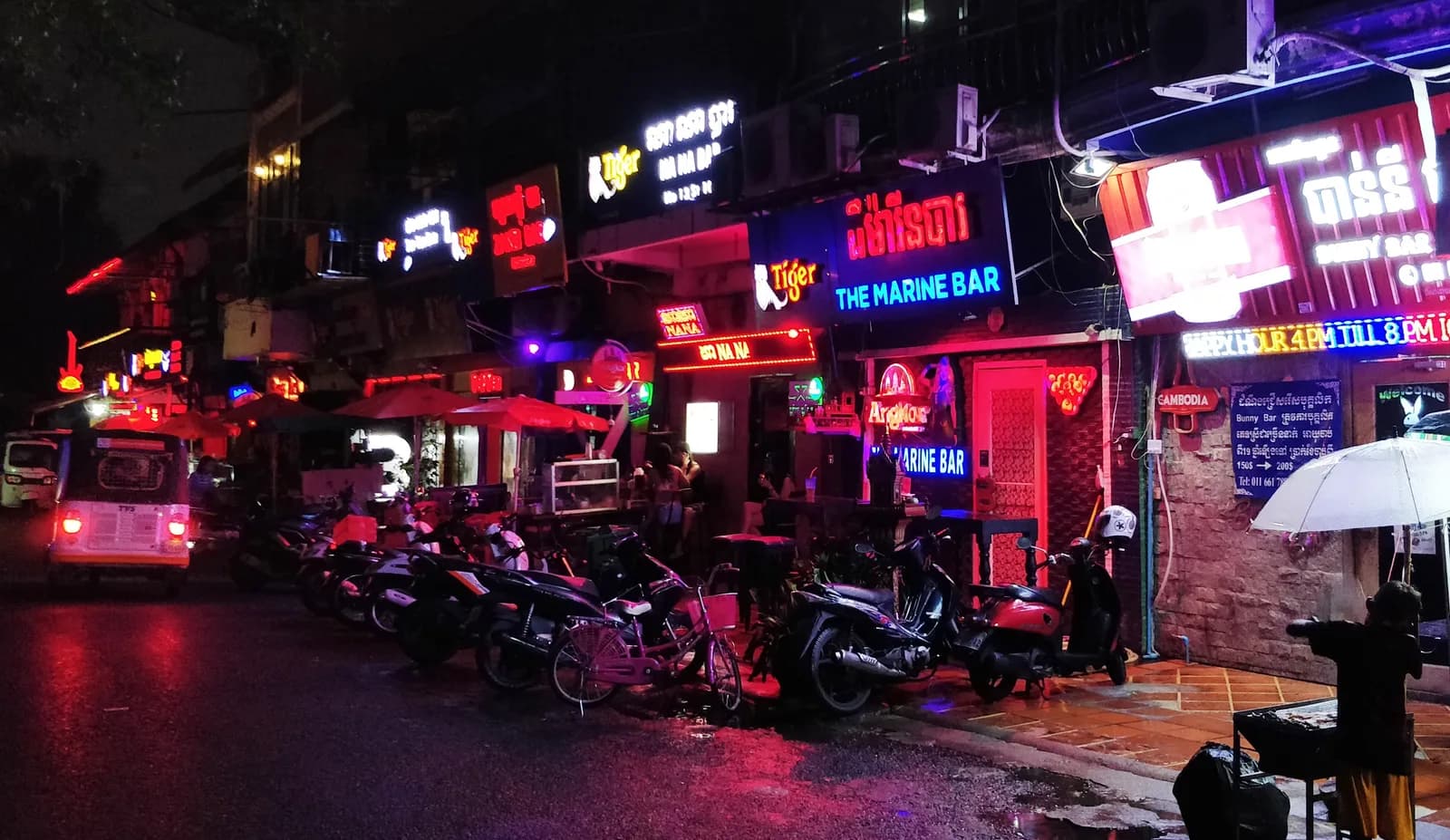
Walk down Street 308 in Phnom Penh today and you'll find The Cage, a small room on Bassac Lane that's become the closest thing the city has to a consistent underground address: disco, funk, house, minimal and techno on rotation, free entry most nights, open till 5am. Its manager, Justfin, put it plainly to Mixmag Asia: "There are not many spaces that consistently program underground electronic music, but what we do have is raw and true." The Cage bills itself as a judgment-free zone, which sounds like marketing copy until you remember how recently that wasn't a given here.
That scarcity of venues is the scene's real ceiling. Rowan Steele of the touring collective Dessert Discs, who's also behind a chunk of the country's better sound systems, told Mixmag it's "hard for a scene to grow when there just aren't enough spaces to host events." Dessert Discs has gotten around that by leaving, touring its own rigs through Bangkok, the UK and festival stops like Wonderfruit, which is a strange kind of solution: export the talent because the rooms at home can't hold it yet.
Building For Cambodians, Not Around Them
For years, Phnom Penh's dance floors skewed expat and tourist. Ange, who runs the collective Ariya, is trying to flip that, prioritizing Cambodian crowds over the backpacker circuit. It's slower work and it doesn't always pay. Ange's own read on the biggest challenge is blunt: getting paid properly to play good music to a crowd that actually wants it.
Nobody embodies that harder edge more than Kaza, a Phnom Penh DJ who specializes in deep, dark industrial techno at 130 BPM, music she's admitted is "too hard" for most local club nights. She got into it after her apartment turned into an informal weekly rave, mentored by a Russian DJ who goes by INEE. Her music leans on Khmer texture too, including a track named for a Cambodian flower.
She's also the person most willing to say the quiet part out loud about who the scene still serves. "If it's Cambodian psytrance, the police won't go there," she told The Rave Report back in 2020. "If you play techno you get raided because it's all the white people going." Local training costs around $35 an hour, out of reach for most young Cambodians who might otherwise pick up a mixer. Her ambition, a Phnom Penh answer to Berlin's Kit Kat Club, is still a long way off. But her mission statement doubles as the scene's: "To make techno big here, it has to start with Cambodians. From the heart."
The Rough Edges, Said Out Loud
Nobody serious here oversells it. Newman says the daily grind is finding a room with decent sound and lights and then funding the night anyway. Ange points at the same problem from the money side: promoters and brands would rather sink budget into rap and commercial pop than underground electronic bookings. Add Phnom Penh's wet season, which can flatten an outdoor calendar for months, and you get a scene that runs on stubbornness more than infrastructure.
It's also spreading past the capital. On Koh Rong, the promoters behind Soundgarden and the monthly Nestival have built a genuinely large draw out of techno and psychedelic sounds on an island with none of Phnom Penh's venue politics, and back on the mainland, Dave Breeze's old DIY beach-party outfit Kerfuffle was working toward a 2.0 relaunch. None of it looks like Bangkok or Ho Chi Minh City's club rows, and it isn't trying to. It's smaller, younger, and for the first time in decades, being built with Cambodians in the room from the start rather than added on afterward.
Cover photo: Andi9876, CC BY-SA 4.0, via Wikimedia Commons.
Read Next


Stay in the loop
Asian electronic music, weekly