The Work Permit Every Touring DJ Needs in Southeast Asia, and Why Bali Caught Three Without One
A nightclub raid in Canggu shows what happens when a DJ books a Southeast Asian show on a tourist visa. Here is what the law actually requires in each country, and what it costs.
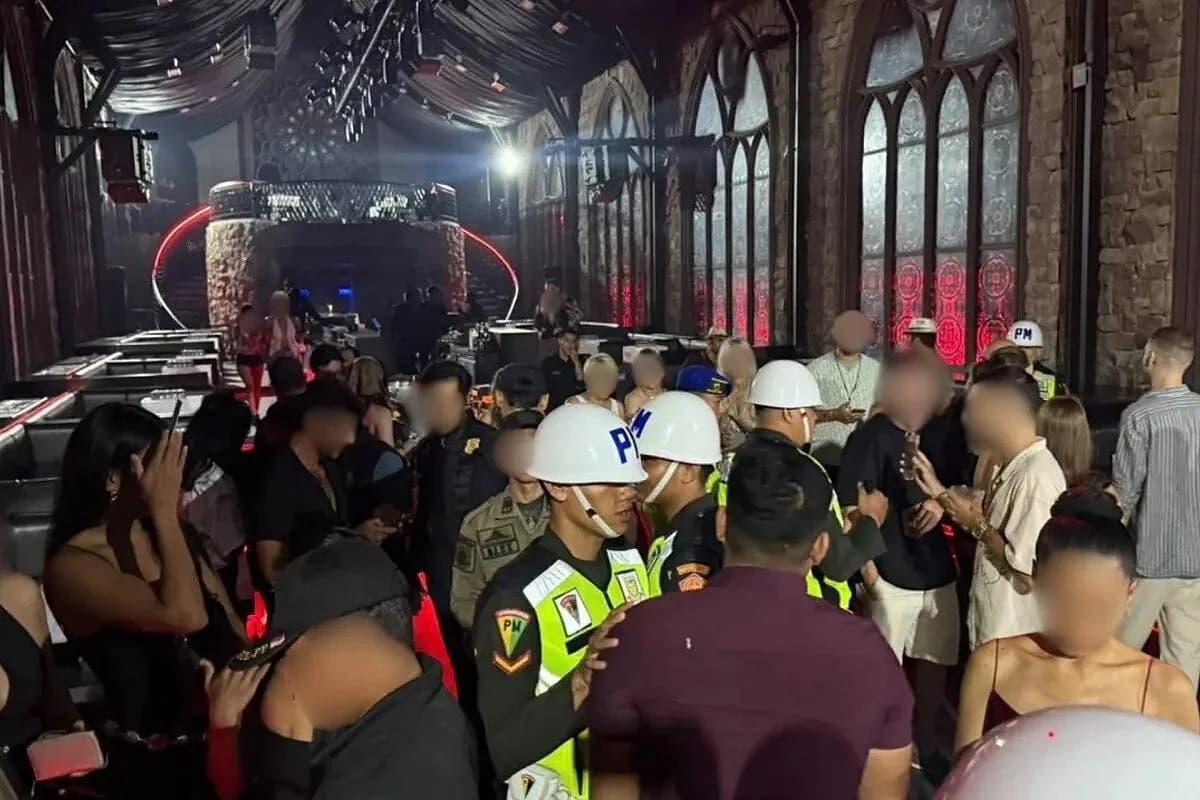
On the evening of September 24, 2026, Indonesian immigration officers walked into a nightclub in Canggu backed by military police, the National Narcotics Agency and Denpasar police. Three foreign nationals, an Egyptian national on a visa-on-arrival and two Russians, one on a VOA and one on an investor KITAS, were pulled aside for working as DJs with no permit that allowed it. A fourth person in the venue, a Nigerian woman, had simply overstayed her visa by 402 days. All four were taken to the Ngurah Rai immigration office for questioning.
None of this is unusual, and that's the point. Under Indonesian immigration law, any public or paid performance counts as work, whether or not the money touches an Indonesian account. A tourist visa or visa-on-arrival doesn't cover it, however small the booking feels to the artist or the promoter who flew them in. The region's clubs book international names constantly, and the paperwork that's supposed to sit underneath those bookings is inconsistent, and expensive. Ngurah Rai Immigration chief Muhammad Novyandri said the Canggu operation was meant to ensure "every stay permit granted by the state is used for its intended purpose."
Thailand: A Non-B Visa, Then a Work Permit
Thailand's rule is the strictest on paper. Any foreigner performing for pay needs a Non-Immigrant B visa, applied for at a Thai embassy or consulate before arrival, plus a separate work permit. The employer, usually the venue or a promoter, has to file a WP32 approval letter in Thailand's e-work permit system while the performer is still outside the country; only after that clears does the artist apply for the visa itself, then sign the physical work permit once they land.
Skip it and the consequences are real, not theoretical. On June 20, 2026, Chiang Mai's Tourist Police arrested an American identified as Eick Alberto, 30, mid-set at a venue on Charoen Rat Road just after midnight, and charged him with working as a foreigner without a permit. In February 2025, three musicians in Pai were fined 5,000 to 8,000 baht each for working without permits, and the bar's Irish owner, who had been running it without proper business registration, was released on 120,000 baht bail. Thai immigration has made clear it treats a DJ booth the same as any other unauthorized job.
Indonesia: The C7A, Cheaper and Faster
Indonesia's version is lighter. For a single booking or a short run of shows, a performer applies for a C7A visa (crew travelling with them get the C7B), a single-entry permit valid for up to 60 days. The government fee runs around IDR 1,500,000, filed online by the Indonesian promoter, venue or agency sponsoring the show, and organizers are told to allow a couple of weeks before the event. It's far cheaper than a full work KITAS, which only applies to something like a standing resident DJ slot rather than a one-off gig.
That C7A is exactly the document the three DJs caught in Canggu didn't have. Bali's club scene runs on a steady stream of flown-in talent, and the September raid followed a separate sweep just a week earlier that detained 13 foreigners across Canggu, Seminyak and Umalas for other immigration violations. The pattern is enforcement that's getting more visible, not less.
Singapore Killed Its Performer Visa
Singapore's Ministry of Manpower ceased its Work Permit (Performing Artiste) scheme altogether, confirming on its own site that businesses can no longer apply for new foreign performing artistes under it, though existing holders can finish out their current passes. That scheme required a CAT 1 Public Entertainment Licence and at least six hours a day as a bar, club or similar. Employers also had to provide the performer with medical insurance. With that route gone, MOM points venues toward three alternatives: booking through a licensed entertainment service provider, hiring eligible performers on a regular work pass, or using the Work Pass Exempt framework, which only covers short-term performances at specific government-supported or statutory-board events, not a standard club night.
For a touring DJ with a one-off Singapore booking, that leaves fewer clean options than it did a year ago.
Malaysia and the Philippines
Malaysia runs performers through PUSPAL, the government body that screens foreign acts, before a sponsor can apply for a Professional Visit Pass. For a first-time applicant, the whole process, from registration through endorsement, typically takes seven to eight months, and the main application fee is RM1,296 before any agency or endorsement costs. A PVP for performers is usually only issued for up to six months, which makes it a document for a tour or a residency, not a same-month booking.
The Philippines moves faster. Foreign performers need a Special Work Permit from the Bureau of Immigration, applied for at least three working days before the show. File late and the fee doubles; file on or after the event date and the application is rejected outright, according to the Bureau of Immigration's own rules. Skip it entirely and the risk is deportation proceedings and a blacklist on future entry, the same penalty the Bureau of Immigration handed Pokwang's former partner Lee O'Brian for working in the Philippines without one.
What's Not Confirmed
Vietnam and Cambodia aren't in this guide. Both plainly require some form of work authorization for paid foreign performers, but neither publishes a clear, DJ-specific permit pathway the way Thailand, Indonesia, Malaysia and the Philippines do, and this piece isn't going to guess at a process it couldn't verify. Touring DJs working the region's digital-nomad circuit should note that a long-stay visa built for remote work, Thailand's DTV included, still doesn't cover paid local performances; that's a separate document every time.

What Promoters Actually Do
In every country on this list, the local side, the venue, the promoter or an entertainment agency, has to sponsor the application, not the artist alone. That detail catches smaller bookings: a club night thrown together on short notice rarely has the lead time Thailand's WP32 process or Malaysia's seven-month PUSPAL pipeline requires, so the paperwork gets skipped and the artist plays anyway. Indonesia's C7A and the Philippines' SWP are the closest things to a fast lane, but even those need a couple of weeks and a sponsor willing to file on the artist's behalf. None of it is optional, and as Bali's immigration office and Chiang Mai's tourist police have both shown this year, enforcement doesn't wait for a tour to end before it shows up.
FAQ
Does a tourist visa cover a paid DJ set in Southeast Asia?
No. Every country covered here treats a paid performance as work, regardless of how short the booking is, and a tourist visa or visa-on-arrival does not authorize it.
What happens if a DJ performs without the right permit?
Consequences vary by country but are enforced in practice: Thailand fines performers 5,000 to 50,000 baht and deports them, Indonesia detains and questions suspects at its immigration office, and Malaysia and the Philippines can bar future entry.
Who is responsible for arranging a touring DJ's work visa?
In Thailand, Indonesia, Malaysia and the Philippines, the local venue, promoter or agency sponsors the application. The artist alone generally can't file for one.
Has Singapore changed its rules for foreign performers?
Yes. Singapore's Ministry of Manpower ceased new applications under its Work Permit (Performing Artiste) scheme, leaving venues to use a licensed service provider, a regular work pass, or the narrower Work Pass Exempt framework instead.
Which Southeast Asian country has the fastest performer visa?
Indonesia's C7A is a single-entry visa valid for up to 60 days. Organizers are told to allow a couple of weeks before the event to get it approved. Malaysia's Professional Visit Pass is the slowest for a first-time applicant, typically taking seven to eight months.
Cover photo: Antara, via Bali.live, from the raid on a Canggu nightclub where three foreign DJs were detained.
Read Next
Thailand Scrapped Its Decades-Old Afternoon Alcohol Ban: What You Can (and Can't) Legally Drink Across Southeast Asia