
What Is Deep House, Explained: Singapore's Reissued 2001 Classic and Bangkok's Deep House Thailand
Deep house has a 1986 Chicago blueprint, a reissued 2001 Singapore classic and a Bangkok collective that grew out of a condo party. This is what the genre actually is, and where to hear it in Southeast Asia.
Official link
A 2001 CD that barely left Singapore's indie record shops is back this year, reissued on vinyl by the German label Hello Goodbye and sold through the mail-order dealer Forced Exposure. Case Woo's A Deeper Shade carries the same claim it did 25 years ago: by most accounts, the only full-length deep house and tech house album the country ever produced. Deep house itself has had a rougher 25 years than that one record. The name gets slapped on pop-house with a saxophone solo, on tech house with a slower kick, on whatever a streaming playlist needs filling, none of which is what the genre actually is.
Strip the confusion away and deep house is a specific, four-decade-old sound with a clear inventor and a BPM range you could set a metronome to. It also has three live anchors in Southeast Asia right now: that reissued Singapore record, a Bangkok collective that grew out of a single condo party, and a Manila producer who put out six tracks with no label behind him at all.
What Deep House Actually Sounds Like
Deep house was born in Chicago in the mid-1980s, a few years after house music itself. Larry Heard, recording as Mr. Fingers, is the name every serious account of the genre starts with. His 1985 demo "Mystery of Love" and the 1986 single "Can You Feel It," both built on a Roland Juno-60 synthesizer and a TR-909 drum machine, took house's raw 4/4 pulse and slowed it down, layering it with jazz chords and ambient warmth. Marshall Jefferson, and a few years later Kerri Chandler, pushed the sound further toward gospel-soul vocals and deeper, longer grooves.
The technical range holds up today. Deep house sits at roughly 110 to 125 BPM, slower and warmer than the faster-edged tech house and big-room house styles it sometimes gets filed next to. Tempo alone doesn't define it, though. What separates a deep house record from the rest of the house family is extended, jazz-derived chords (sevenths and ninths rather than plain triads), a bassline that carries melody instead of just weight, and vocals that are sparse or absent, soulful rather than hook-driven on the rare occasion they show up. It favors steady, hypnotic repetition over other genres' dramatic build-ups and releases. A deep house DJ builds one long, unhurried arc instead of a series of peaks.
Deep House vs. Its Louder Cousins
The house family tree confuses people on purpose, or at least streaming platforms do. Afro house layers saxophone, piano, hand percussion, flute and vocals, often sung in Zulu, Xhosa or another South African language, on top of a four-on-the-floor structure built from kwaito, mbaqanga, deep house, tribal house and soulful house. Organic house leans on multi-layered percussion built from bongos and congas, atmospheric pads under real instruments like kalimba or violin, and a tempo that rarely rushes. Tech house strips classic house's chords, vocals and song structure back to a rolling bassline and techno's four-on-the-floor discipline, built more for continuous DJ mixing than for standalone songs. By the mid-to-late 2010s, the term had stretched to cover various bassline-driven house styles that later got their own names, among them Brazilian bass and slap house, muddying what "deep house" actually meant. A track with a pop chorus and a festival drop is pop-house wearing the label, whatever the playlist says.
The Singapore Album That Wouldn't Stay Buried
Case Woo recorded A Deeper Shade during a month of self-imposed studio isolation after discovering the genre in 1999. "I was introduced to the Deep House genre in 1999 and it was love at first listen, pure magic!" he has said of the sessions. The CD came out in 2001 and was, by most accounts, the only full-length deep house and tech house album to come out of the country.
That changed this year. The German label Hello Goodbye pressed A Deeper Shade to double vinyl, catalog BYE 001LP, with the original artwork reprinted and an insert showing young Case Woo's home studio and a full gear list. It's a reminder that Southeast Asia's relationship with deep house predates the 2020s afro house boom by two decades, older than most of the clubs now booking the sound, and it just got easier to actually hold.
Deep House Thailand Built a Scene Out of a Condo Party
If Singapore has the genre's regional archive, Bangkok has its live wing. Deep House Thailand grew out of a single home party thrown by BYAS, born Yasin Borry in Antwerp, Belgium, and now based in Thailand, together with a DJ named Siggi. It outgrew the condo fast. The collective has since run sixteen events across rooftops, club takeovers, pool parties, a creator house party, and, on March 22, 2025, Thailand's first deep house coffee rave: a daytime set inside Curvistan, a Porsche exhibition gallery, with people dancing among the cars at 2pm. DHT says it went viral.
The club takeovers are the clearer evidence that the sound has a real room in Bangkok now. DHT has played club takeovers and rooftop parties at Mustache, Spectrum, SIN Rooftop, APT 101, Baccarat and Centara's rooftop pool, with resident sets settling in at Baccarat. BYAS's own catalog, deep house and afro house blended with indie dance and melodic touches, has passed six million streams across Spotify, SoundCloud and YouTube as of September 2026. The next date is a Halloween takeover at APT 101 on Saturday, October 31, 10pm, with BYAS, Siggi, Berry and Wiwa. DHT returns to SIN Rooftop on November 21, 7pm to 1am.
Manila's Deep House Has No Label Behind It
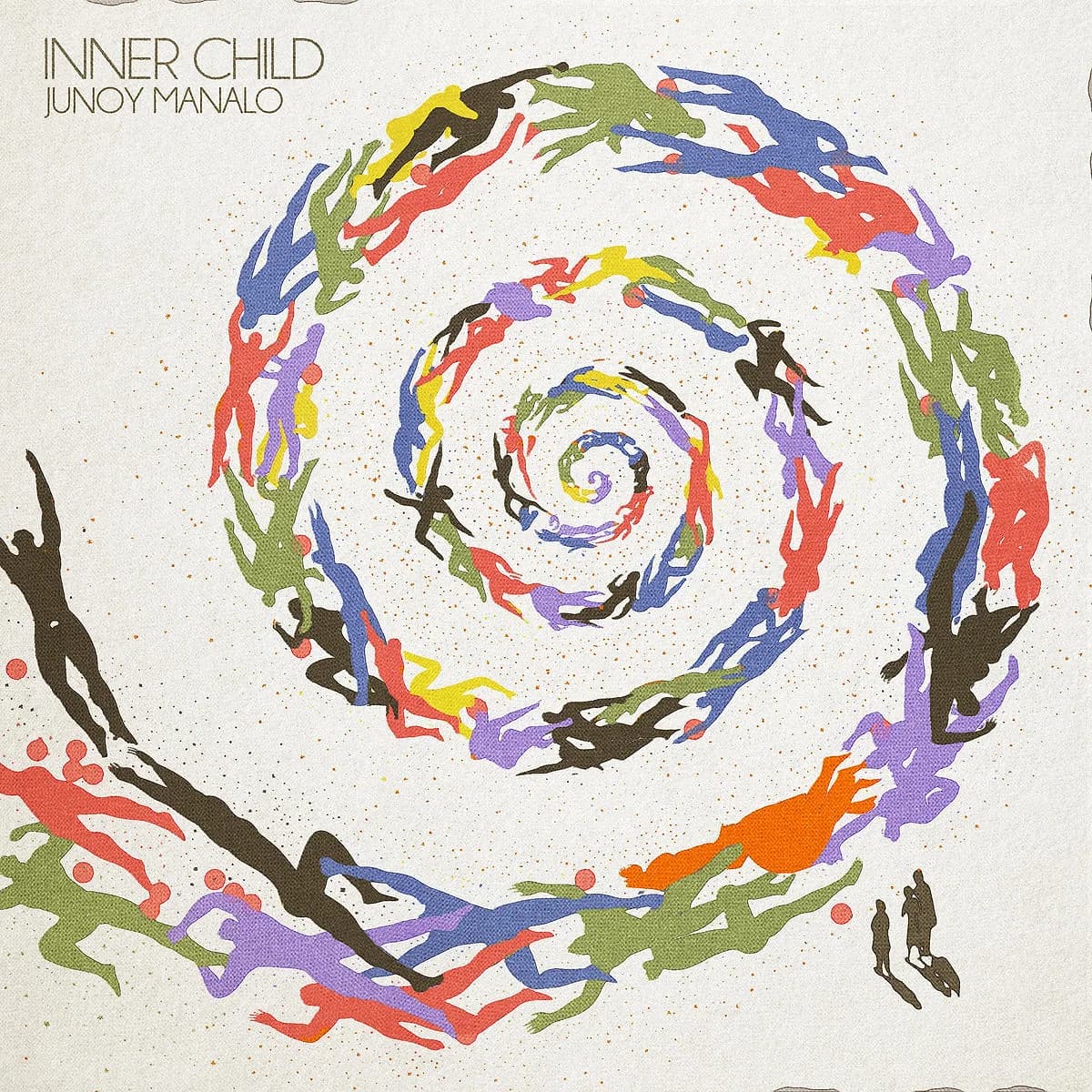
The Philippines' version of this story is smaller and scrappier. Manila producer Junoy Manalo self-released Inner Child, six tracks of warm-chord, live-feeling deep house, on Bandcamp and SoundCloud on June 8, with no label involved at any stage. Loopliner covered the record, closer to a late-bar set than a peak-time weapon, grooves built for dancers rather than algorithms. No deep house scene in the region looks the same twice. Singapore has an archive, Bangkok has a collective booking real rooms, Manila has one producer doing it alone.
FAQ
What BPM is deep house?
Roughly 110 to 125 BPM, slower than the tech house and big-room house styles it's often confused with.
Who invented deep house?
Larry Heard, recording as Mr. Fingers in Chicago, is the genre's widely credited pioneer. His 1985 "Mystery of Love" and 1986 "Can You Feel It" set the template: jazz chords, a warm melodic bassline and house's 4/4 kick, built on a Roland Juno-60 and a TR-909.
Is deep house the same as afro house?
No. Deep house leans on jazz-derived chords, while afro house, which emerged in 1990s South Africa, is built on South African rhythms with instruments like saxophone, piano and synthesizer.
Where can I hear deep house in Southeast Asia?
Bangkok's Deep House Thailand runs the region's most active live calendar, with its next takeover at APT 101 on October 31. Manila's Junoy Manalo and Singapore's reissued Case Woo record cover the independent-release and archival ends of the same scene.
Read Next
Stay in the loop
Asian electronic music, weekly