
Thailand Still Sells Legal Weed With a Doctor's Prescription, While the Rest of Southeast Asia Bans It Outright
Thailand's weed shops are still open, but a 2025 law now requires a doctor's prescription to buy legally, and the rules get far stricter the moment you cross into a neighboring country.
Thailand decriminalized cannabis in June 2022, and weed dispensaries opened across Bangkok's tourist strips as fast as landlords could rent them out. Three years on, the shops are still there. What's changed is what happens next: since June 2025, buying from one of them legally requires a doctor's prescription, and carrying what you bought across the border into Malaysia or Singapore can still get you sentenced to death.
Southeast Asia's clubbing circuit runs through six very different legal regimes on this one substance, and the gap between the loosest and the strictest is about as wide as it gets anywhere in the world. Six countries, six different answers to the same question.
Thailand: Legal, But Only With a Prescription Now
Thailand decriminalized cannabis in June 2022, and for three years Bangkok ran an almost entirely unregulated weed economy worth an estimated $1 billion a year, with dispensaries opening on nearly every tourist strip in the city. That ended on June 25, 2025, when Public Health Minister Somsak Thepsuthin issued an order reclassifying cannabis flower as a controlled herb under traditional medicine law, days after the Bhumjaithai Party, the party that had championed legalization, withdrew from the ruling coalition over its handling of a border conflict with Cambodia.
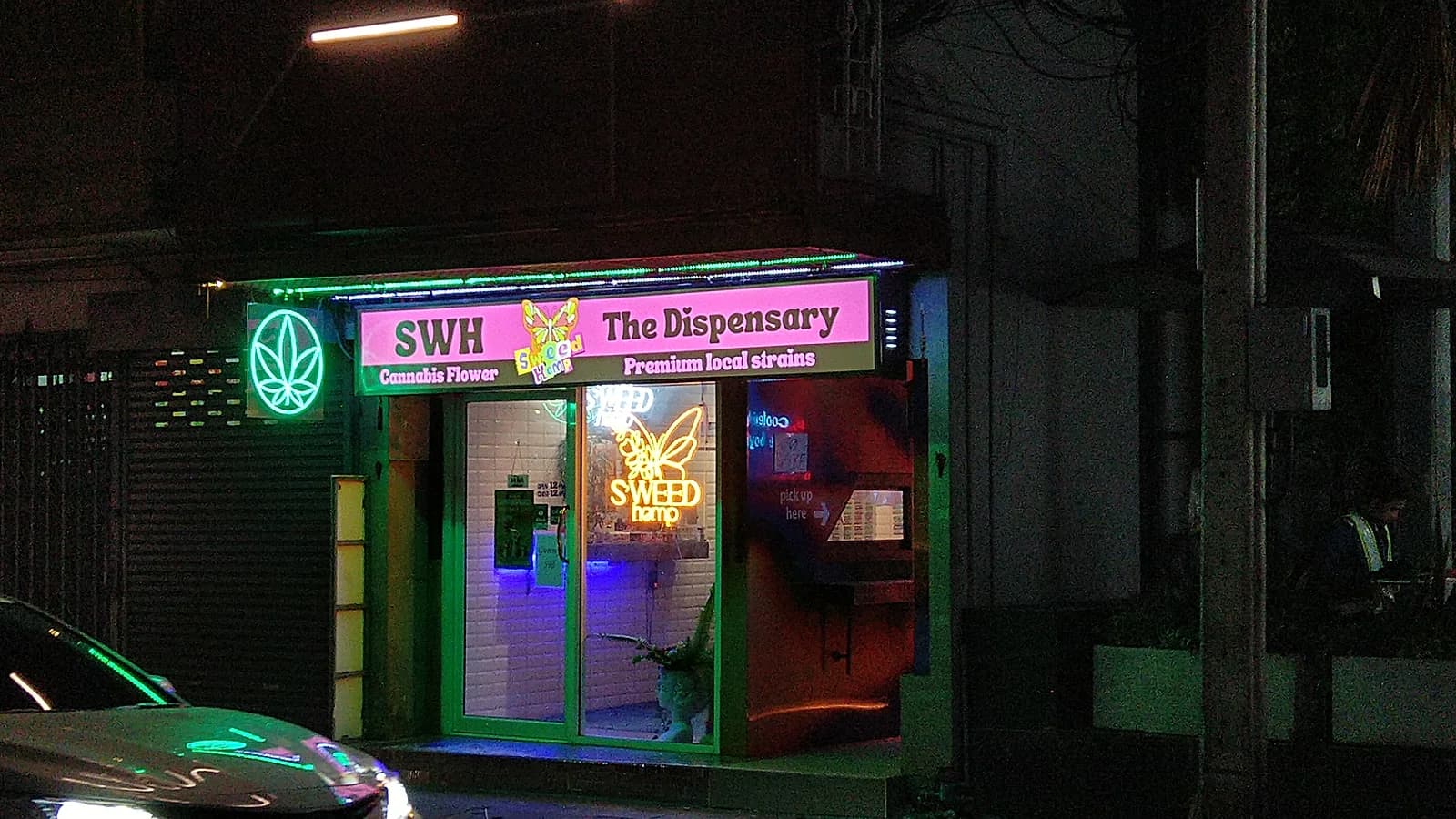
The new rules require a prescription from a licensed Thai practitioner, valid for 30 days, with no recognition of foreign medical paperwork. Buying, carrying or smoking without one carries a fine of up to 25,000 baht (roughly $700) and up to three months in jail, tourist status included. The licensing crackdown has been brutal on the industry itself: of the 18,433 shops operating before the order, 7,297 have shut down for failing to meet the stricter renewal requirements, leaving 11,136 still open as of February 2026, with another 4,587 licenses expiring later this year. January 2026 rules went further, requiring every remaining dispensary to keep a certified traditional-medicine practitioner on site.
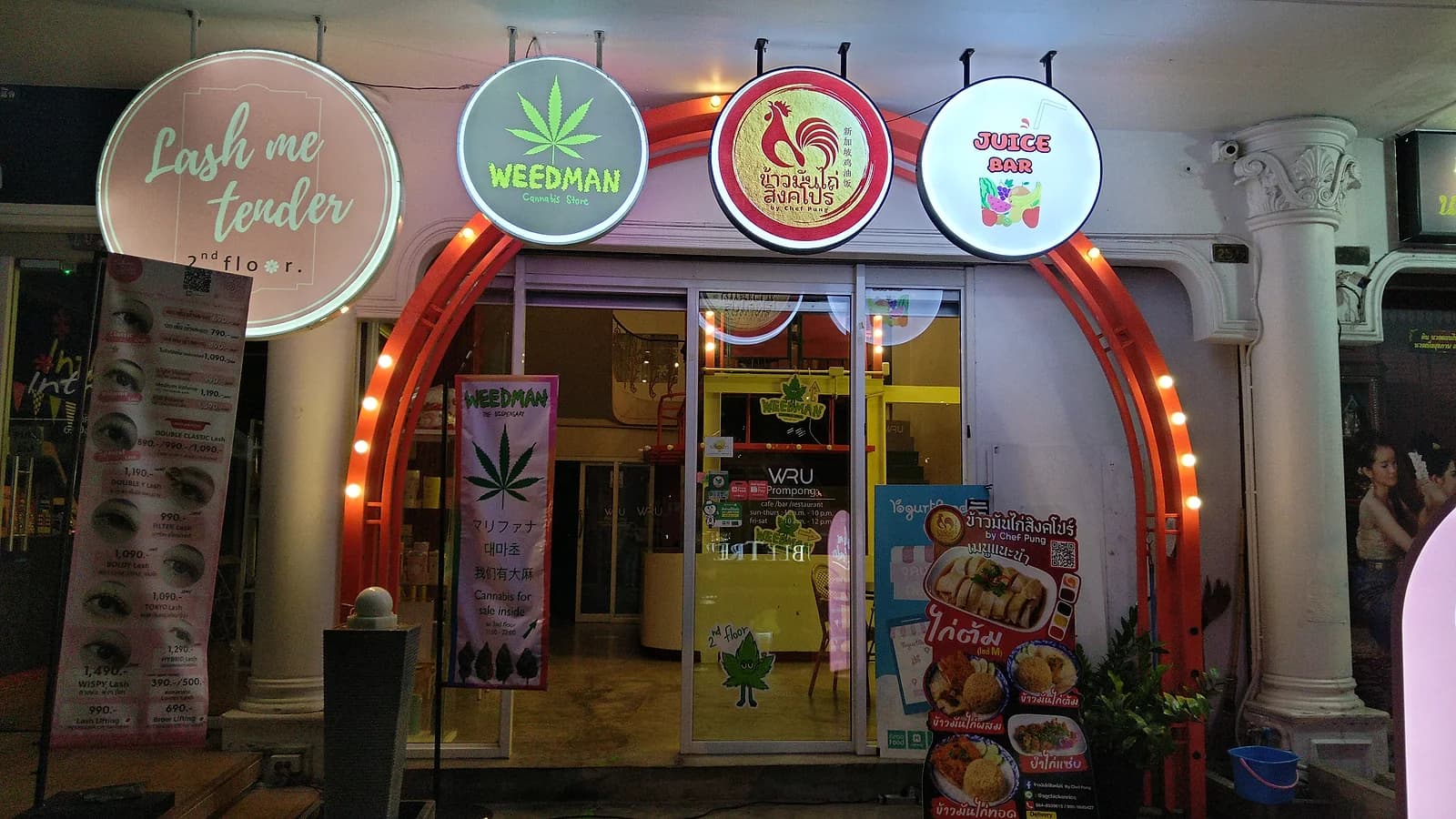
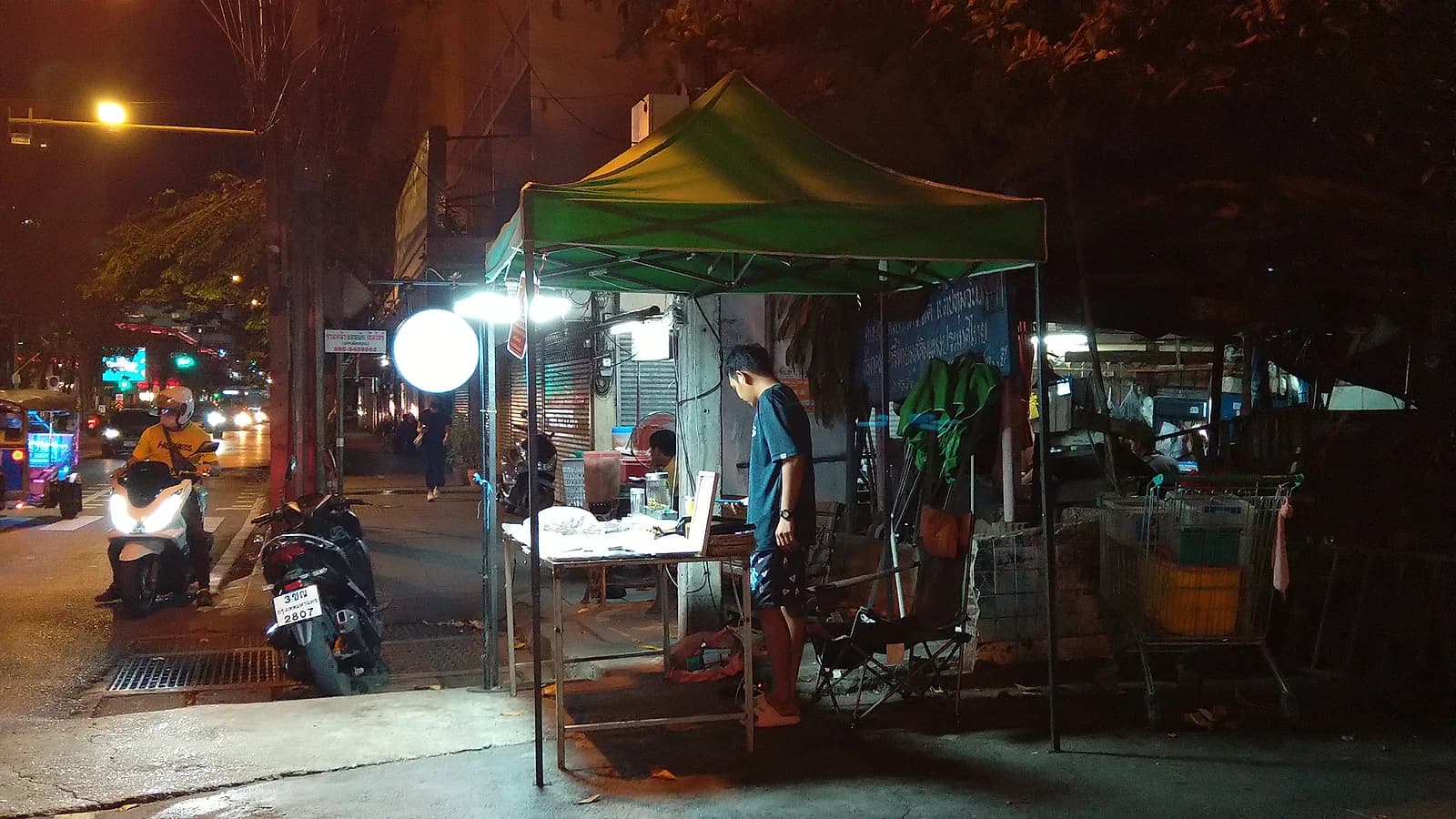
The shops that survived look nothing like the makeshift roadside tents that defined the 2022-2025 boom: a tarp, a scale, a lockbox, run by whoever could afford a folding table and a sign. Most of those informal operators had no prescription-dispensing model to fall back on, and they make up most of that 7,297. Thailand's government hasn't fully settled where this ends, either: a deputy prime minister said in July 2026 the country would work toward legislating medical cannabis properly, rather than leaving it to ministerial orders, suggesting the current rules aren't the final word.
Singapore and Malaysia: Trafficking Can Still Mean the Gallows
Cross the Causeway or fly into Changi with what was legal in Bangkok and the law changes completely. Singapore's Misuse of Drugs Act sets a mandatory death penalty for importing or exporting more than 500 grams of cannabis; 330 to 500 grams carries up to 30 years and 15 strokes of the cane. This isn't theoretical: Tangaraju Suppiah, a 46-year-old Singaporean on death row since 2018, was hanged on April 26, 2023, for abetting the trafficking of roughly a kilogram of cannabis, twice the mandatory threshold.
Malaysia is only slightly less absolute. Possession of more than 200 grams is presumed trafficking under the Dangerous Drugs Act 1952. A 2023 law removed the mandatory death sentence for it, but a judge can still impose one; 30 to 40 years and caning is the alternative, not a guarantee. A de facto execution moratorium has held since 2018, but the law itself hasn't softened.
Indonesia: One Vape Cartridge, Twenty Years
Indonesia's Narcotics Law treats every part of the cannabis plant as a Group I narcotic with no threshold for personal use. Possession or cultivation carries four to twelve years, with anything over a kilogram or five plants exposing someone to life imprisonment, and large-scale trafficking up to the death penalty. In May 2026, a 53-year-old Australian woman was arrested in Lombok with 59 milliliters of cannabis vape liquid she said she used for knee pain and depression. She now faces up to 20 years and a fine of roughly $111,000. "She must comply with the laws and regulations in force in our country," the arresting narcotics officer, I Nyoman Diana Mahardika, told reporters. "As for narcotics such as marijuana, it must not be possessed, used, or traded within our jurisdiction." Lombok is an hour's flight from Bali's club strip in Canggu and Uluwatu, and the law doesn't change between the two islands.
The Philippines and Vietnam: No Medical Carve-Out at All
The Philippines' Comprehensive Dangerous Drugs Act of 2002 puts cannabis in the same schedule as heroin and methamphetamine. Possession, cultivation or distribution can carry life imprisonment and fines from 500,000 to 10 million pesos for larger quantities; medical cannabis bills remain stuck in committee as of early 2026.
Vietnam offers no medical exception either. Trafficking under the penal code can carry life imprisonment or the death penalty, with fines up to 500 million dong, roughly $19,000. Nothing about the nightlife scenes in Hanoi and Ho Chi Minh City changes that math.
What This Actually Means on a Night Out
Staying inside Thailand, the practical risk is smaller than the headlines suggest: a tourist who buys from a licensed shop without a prescription mostly gets an awkward refusal, not a raid, and the fines for simple possession land closer to a speeding ticket than a felony. The risk jumps the moment anything crosses a border. A joint or a vape cartridge tolerated in a Bangkok club becomes a trafficking charge the second it reaches a Changi or Woodlands checkpoint, and Indonesian customs at Denpasar or Lombok treats a near-empty vape pod the same way it treats a kilo. Southeast Asia's clubbing map runs from Bangkok to Bali to Singapore in a single long weekend now. The cannabis laws don't travel with you.
This is a companion piece to Loopliner's guides to Thailand's loosened alcohol hours, the region's vaping bans and Thailand's visa and nightlife rules for clubbing tourists.
FAQ
Is weed legal in Thailand in 2026?
Only with a prescription. Since June 25, 2025, cannabis requires a valid prescription from a licensed Thai practitioner, good for 30 days. Buying or smoking without one carries a fine up to 25,000 baht and up to three months in jail.
Can tourists get a cannabis prescription in Thailand?
Only from a Thai-licensed practitioner. Foreign medical prescriptions carry no legal recognition in Thailand.
What happens if you're caught with cannabis in Singapore?
Importing or exporting more than 500 grams carries a mandatory death penalty under Singapore's Misuse of Drugs Act. Singapore executed a citizen for trafficking roughly a kilogram of cannabis in April 2023.
Is cannabis legal anywhere else in Southeast Asia besides Thailand?
No. Singapore, Malaysia, Indonesia, the Philippines and Vietnam all treat it as a prohibited narcotic with no medical carve-out, with penalties from decades in prison to the death penalty for trafficking quantities.
Can you bring cannabis bought in Thailand into a neighboring country?
No. Crossing into Malaysia or Singapore with cannabis, even a small amount, is treated as trafficking, and Indonesian customs applies the same strict standard to vape liquid as to flower.
Read Next
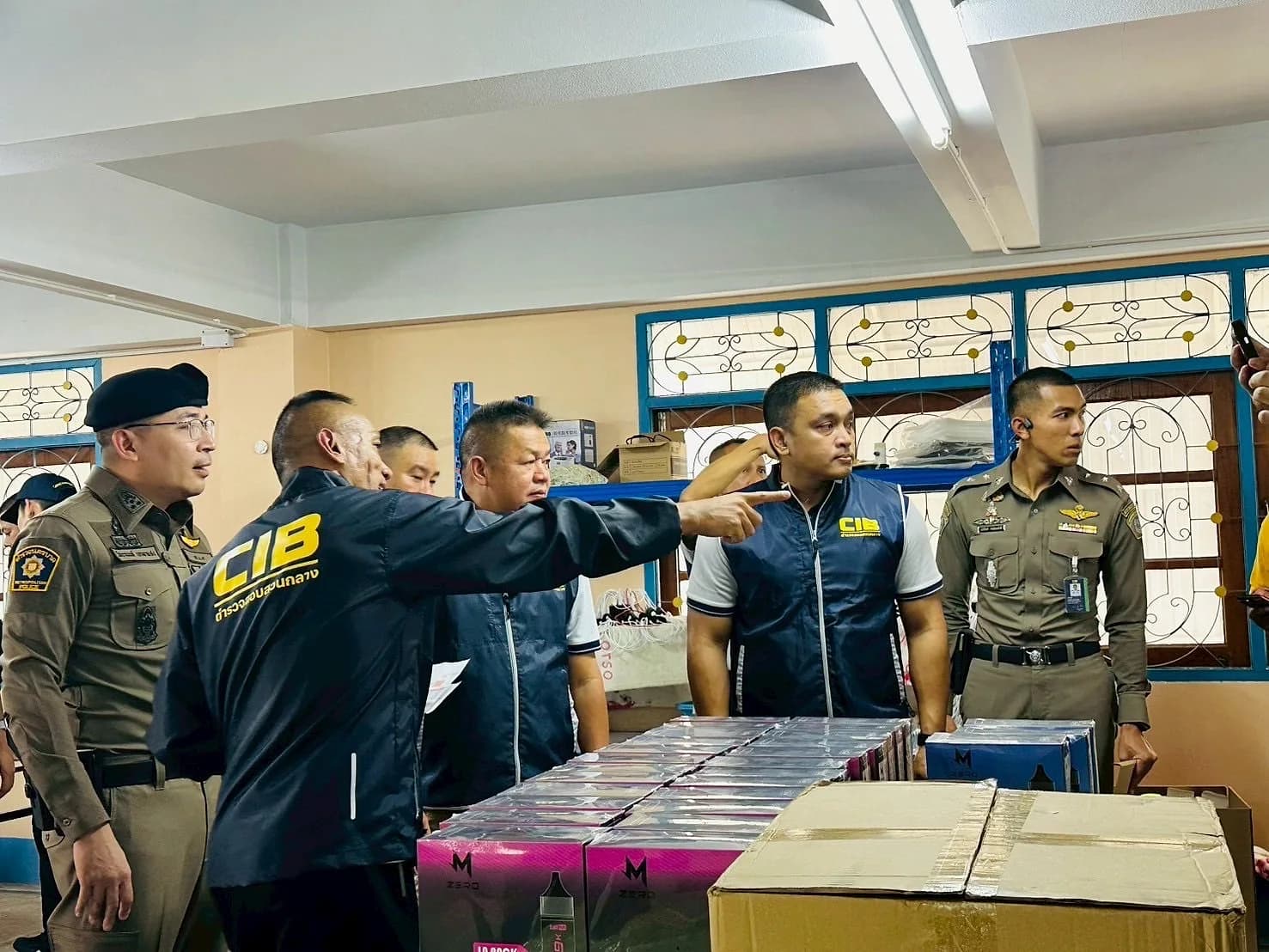
Thailand and Vietnam Ban Vaping Outright: What You Can (and Can't) Smoke in Southeast Asia's Clubs
Thailand Scrapped Its Decades-Old Afternoon Alcohol Ban: What You Can (and Can't) Legally Drink Across Southeast Asia
Bangkok's Underground House Scene Explodes: Hard In Zight 3 Festival Brings Raw Hardstyle Energy to AVVE Bar in March 2026
Stay in the loop
Asian electronic music, weekly