
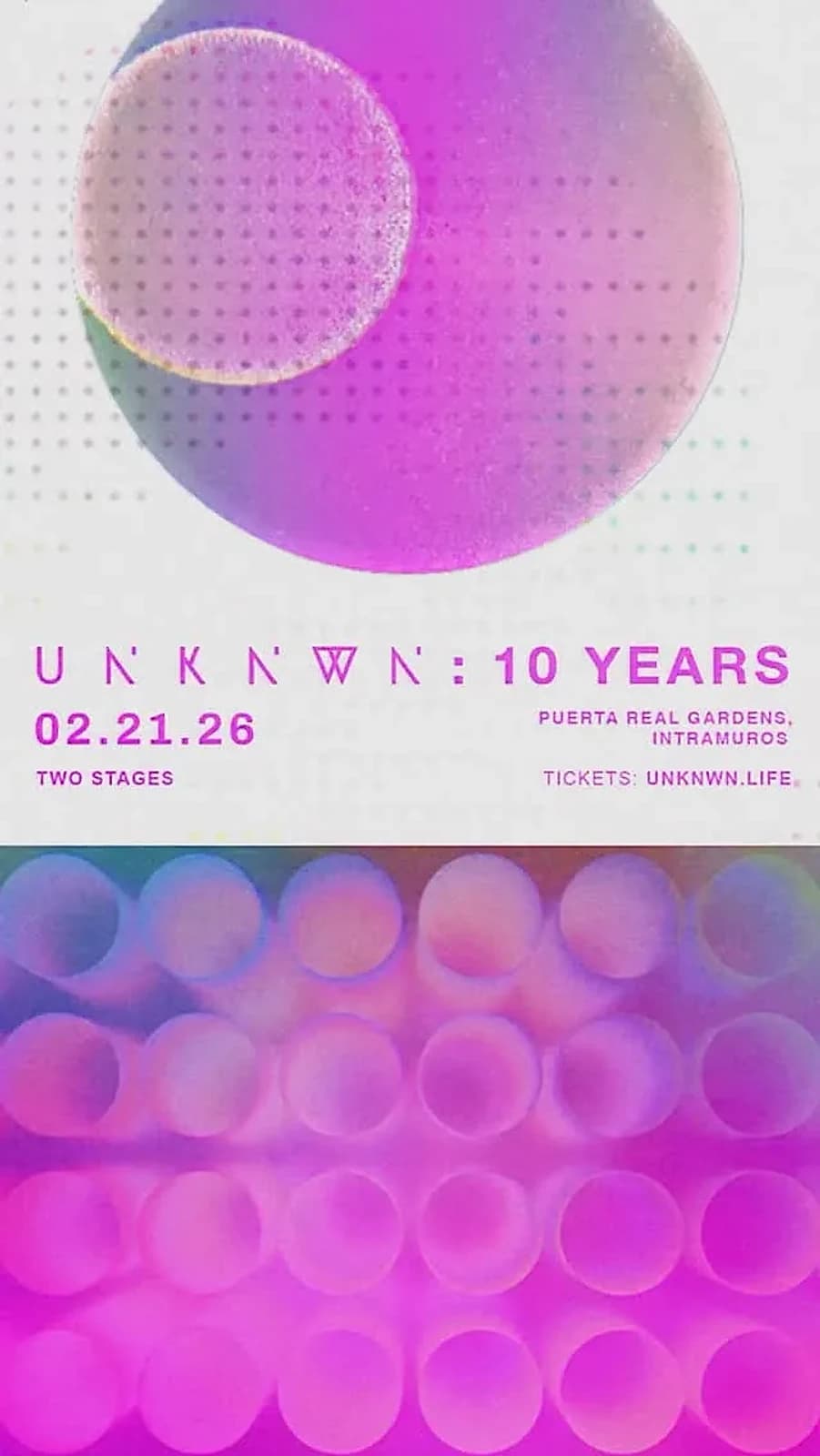
UNKNWN Turns Ten: The Party That Outlasted Half of Manila's Clubs
While XX:XX, TIME, Today x FUTURE and Pineapple Lab all shut their doors, one Manila collective kept moving from room to room until it didn't need a room at all. Ten years and one 16-hour anniversary party later, UNKNWN is the closest thing the city's underground has to an institution.
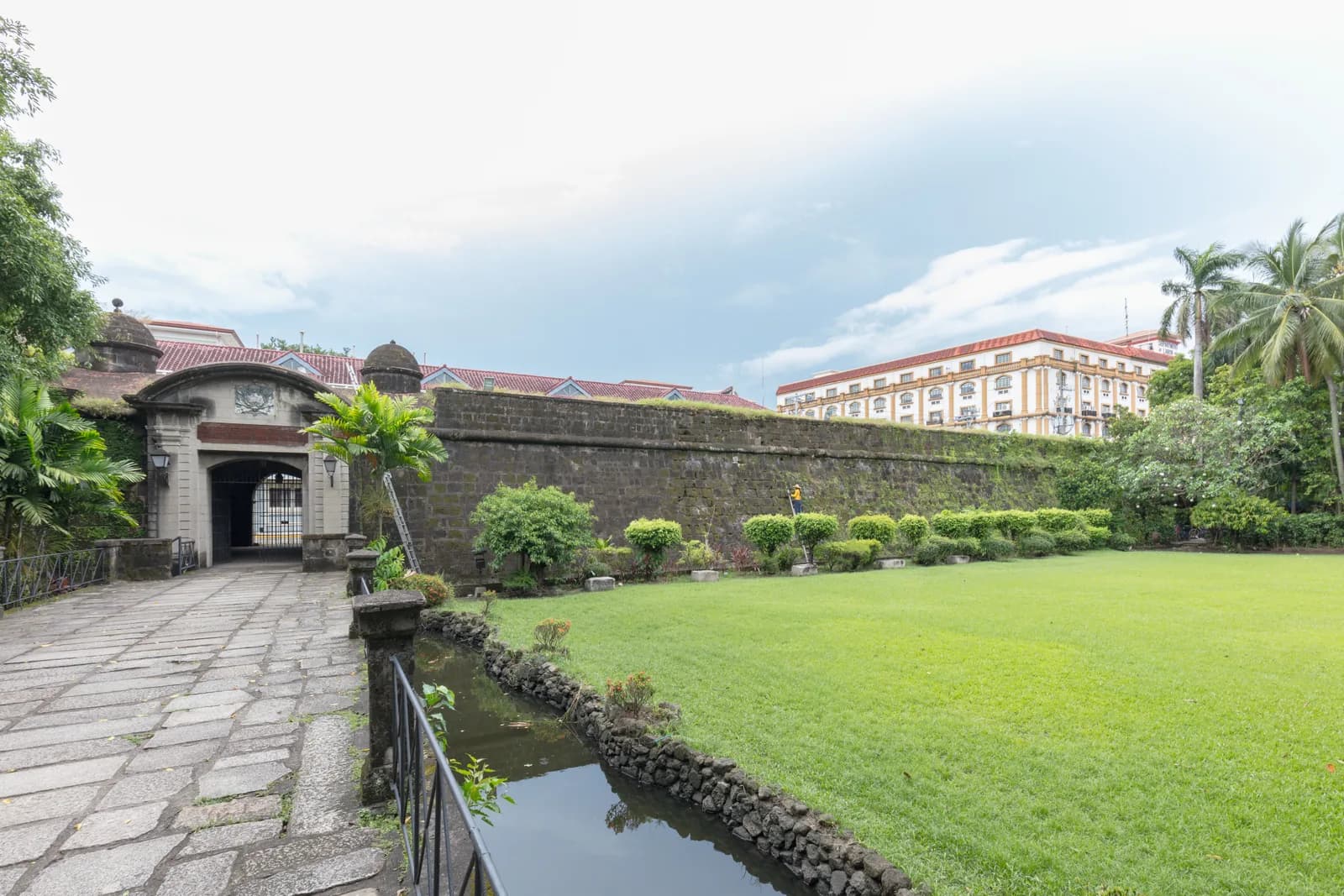
At one in the afternoon on February 21, a sound system inside the old Spanish walls of Intramuros switched on and didn't switch off again for sixteen hours. Two stages, fifteen acts, a crowd that came for the afternoon sun and stayed through the humidity and into the small hours. By the time it wrapped at five the next morning, UNKNWN had thrown its tenth anniversary party at Puerta Real Gardens, the walled-city venue it now calls its unofficial home.
Ten years is a long time for any independent party crew to survive, and it's an especially long time in Manila, where the underground's actual real estate keeps disappearing under it. XX:XX is gone. TIME is gone. Today x FUTURE is gone. Pineapple Lab, one of the city's few dedicated experimental-arts spaces, is gone too. "All of our actual community spaces were closing down, being purchased by monopolies," the organizer Jorge Wieneke told Bandcamp Daily earlier this year, describing a scene that has had to relearn how to throw a party roughly once a decade. UNKNWN never had a lease to lose in the first place, and that turned out to be the whole point.
Built With No Room to Build It In
The collective started, by its own account, the way most good DIY scenes start: because nobody else was going to do it. "If we wanted it to exist, we had to build it ourselves," is how Emel Rowe, the person who's fronted UNKNWN since day one, has put it. The early parties ran out of secret, changing locations rather than a fixed club, a survival tactic as much as an aesthetic. Manila's underground has never had the luxury of a Berghain-style permanent room; it has had a rotating cast of warehouses, bars and gardens that host a scene for a year or two before a landlord, a permit office or a noise complaint ends it.
What's notable about UNKNWN a decade on is that it never fully gave up the nomad instinct even after it found a semi-regular home. Its eighth-anniversary show, in February 2024, ran at Dancing Queen inside Makati Cinema Square, an eight-hour set from 8pm to 5am with Emel Rowe on the decks alongside XI, JAV/ and Samantha Nicole, plus guests flown in from Japan, Australia, China, Vietnam and the US. Two years later the tenth-anniversary show doubled the runtime and moved to Intramuros, the old walled city that used to host state functions for Spanish governors-general and now, for one Saturday a year, hosts a rave.
Locals Don't Open, They Play
The thing that separates UNKNWN from a lot of Southeast Asian party series chasing the same handful of European bookings is where it puts its own artists on the bill. This year's ten-year lineup, co-presented with Twelve Points Records, put local names Jav/ and Thirstkid in primetime slots next to the international guests rather than sandwiching them into the dead hour before doors properly open. That's a deliberate house rule, not a courtesy booking: on UNKNWN's own telling, the point was never genre purity or a big-name closer, it was "energy, intention, and whether it actually moves people." It's the kind of line that would sound like marketing copy from most promoters. From a crew that's been running the same philosophy since a decade before anyone was paying attention, it reads more like a mission statement that happened to work.
The track record backs it up. Over the years UNKNWN has pulled in Four Tet, Jamie XX, Breakbot and Tim Sweeney, names that don't usually show up on a Manila flyer, let alone one thrown by a crew without a home venue. It's the same city where Alinep's techno just landed on a Berlin label, proof that whatever UNKNWN and the rest of the scene have been building for a decade is starting to travel outward, not just survive at home. That's the trick of it: international bookings gave the parties enough pull to keep paying for the next one, and the next one kept the door open for whichever local producer needed the slot more than the headliner did.
Rebuilding, With More Intention
None of this makes Manila's underground an easy scene to run a party in. Emel Rowe has been blunt about the obstacles that haven't gone away in ten years: permit friction, legal grey areas around underground and queer events specifically, and a general cultural unfamiliarity with what a rave even is outside of a commercial festival context. The assessment, in Rowe's own words, is that the city's electronic scene is "rebuilding, with more intention," which is a more honest way of putting it than "back to normal." There isn't a normal to go back to. There's a rotating cast of collectives, queer nights like CHURCH and Elephant, techno crews like Danza Organika and Kaput Systems, all learning the same lesson UNKNWN learned first: don't build your identity around a room, because the room won't last. It's the same lesson Cambodia's underground promoters in Phnom Penh have had to learn from a much earlier starting point, and the one Hanoi's scene relearned this year when it lost its most important club and simply found new ones.
What happens at year eleven is genuinely unclear, and UNKNWN doesn't seem interested in pretending otherwise. No venue announcement has followed the February party, no fixed home has been claimed. Given the last ten years, betting on a fixed address would be the surprising move. The safer bet is that whenever the next party lands, it will again put a local producer next to a flown-in headliner, in whatever garden, warehouse or basketball court happens to still have its doors open that month.
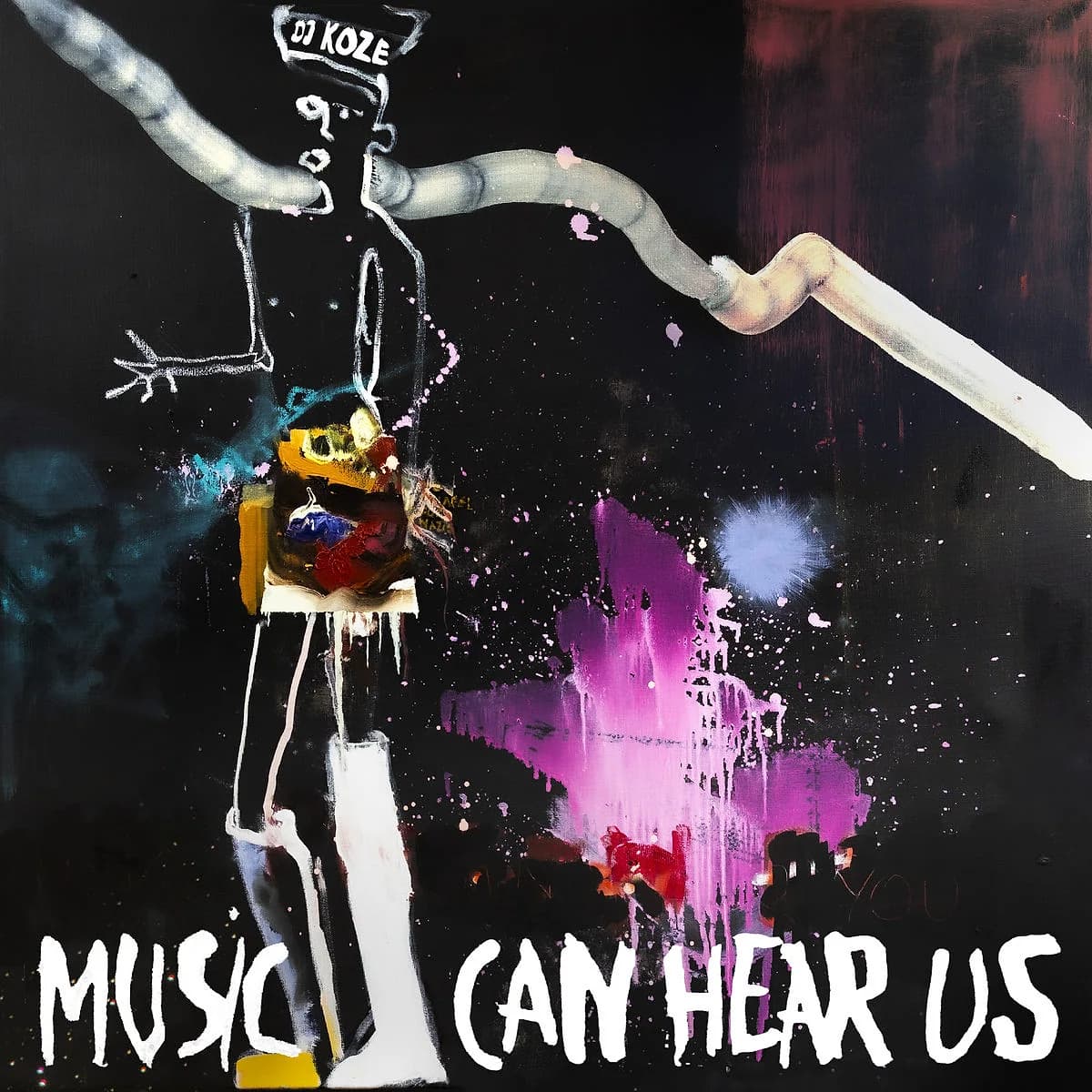
Cover: official key art for UNKNWN's 10 Years anniversary party, via UNKNWN's Facebook page.
Read Next
Stay in the loop
Asian electronic music, weekly