
Hanoi's Most Important Club Is Gone. The Underground Found New Rooms Anyway
Savage, the club that built Hanoi's house and techno scene, closed for an opera house. A nitrous-oxide crackdown followed, and Equation Festival didn't survive the year. The scene didn't stop, it just got harder to find.
On New Year's Eve, the club that built Hanoi's house and techno scene threw itself a funeral. Savage's residents Di Linh, Ouissam and Harry James played through to sunrise inside a converted French villa in Tay Ho, and by the time the sun came up on January 1st, the countdown wasn't really to a new year. It was to a bulldozer. The government wants the site, a stretch of the Quang An Peninsula backing onto West Lake, for a new opera house and cultural park spanning 44.1 hectares. Savage is already off the map.
Savage opened in 2016, the project of French expats Samy, Ouissam and Julie, who'd cut their teeth booking and label-managing in Hong Kong. It moved in 2020 to that Tay Ho villa, a three-story former Angolan embassy building with a garden, two rooms known as the Anteroom and the Red Cube, and its own record shop and internet radio station, Pond Records. For most of a decade it was the first address any touring DJ landing in northern Vietnam asked for. "We would love to reopen a third time in a new location," Ouissam told Mixmag Asia when the closure order came down, "but finding the right space in Tay Ho is becoming difficult."
A Ban on Balloons, and Then a Lot More
Savage's closure would have stung on its own. Instead it landed in the middle of something bigger. A nationwide ban on nitrous oxide balloons took effect in mid-2025, and the policing around it has run well past balloons: officers now carry out on-site drug testing at legal, licensed clubs, without needing to show cause first. Get caught with the wrong thing in your pocket in Hanoi right now and you're looking at deportation if you're foreign, prison if you're not.
The effects hit the calendar fast. Equation, the festival Savage's own team spun off in 2017, first at Son Tinh Camp in Ba Vi and then from 2022 at a limestone cave at Mo Luong in Hoa Binh province, found the cave unavailable for its usual April dates. In February, organisers announced a fallback at Unmute, with a lineup running to Clarisa Kimskii, Roi Perez, Sarayu and Di Linh. By summer, Huck Magazine was reporting the festival had been cancelled outright, "due to pressure from authorities." Di Linh's read on it, given to Huck: its future is "uncertain." Outlandish, the other fixture on the calendar, fared little better. Its 2026 edition shrank from a festival at Gam Troi valley to what Huck called "less festival, more therapeutic retreat," fewer than 100 people split across two boutique homestays instead. Organiser Matt summed it up: "When you take away people's balloons, they still want to dance, let loose, and be free for however long they're permitted."
The Party Moved. It Didn't Stop.
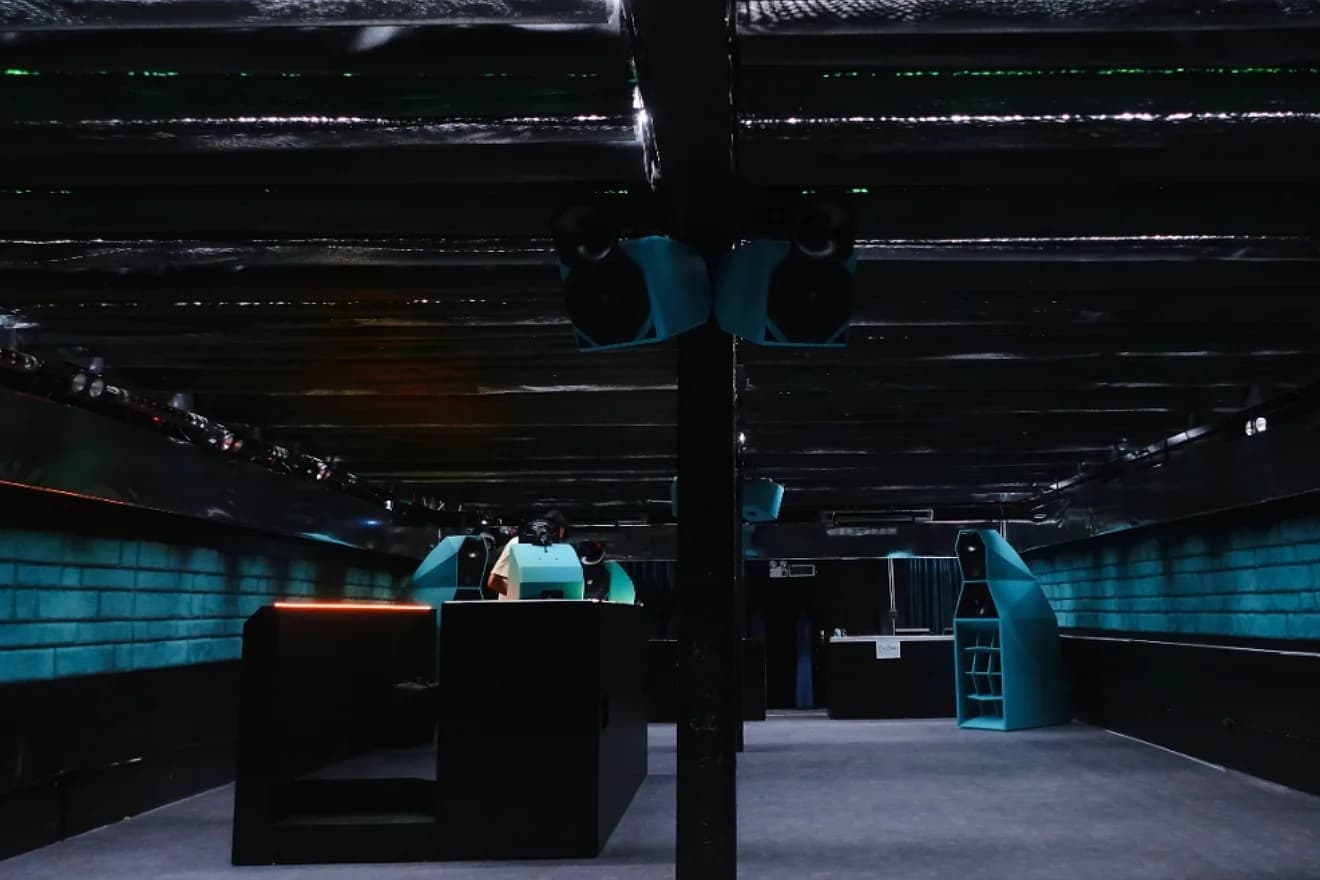
What's actually interesting about Hanoi right now isn't the closures, it's where the crowd went after. Unmute, a 300-capacity room built into a working 24-hour fruit and vegetable market in Tay Ho, opened in late 2023 with a locally built four-way sound system, and it hosts serious names: Huck's reporting caught DJ Nobu playing there a week before Jeff Mills was booked to follow, back-to-back bookings in a room most people would walk straight past. It's also the club that's now absorbing whatever's left of Equation. A short ride away, GoodTime Burger, a burger counter that doubles as a DJ booth on weekends under booker TaoFu, has turned into the kind of place a block party gets thrown together on a few days' notice. "Through these activities," TaoFu told Huck, "we aim to build, preserve, and nurture underground culture while supporting local and international artists based in Hanoi." Over by the lake, HUM Studios, founded by Italian-born Yanes and his partner A.lien, stacks a tiny ground-floor bar under a first-floor micro-club and an upper-level production studio, betting on a slower build than a single big room ever offered.
None of these places are trying to be the next Savage. They're smaller, quieter, and in Unmute's case, hidden behind an unmarked parking garage entrance inside a produce market. That might be exactly the point right now.
What's Left
Hanoi's underground has been here before, in a smaller way. Tri Minh, the closest thing Vietnamese electronic music has to a founding father, ran the city's first electronic festival back in 2008 off the back of a jazz background and a Conservatory education, long before anyone here was thinking about opera houses or balloon bans. The generation playing now, Di Linh included, came up through Savage during the pandemic years and has since taken residencies as far off as The Observatory in Ho Chi Minh City. What's changed is the ceiling: no cornerstone venue, no guaranteed festival weekend, a police presence that wasn't part of the deal five years ago. It's a version of what's already played out in Phnom Penh, where a scene had to rebuild itself smaller and more careful after its own venues got squeezed. Di Linh's assessment, given to Huck Magazine, reads less like a eulogy than a plan. "If we stay together and stick with each other," she said, "we can rebuild."
Cover photo: "Hanoi Night Riders" by Johnragai-Moment Catcher, CC BY 2.0, via Flickr.
Read Next
Stay in the loop
Asian electronic music, weekly