
What Is a Boiler Room Set, and How Do You Actually Get Booked for One?
Boiler Room turned a webcam in a London basement into a global stamp of approval, and getting picked for one still isn't a matter of sending a good mix to an inbox. This explains what the platform is actually looking for, and the two real routes artists have used to get on it.
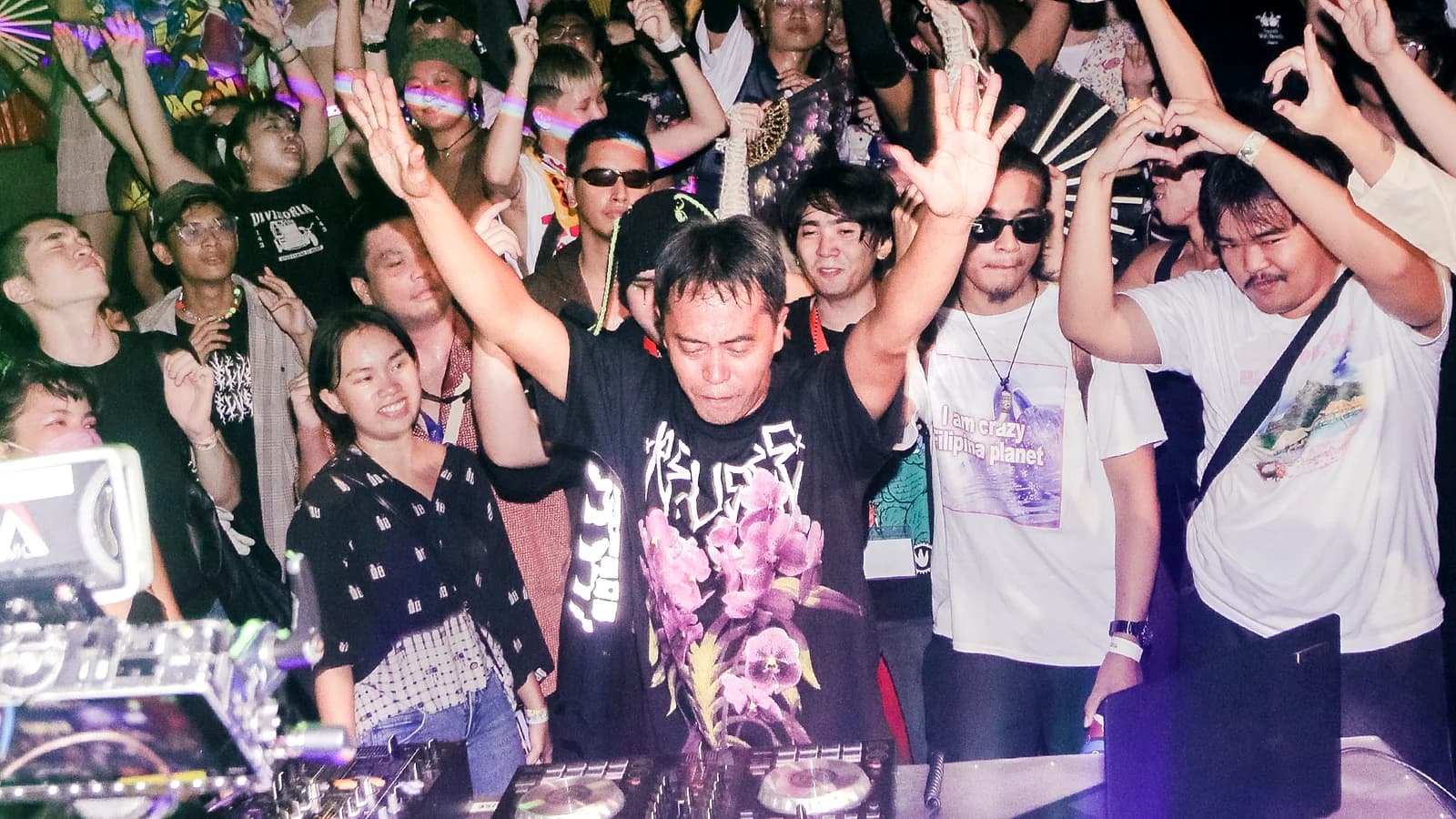
DJ Love has orchids tucked into his shirt and both arms in the air, and there is no barrier between him and the crowd pressing against his decks. That single frame, shot in April 2023, is the entire pitch of a Boiler Room set: no stage, no photo pit, just a camera close enough to catch sweat. It's also the most-viewed Boiler Room recording to ever come out of the Philippines, and it exists because a Manila collective won a grant application, not because a talent scout discovered a hidden genius.
What a Boiler Room Set Actually Is
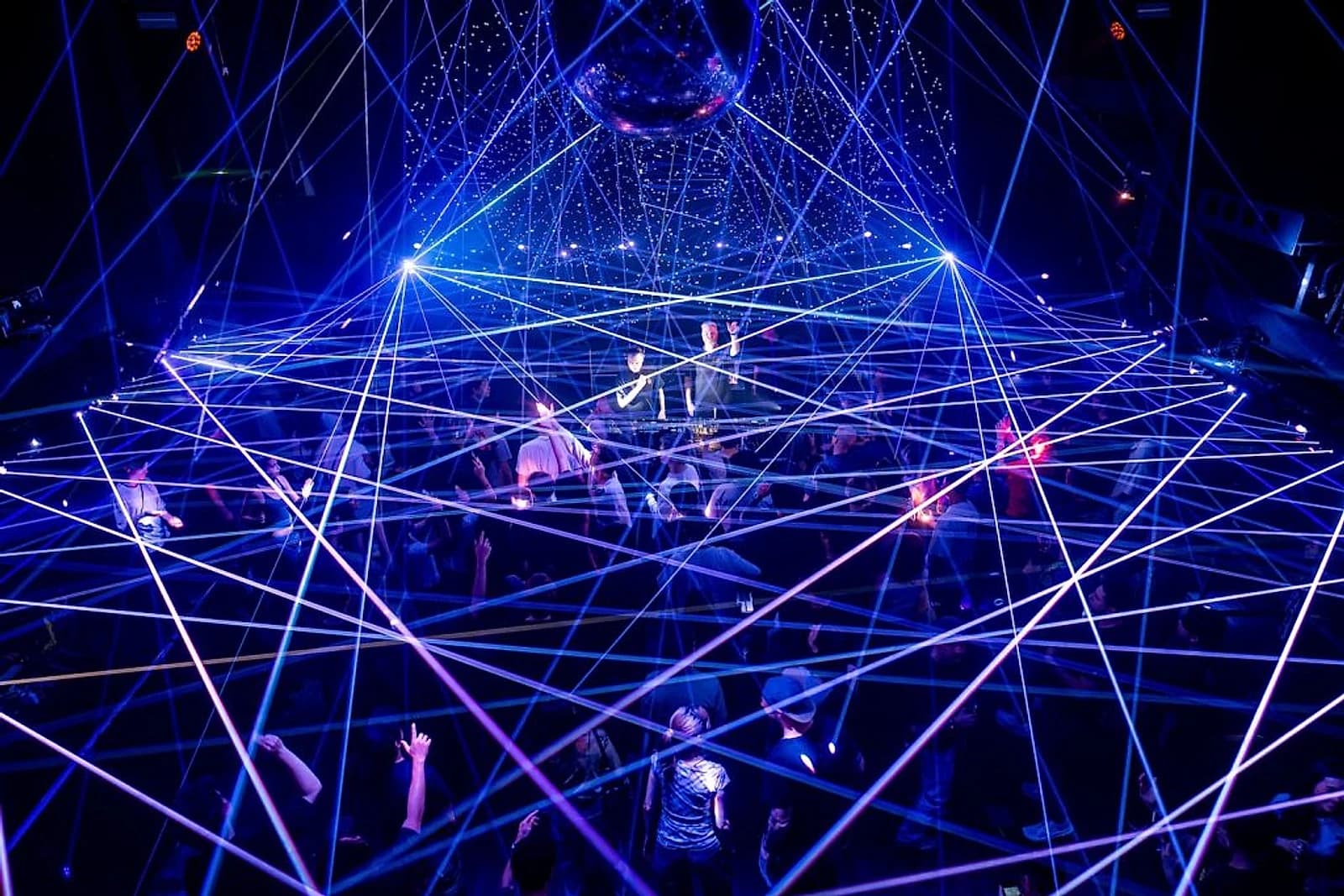
Boiler Room started in March 2010 as a webcam duct-taped to a wall in a Hackney basement, an idea from Blaise Bellville and Thristian Richards to livestream a DJ mix for a small magazine. It worked because it stripped away everything a normal club broadcast has: no VIP shots, no drone footage of a mainstage, just a DJ hemmed in by however many people fit in the room, filmed at eye level. Within a year it had spread from London to Berlin, Los Angeles and São Paulo. By the mid-2010s it had widened past house and techno into hip hop, jazz and classical, and it had launched its own festival in Peckham by 2019.
It is not a scrappy blog project anymore. DICE, the ticketing platform, bought Boiler Room in 2021, and in January 2025 it changed hands again to Superstruct Entertainment, the festival group owned by the private equity firm KKR. The platform has now filmed more than 8,000 performances across over 5,000 shows in more than 200 cities. A Charli XCX set in February 2024 pulled in more than 25,000 RSVPs, the biggest in the platform's history. The scale changes what a booking is worth: getting a Boiler Room booking means getting distributed by a company that also owns some of the largest festival brands in Europe, not a webcam and a mailing list.
The Official Route: Broadcast Lab
Boiler Room does have a formal application process, and it is built for pitching a whole show concept, not for an individual DJ submitting themselves for a slot. The program is called Broadcast Lab, a recurring open call (past editions have run at least into the double digits) for musicians, collectives and curators to pitch an entire show concept, not just a mix. Boiler Room's own language for what it wants is specific: proposals that prioritise "underrepresented artists, marginalised communities & forward-thinking collaborations," treated as what the platform calls a 360 degree activation, weighing the whole broadcast format, not just who's on the lineup. Winning applications have been funded with up to £10,000, plus in-kind production support and a guaranteed release across Boiler Room's own channels. Applications are judged internally by Boiler Room's team, and deadlines close for each round, so a submission has to land inside an open window, not whenever an artist happens to be ready.
This is exactly the route that put budots, the Filipino dance genre born from remixed found sounds and karaoke tracks, on Boiler Room's platform at all. In April 2023, the Manila-based Manila Community Radio collective won a Broadcast Lab grant and used it to build a showcase around the genre rather than around one artist: DJ Love headlined alongside Teya Logos, Libya Montes and five other Filipino selectors. Nobody submitted DJ Love's name to a form. The collective pitched a concept, Boiler Room funded it, and DJ Love got a slot inside somebody else's winning application. London label Eastern Margins signed him not long after, on the strength of a set most of the world would never have seen him play otherwise. We wrote about what came next for budots and Manila's underground scene here.
The Other Route: Get Boiler Room to Come to You
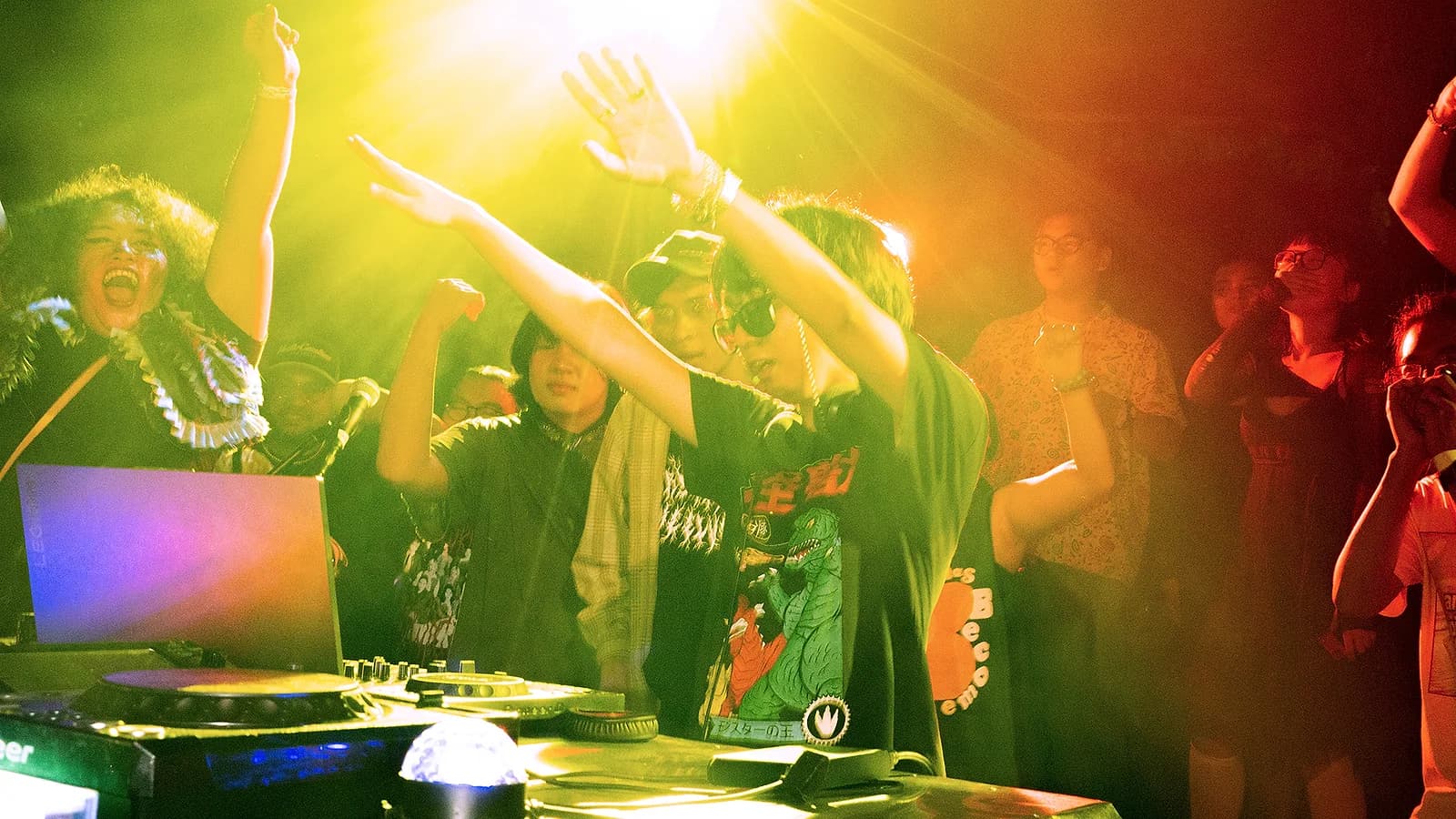
The less official path is older and slower: build a party good enough, for long enough, that Boiler Room's own scouts show up without being asked. Hong Kong's Yeti Out is the clearest case in the region. The crew started in 2010 as a UK student blog, YetiInTheBasement, run by twins Arthur Bray and Tom Bray with Erisen Ali, mostly to talk their way into shows for free. By 2018 they were established enough in Hong Kong that Boiler Room co-branded a party with them inside a former Victorian prison, rescheduled to a Tuesday night after Typhoon Mangkhut wrecked the original date. That one-off didn't turn into a standing partnership right away. It took until May 2025, six and a half years later, for Boiler Room's cameras to come back to Hong Kong for a full broadcast, and the crew running the night was still Yeti Out. We covered the full arc of that comeback here. Nobody at Yeti Out filled out a form for that either; a decade of consistent programming did the work an application would have done for a first-timer.
What This Actually Means If You're an Artist
Two things follow from these cases. First, Broadcast Lab's eligibility line names individual musicians alongside collectives and curators, but the fund is judged on a full show concept, not a bare pitch to play a set, and DJ Love's own slot came from a collective's winning application rather than a personal one. Building a relationship with a promoter or radio collective in your own city that Boiler Room might plausibly fund is still a more realistic route in than applying solo with just a mix. Second, a single co-branded party is not a guarantee of anything ongoing; Yeti Out waited years between its first Boiler Room collaboration and its next one, and spent that time still throwing its own parties regardless of whether the cameras were there. Boiler Room's 8,000-plus performances since 2010 sound like a lot until you remember that's spread across 200-plus cities over fifteen years; for any one scene, a broadcast is still a rare event, not a recurring calendar slot.
FAQ
What is a Boiler Room set?
It's a filmed DJ or live set produced by the platform Boiler Room, shot without a stage barrier so the camera and the crowd are essentially on top of the performer. It started as a single webcam in a London basement in March 2010 and has since covered more than 5,000 shows in over 200 cities.
Who owns Boiler Room now?
Ticketing platform DICE bought Boiler Room in 2021. In January 2025, it was sold again to Superstruct Entertainment, a festival group owned by the private equity firm KKR.
How do you apply to play a Boiler Room set?
The formal channel is Broadcast Lab, a recurring open call for individual musicians, collectives and curators to pitch a full show concept. Winning proposals have received up to £10,000 in funding plus a guaranteed release on Boiler Room's channels, judged internally by the Boiler Room team.
Did DJ Love apply directly to Boiler Room?
No. Manila Community Radio, a Manila-based collective, won a Broadcast Lab grant in April 2023 and built a budots showcase around DJ Love and seven other Filipino selectors. He got his slot through the collective's winning pitch, not a personal submission.
Can a party get a Boiler Room broadcast without applying to Broadcast Lab?
Yes, but it tends to take years of consistent programming first. Hong Kong's Yeti Out crew got a one-off co-branded party with Boiler Room in 2018 and didn't get a full broadcast until May 2025, six and a half years later.
Read Next
Stay in the loop
Asian electronic music, weekly