
What Is Trance, Explained: Armin van Buuren Brought ASOT to Vietnam for the First Time
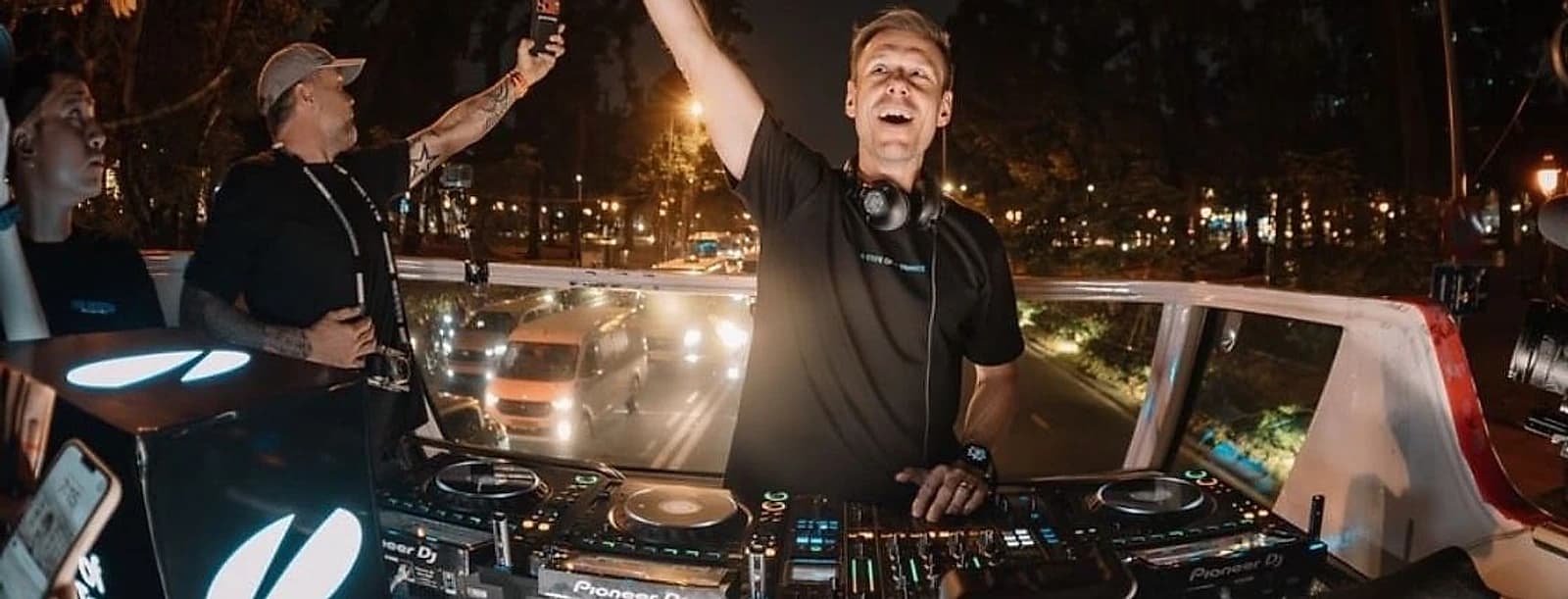
In January, Armin van Buuren surprised Ho Chi Minh City with a DJ set on the roof of a moving bus, teasing A State of Trance's first-ever Vietnam show.
In January 2026, commuters on Ho Chi Minh City's streets found themselves stuck behind a bus wrapped floor to roof in event graphics for A State of Trance, with Armin van Buuren DJing from the upper deck, one arm in the air. He played a short, loud set past the Saigon Bridge while riders pulled out their phones. "This was definitely not on my 2026 bingo card," he said afterward. "Loved it though, and can't wait to be back in June."
He came back in June, and he wasn't the only one. Trance, a genre most of Southeast Asia has treated as a European import for twenty-five years, had its biggest regional moment yet in 2026. Vietnam got its first full A State of Trance festival on June 13. Sanctuary followed on July 18, 2026. It was billed as Malaysia's first home-grown trance festival. Neither country had hosted anything like it before.
What Trance Actually Sounds Like
Trance runs 120 to 150 BPM, built on repeating melodic phrases that build tension over four, six, sometimes eight minutes before releasing it, usually with a breakdown that strips everything back to a single pad or vocal before the drop. It grew out of Frankfurt's Eye Q and Harthouse labels in the early 1990s. DJ Dag Lerner is generally credited with naming the sound, and much of its early direction came from Sven Väth, who brought back ideas from Goa, where DJs were already using psychedelic rock and hypnotic repetition to put beach crowds into something close to an actual trance state.
That Goa lineage split the genre in two. One branch became psytrance: organic, faster, built around an oriental and psychedelic aesthetic, and it's the branch that actually took root in Southeast Asia, through Thailand's quarter-century of jungle and beach parties running from Kanchanaburi to Koh Phangan. The other branch, the one this piece is about, became uplifting and progressive trance: cleaner, more melodic, closer to classical music in its builds, and the sound Armin van Buuren has spent 25 years turning into a global brand through his weekly radio show and podcast, A State of Trance, which first aired on 1 June 2001. The genre's commercial peak was the late '90s and early 2000s; it dipped hard through the 2010s before a partial resurgence around 2017, when underground DJs like Nina Kraviz started slipping trance tracks into otherwise techno sets.
Vietnam Got the Festival First
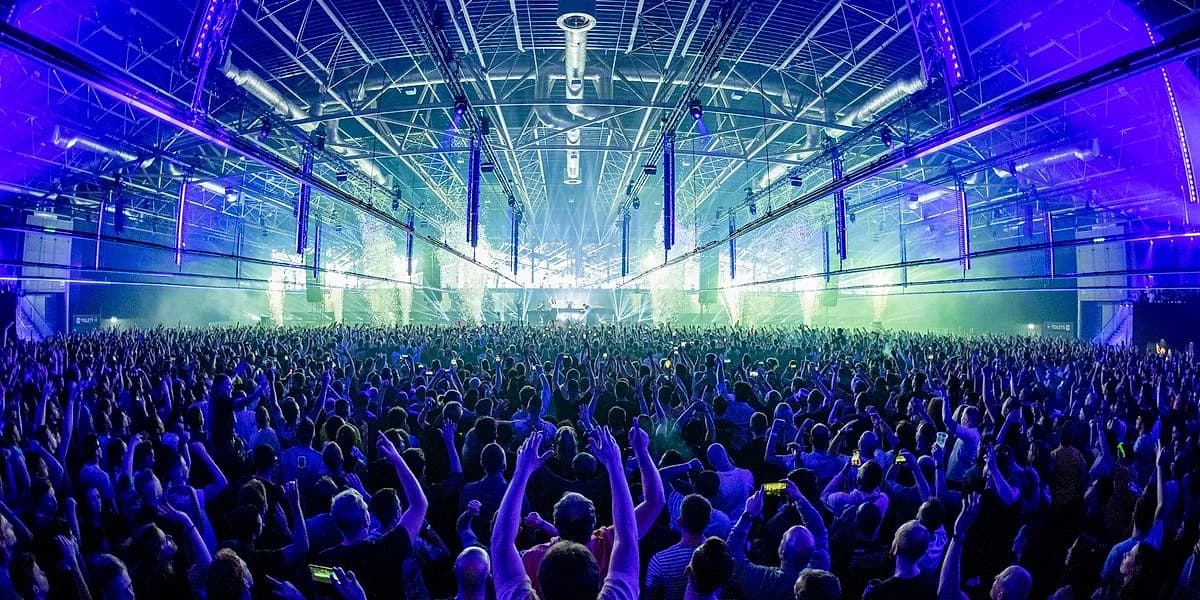
A State of Trance Vietnam was scheduled for June 13 at Van Phuc City; organizers had confirmed more than 10,000 attendees from over 50 countries ahead of the show. It was Vietnam's first full ASOT festival in the brand's 25-year history, and one of four international stops built around the anniversary anywhere in the world, alongside Rotterdam, Hong Kong (the night before, June 12, at AsiaWorld-Expo) and Poland.
The bill doubled as the show's own on-air family. Ruben de Ronde co-hosts the weekly broadcast; Ferry Corsten (performing as Gouryella) is its monthly resident. Both flew in, alongside Cosmic Gate and Nifra. The actual headline slot went to a face-to-face set between van Buuren and KI/KI, their first time sharing a stage. The pair had already written the official anthem for Amsterdam Music Festival 2025 together. KI/KI is also the first woman to win the Dutch Edison Pop Award. None of that is small-festival filler; Vietnam got the genre's actual A-list, not a touring B-bill.

Malaysia Followed Five Weeks Later
On July 18, 2026, Kuala Lumpur's Mega Star Arena hosted SANCTUARY by Evolution. It was billed outright as Malaysia's first home-grown trance festival. It ran a compact three hours, 3pm to 6pm. The bill ran nine names: Paul van Dyk, Aly & Fila, Richard Durand, Ben Gold, David Forbes, David Rust, Haikal Ahmad, Neoteric Nova and Vision X. Six of them were billed as international names anchored by van Dyk and Aly & Fila. Tickets ran from MYR 298 general admission up to MYR 6,500 for a VVIP booth.
The promoter matters here: Evolution Events Asia also runs BLAK, the hard techno series whose first Kuala Lumpur edition drew 5,500 people. Running a dedicated trance night and a dedicated hard techno night under the same company says more about where Malaysia's electronic scene has actually matured, past the all-genres-one-stage festival model that's long defined Malaysia's electronic scene, than either genre piece does alone.
What Was Already Here, and What Still Isn't
Trance didn't arrive in the region from nothing. Kuala Lumpur's Zouk has run trance nights on and off for years, under banners like TranceSylvania and Fired Up Fridays, going back to at least 2018, when the club brought in KhoMha, Super8 & Tab and Willem de Roo for RM65 presale. That's a real but modest footprint: one club, one city, occasional nights, nothing like a dedicated festival until SANCTUARY.
Outside Vietnam and Malaysia, we found no dedicated trance festival anywhere else in Southeast Asia. Not in Thailand, not in Indonesia, not in the Philippines, not in Singapore. Thailand's actual trance-adjacent institution is the psytrance beach-party circuit, a different branch of the family tree entirely, older and more embedded than anything uplifting trance has built here. Trance's biggest regional moment yet came from Vietnam and Malaysia; the rest of Southeast Asia hasn't followed.
FAQ
What's the difference between trance and psytrance?
Wikipedia dates Goa trance to the early 1990s in the Indian state of Goa. Psychedelic trance, better known as psytrance, developed directly from Goa trance, according to the same page. Uplifting trance has a separate lineage. Wikipedia dates the name to 1996, in the wake of progressive trance. By the late 1990s, Paul Oakenfold, Sasha & Digweed and Paul van Dyk had become its known names. Uplifting and progressive trance, the kind Armin van Buuren built A State of Trance around, is cleaner and more melodic, closer to classical builds. Psytrance runs faster, generally 125 to 150 BPM. It's the branch that actually took hold in Southeast Asia, mainly through Thailand's beach-party scene.
What BPM is trance music?
Trance generally runs 120 to 150 BPM, built on repeating melodic phrases that build tension before a breakdown and release.
Who created A State of Trance?
Armin van Buuren created A State of Trance, a weekly two-hour radio show that first aired on 1 June 2001. Van Buuren hosts it with Ruben de Ronde as co-host, and Ferry Corsten appears as a monthly resident.
Has Southeast Asia had a trance festival before 2026?
Not at this scale. Vietnam's June 13, 2026 A State of Trance festival in Ho Chi Minh City was the brand's first full festival in the country. Malaysia's July 18, 2026 SANCTUARY by Evolution in Kuala Lumpur was billed as the country's first home-grown trance festival. Kuala Lumpur's Zouk had run smaller trance nights since at least 2018.
Where can I still hear trance in Southeast Asia?
Outside one-off festivals, the most consistent venue has been Zouk Kuala Lumpur, which has hosted recurring trance nights under names like TranceSylvania and Fired Up Fridays. Check the club's own event calendar before planning a trip around it, since these aren't a fixed weekly fixture.
Read Next



Stay in the loop
Asian electronic music, weekly