
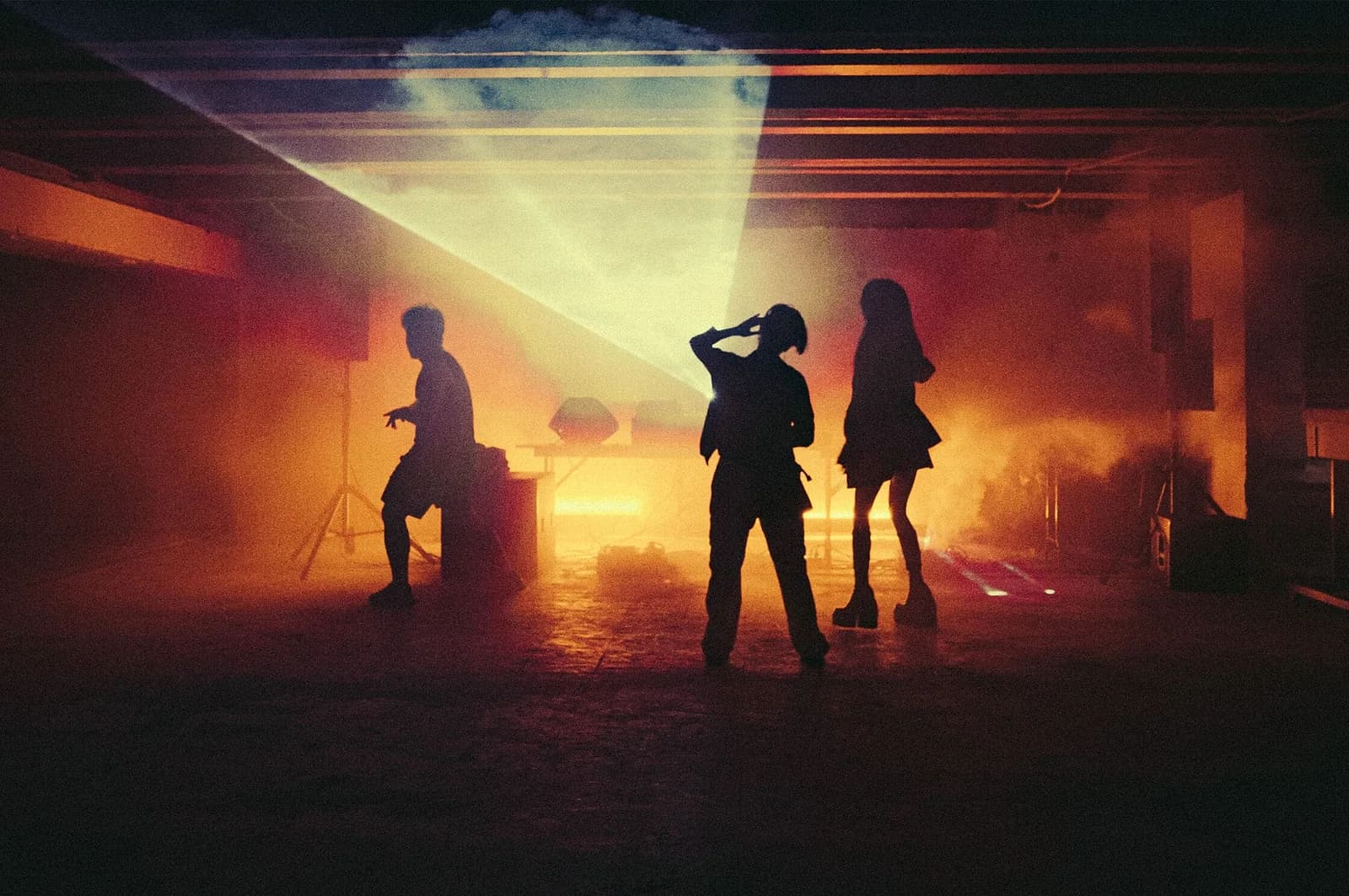
Where Southeast Asia's Warehouse and DIY Parties Actually Happen
Djakarta Warehouse Project borrowed the word for a stadium-sized festival. The actual warehouse and DIY scene is smaller, scrappier, and scattered across converted shophouses, a former cinema, and a small club above a Poblacion sidewalk.
Djakarta Warehouse Project put the word "warehouse" on billboards across Indonesia and then filled a convention-centre car park with 200,000 people and a main stage the size of an aircraft hangar. It is the biggest dance music event in Southeast Asia, and it has almost nothing to do with what this piece is actually about. A real warehouse party is smaller, harder to find, and usually announced four days before it happens, not four months. This is a guide to that other scene: the converted shophouses, the former cinema, the community complex above a tattoo parlour, the two-storey club that a bunch of DJs and visual artists turned into a scene almost by accident.
Bangkok: two buildings both call themselves "warehouse," and they're opposites
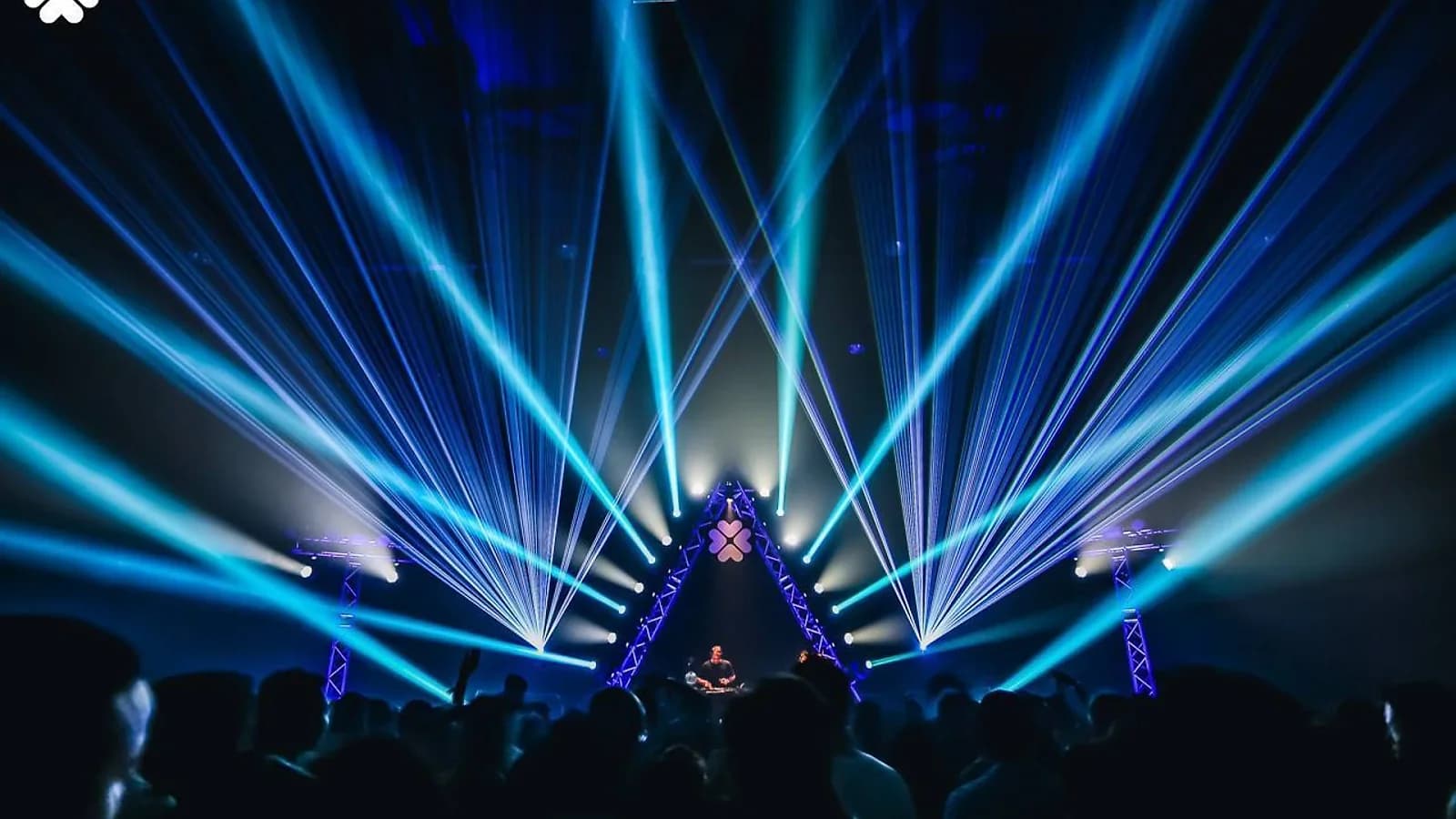
Start with the contrast, because Bangkok has it in one city. Kolour, one of Thailand's longest-running house and techno promoters, runs an annual ticketed event literally called Kolour Warehouse, an afternoon-into-night production presented by Singha that has booked Seth Troxler alongside Thai residents like Alex Fischer and Sunju Hargun. It is polished, produced and sponsored, closer to a boutique festival than a rave, and there's nothing wrong with that: the laser rig and the crowd noise are real.
Then there's The Warehouse at 867 Charoen Krung Road in Talat Noi, which is closer to what the word used to mean. It's a former industrial shophouse complex turned into twelve small businesses under one corrugated roof: a cocktail bar called Clutch, a mezcal room, a tattoo studio, a coffee shop, and a room called Gear Box that exists specifically for techno. The private event space seats 400-plus and comes with a full PA and lighting rig, and when local crews like RomRom, BCR or Durian Radio take it over, the whole complex turns into a four-floor house and techno night rather than a single dancefloor. Nobody headlines it the way Troxler headlines Kolour. That's the point: it's a room the scene borrows, not a brand the scene buys tickets to. For the wider Bangkok underground beyond this one building, our guide to getting into the city's house and techno scene is the fuller map.
Manila: the DIY scene that keeps eating itself, and keeps coming back
No city in this guide takes the word "DIY" more literally than Manila, and no city churns through its own parties faster. The current anchor is Apotheka, a small, warehouse-style room on the ground floor of the White Rabbit building at the corner of Doña Carmen and General Luna in Poblacion. It doesn't throw one signature party so much as host a rotation of themed and queer-friendly nights from Wednesday through Saturday, which is closer to how most of Manila's DIY scene actually works: fewer standalone venues, more crews taking over a room for a night at a time.
The crews are where it gets interesting. KAPUT, founded in mid-2022 by visual artist Derek Tumala and filmmaker Jan Pineda, builds parties around video-mapping projections rather than just a lineup; a January 2024 night with Vancouver's Normie Corp at Makati Cinema Square is still cited as one of the biggest production nights the scene has thrown. SMUTT runs what it calls, without much modesty, a "delightfully horny" house and disco night built for queer Manila. Warphole leans into a specifically Japanese strand of dance music on a custom-built sound system. None of this is stable: SadoMasoDisco, founded late 2022, closed in December 2023; Danza Organika, which picked up its mantle in early 2024, played its final show in March 2025. A DIY scene this size doesn't have a five-year business plan, it has a rotating cast, and that instability is part of the appeal for the people who show up. Manila's older, sturdier institution is UNKNWN, which just turned ten, and it's worth reading against these newer crews as the counter-example: the one party that didn't burn out. For the club side of the city, see our full Manila guide.
Kuala Lumpur: an independent collective, and a former cinema
KL's techno scene has plenty of proper clubs now, from Volt's TREC basement to Save Our Souls' self-described "techno cave." What it has less of, on paper, is the warehouse format. Voidrealm Collective, an independent group of DJs and producers, is the closest thing the city has to a crew organising its own rooms rather than waiting for a club to book it: their events split across sub-series (Into The Void for dark and deep techno, Voidance for leftfield and electro, Devoid Live for streamed sets), and rather than a fixed warehouse, they've repeatedly taken over REXKL, the converted 1940s Rex Cinema turned arts and retail hub in Chinatown, for one-off nights (a 2022 booking of Nehza Records' Roni, a 2023 night with Heuremin and Nazreth). It's not a warehouse in the literal sense, but the instinct, reclaiming an old building nobody else wanted for one loud night, is the same one that built this whole genre of party everywhere else. Our Kuala Lumpur club guide covers the rest of the city's rooms.
Bali: warehouse-scale, but rarely warehouse-shaped
Bali complicates the format on purpose. The island's biggest underground nights lean less on old industrial buildings, there simply aren't many to convert, and more on villas, rice-field clearings and jungle sites rented for a single event: sets that run until the sun is up and you're driving home through Canggu traffic squinting into it. It's warehouse energy without a warehouse, which is arguably more DIY than anything with a fixed address. We've mapped the club side of that scene in our Bali guide; the pop-up jungle and villa parties don't hold still long enough for a single write-up; they change promoter and location almost every season.
What's not on this list
Jakarta almost certainly has a real DIY warehouse scene underneath DWP's shadow: office towers, mall basements and shophouse rooms in Kebayoran Baru host weekly events under names like SALA and TechnoPartyJKT, but none of it was verifiable enough, addresses, dates, a real name behind the Instagram handle, to write up responsibly here. Ho Chi Minh City has serious house and techno at rooms like Vibes Club Saigon, but that's a fixed basement club, not a DIY warehouse operation, and we couldn't confirm one that is. Singapore's licensing regime makes an unlicensed warehouse rave a much bigger legal risk than it is anywhere else on this list, which is probably why we couldn't find one worth naming. If you know of a real one in any of these cities, that's a piece we'd rather write with a source than guess at.
Cover photo: a DIY party in Manila's underground scene, via Rolling Stone Philippines.
Read Next
Stay in the loop
Asian electronic music, weekly