What a Nightclub Drug Raid Actually Looks Like in Thailand, Malaysia and Singapore
Three documented 2026 raids, one each in Bangkok, Kuching and Singapore, show how differently Thailand, Malaysia and Singapore actually enforce drug laws on a dance floor, and what a positive test really costs you in each.
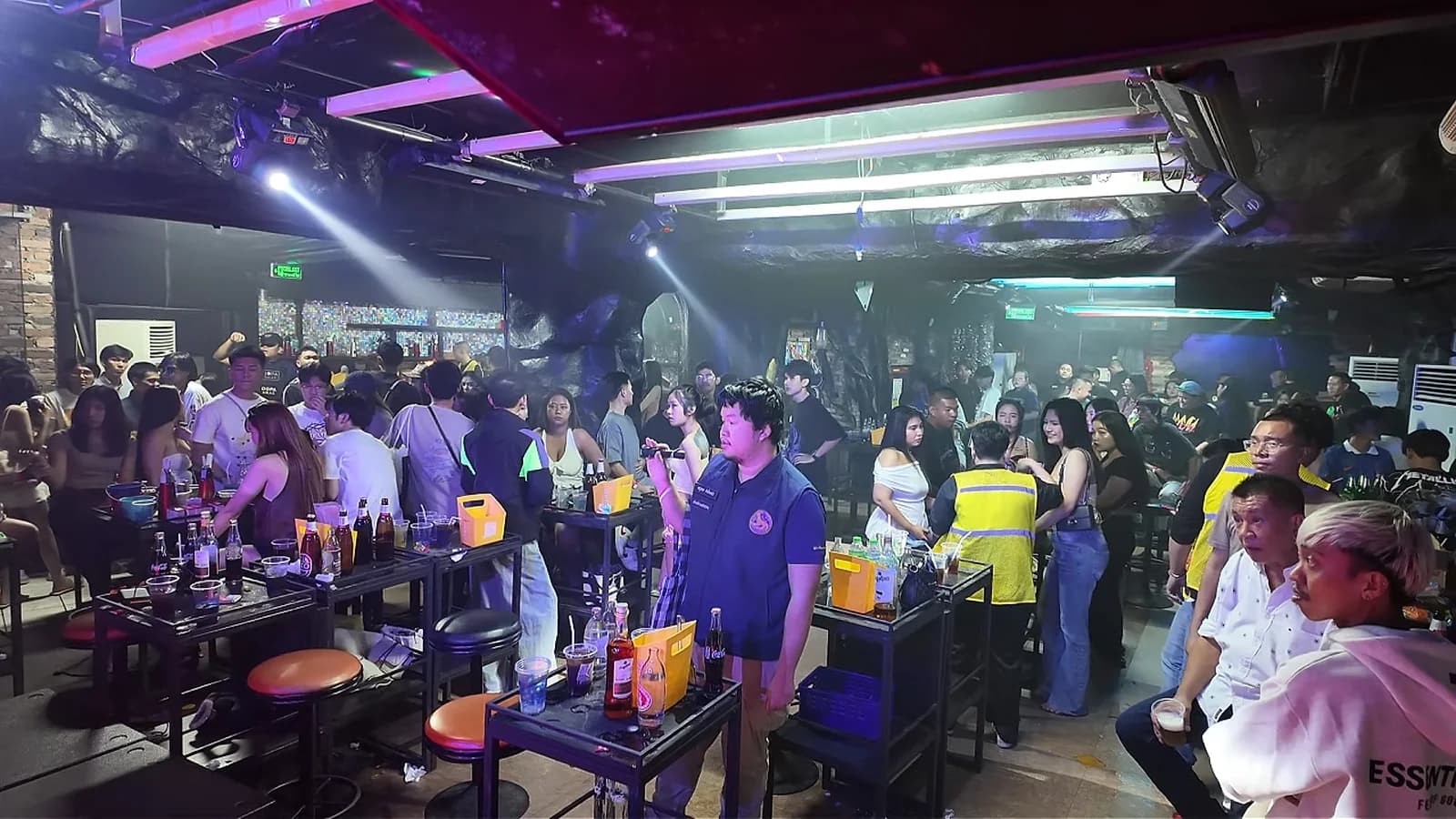
At 3:30am on October 10, officers cut the music at OK Bar on Bangkok's Khao San Road, split the room by gender and started processing everyone inside. By the time the Department of Provincial Administration finished, 102 patrons had been through an ID check, 31 had tested positive for drugs in an on-the-spot urine screen, and two of the people who tested positive were the night's own DJs.
That scene plays out, with local variations, more often than most visiting clubbers assume. Thailand, Malaysia and Singapore all run drug enforcement inside nightlife venues as a matter of routine, not as some rare crackdown, and the procedure, the legal exposure and what actually happens to you afterward differ sharply by country.
Thailand: No Warrant Needed to Walk In
OK Bar occupied the second floor of a two-storey building in Talat Yot subdistrict, a large hall with a stage, several seating areas and four to six guards at the door who, officials later noted, checked nobody's ID and searched nobody for weapons on the way in. The venue had no license to operate as an entertainment spot, a status that put it in violation before anyone found a single gram of anything.
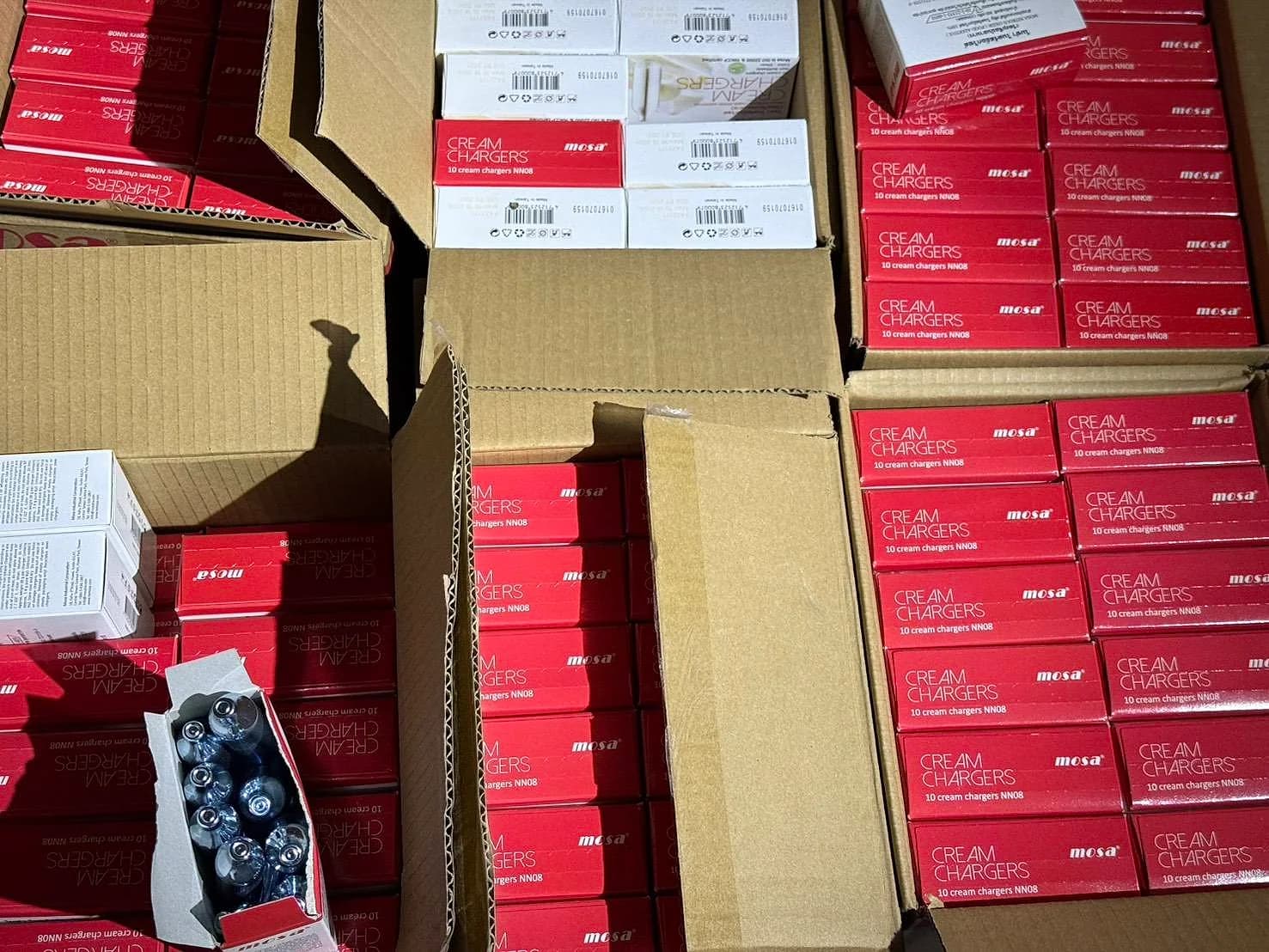
The operation, dubbed Singh Pha Det Suek, was led by Deputy Interior Minister Phonphir Suwannachiw alongside Department of Provincial Administration officials and a special unit, acting on reports of an unlicensed venue selling alcohol past hours, letting in minors and allowing drug use on the floor. Officers noticed patrons cycling in and out of one bathroom and found drinking straws and loose white powder on the floor there; across the venue's 102 patrons, they counted 30 people under 20, including a 15 year old. Urine tests came back positive for 31 people, four of them under 20, plus the two DJs. Officers also seized a firearm with ammunition, an imitation firearm and balloons with equipment believed to be linked to nitrous oxide use, alongside suspected drugs scattered across the venue.
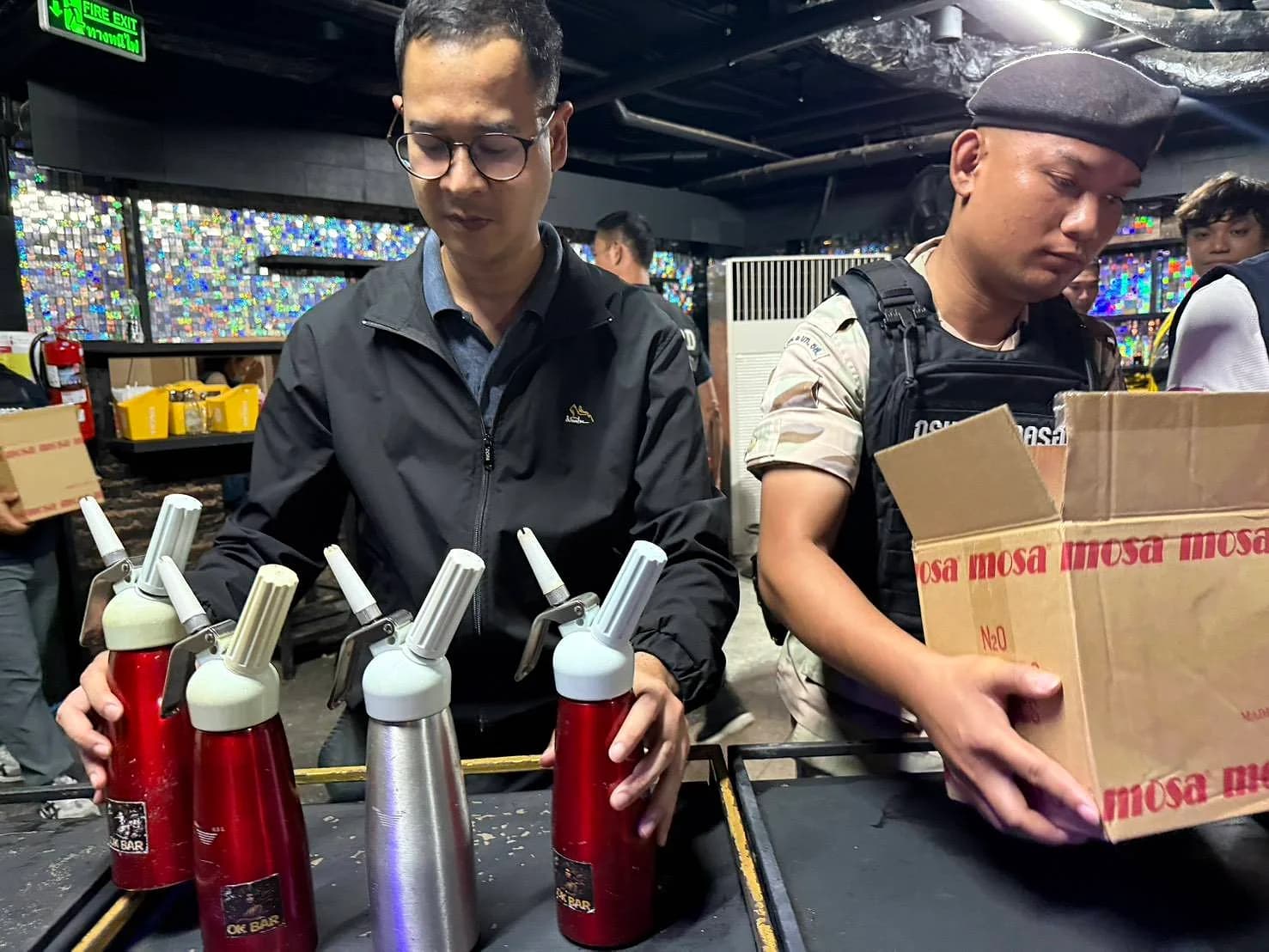
What happened next tells you more about Thai enforcement than the raid itself. The venue's manager was detained and now faces charges stacked on top of each other: operating without a license, selling alcohol outside permitted hours, selling to minors, violating promotion rules, importing unlicensed food products and more. Records allegedly showed over 177,000 baht a month in payments to multiple agencies, an allegation still under investigation. And OK Bar wasn't even supposed to be open: the local district office had already ordered it to suspend operations back on August 4 over fire and safety hazards, an order it simply ignored. This time, the Department of Provincial Administration is asking the Metropolitan Police Bureau to shut the venue for five years outright. No warrant, no separate court process before the test, just an inspection, a swab and a cascade of paperwork that can end a business.
Malaysia: A Positive Test Can Mean Prison and the Cane
Half a continent away in Kuching, Sarawak, Royal Malaysia Police hit a nightclub on Jalan Canna at around 1:15am on April 26. Officers from the district headquarters, the Criminal Investigation Department and the Narcotics Criminal Investigation Department screened 29 people on the spot, 25 men and 4 women. Sixteen tested positive.
Malaysia doesn't treat that as the end of it. The 16 who tested positive were detained under Section 15(1)(a) of the Dangerous Drugs Act 1952, which criminalizes the act of consumption itself, not just possession. One 45 year old man, found with 5.17 grams of suspected ketamine worth an estimated RM258.50, was arrested separately under Section 39A(1) of the same act and now faces two to five years in prison plus three to nine strokes of whipping if convicted; he also tested positive for amphetamine, methamphetamine and a benzodiazepine, and had no prior record. The 45-year-old suspect was remanded for four days under the Criminal Procedure Code while police built their case. "Police will not compromise with any individuals involved in drug-related activities," ACP Alexson Naga Chabu told reporters afterward, a line that could run under almost any raid report in the country.
The corporal punishment is the detail that tends to surprise visitors. A positive urine test in Thailand gets you processed and, if you're lucky and it's a first offense, often diverted toward treatment. In Malaysia, being caught with the drugs on you, not just a positive test, can put you in front of a judge weighing a caning sentence.
Singapore: Saliva, Not Urine, and the CNB Doesn't Wait for a Tip
Singapore's Central Narcotics Bureau doesn't need a specific complaint to show up. Over five days in June 2026, CNB ran an island-wide sweep that touched addresses from Woodlands to Bedok North and made 76 arrests in total. One leg of that operation, run specifically across five nightlife establishments on June 18 and 19, screened close to 130 people and administered on-the-spot saliva test kits, a faster alternative to a urine sample, to 61 of them.
CNB's own account of the operation doesn't spell out what happens to each of the 61 people it swabbed, and Singapore's drug laws, including the mandatory supervision and prosecution framework that makes the city state one of the region's strictest, are their own subject (Loopliner has already covered what Singapore and Malaysia's drug laws actually mean for a tourist). What the June operation does confirm is the pattern: nightlife venues aren't a blind spot for Singapore's narcotics bureau, they're a standing target, worked on a schedule rather than in response to a specific complaint.
What a Positive Test Doesn't Exempt You From
Two details from these three cases are worth carrying with you past the dance floor. First, working the gig doesn't put you outside the raid. The two DJs who tested positive at OK Bar were there to perform, not to party, and testing positive still applied to them regardless; Thai authorities have separately gone after touring DJs for working without the right permit, a different kind of trouble a booking doesn't protect against either. Second, a venue staying open tells you nothing about whether it's actually licensed to. OK Bar had been under a suspension order since August 4 before the raid that finally closed it; nobody on the dance floor that night would have had any way to know.
This piece covers three countries because each had a dated, named, on-the-record 2026 case to anchor it. Vietnam, the Philippines and Indonesia run comparable operations, but without one clean primary source to build an honest account around, they're left out here rather than guessed at. Thailand's own alcohol rules were rewritten. For the fuller legal picture, see our companion piece before your next night out. Its cannabis rules were rewritten this year too.
FAQ
Can Thai police test you for drugs at a club without a warrant?
In the OK Bar raid on Bangkok's Khao San Road in October 2026, authorities searched the unlicensed venue and administered on-the-spot urine tests to patrons as part of a single inspection, with no separate warrant process described in the operation.
What happens if you test positive during a raid in Malaysia?
At the Jalan Canna raid in Kuching in April 2026, the 16 patrons who tested positive were detained under Section 15(1)(a) of the Dangerous Drugs Act 1952, while a separate possession charge in the same raid carried a sentence of up to five years in prison plus whipping.
Does Singapore drug-test people at nightclubs?
Yes. Singapore's Central Narcotics Bureau ran a nightspot-specific leg of a June 2026 operation across five venues, screening close to 130 people and administering saliva tests to 61 of them.
Are DJs exempt from testing during a club raid?
No. At the OK Bar raid, two of the venue's own DJs were among the 31 people who tested positive for drugs.
Does losing a license actually shut a club down right away?
Not necessarily. OK Bar had already been ordered to suspend operations in August 2026 over safety hazards and kept running anyway; only after October's raid did authorities seek a five-year closure order.
Cover photo: Khaosod English.