
What to Expect at Your First House or Techno Night Out in Southeast Asia
What actually happens between walking in and getting home at a Southeast Asian house or techno club: dress codes, door policy, tipping rules, set times and the transport cutoffs nobody mentions.
Show up at Mustache in Bangkok at 10pm on a Friday and you'll have the floor mostly to yourself. The room doesn't properly fill until close to midnight, the set doesn't wind down until 3:30am, and if you leave at 1am because you're tired, you've left at the moment most regulars are just arriving.
That mismatch between a visitor's instinct and a Southeast Asian club's actual rhythm trips up more first-timers than any dress code or guest list ever will. The region's house and techno scene runs on its own clock, its own door rules and its own math on what things cost, and almost none of it is written down anywhere obvious. This is the walk-in-to-walk-home version.
Nobody's Early, and the Floor Fills Late
Bangkok's Sing Sing Theater opens at 9pm Tuesday to Saturday but doesn't properly get going until 11pm, and closes at 3am. Elsewhere, the rooftop room inside Trinity Complex on Silom Soi 5, runs Friday and Saturday only, 11pm to 4am, with a roughly 400 baht cover. Mustache shares its building with Subwerk, a harder techno room next door, and between them they run 10pm to 3:30am on weekends only. None of this is unusual for the region: clubs that technically open at 9 or 10pm but don't fill until close to midnight are the rule, not the exception, from Bangkok to Singapore to Bali.
The practical consequence is that one club rarely carries a whole night on its own. Closing times stagger by venue, so the move locals actually make is to treat the evening as a sequence: dinner, a bar with a dance floor until 1 or 2am, then wherever still has a line after that. Loopliner's own walkthrough of a full Bangkok night maps exactly that sequence, Sing Sing into Mustache, with the food and cash logistics that make it work.
Getting In: Dress Codes, IDs and Guest Lists
Door policy varies more than first-timers expect, and it's venue-specific, not country-specific. Savaya in Bali enforces 21+ with a physical passport or driver's license, a smart casual or "beach chic" dress code that explicitly bans beer-branded shirts, cut-offs and athletic wear, and searches bags at the door; professional cameras and drones aren't allowed in at all. Its free guest list exists but doesn't guarantee entry and can be cancelled without notice.
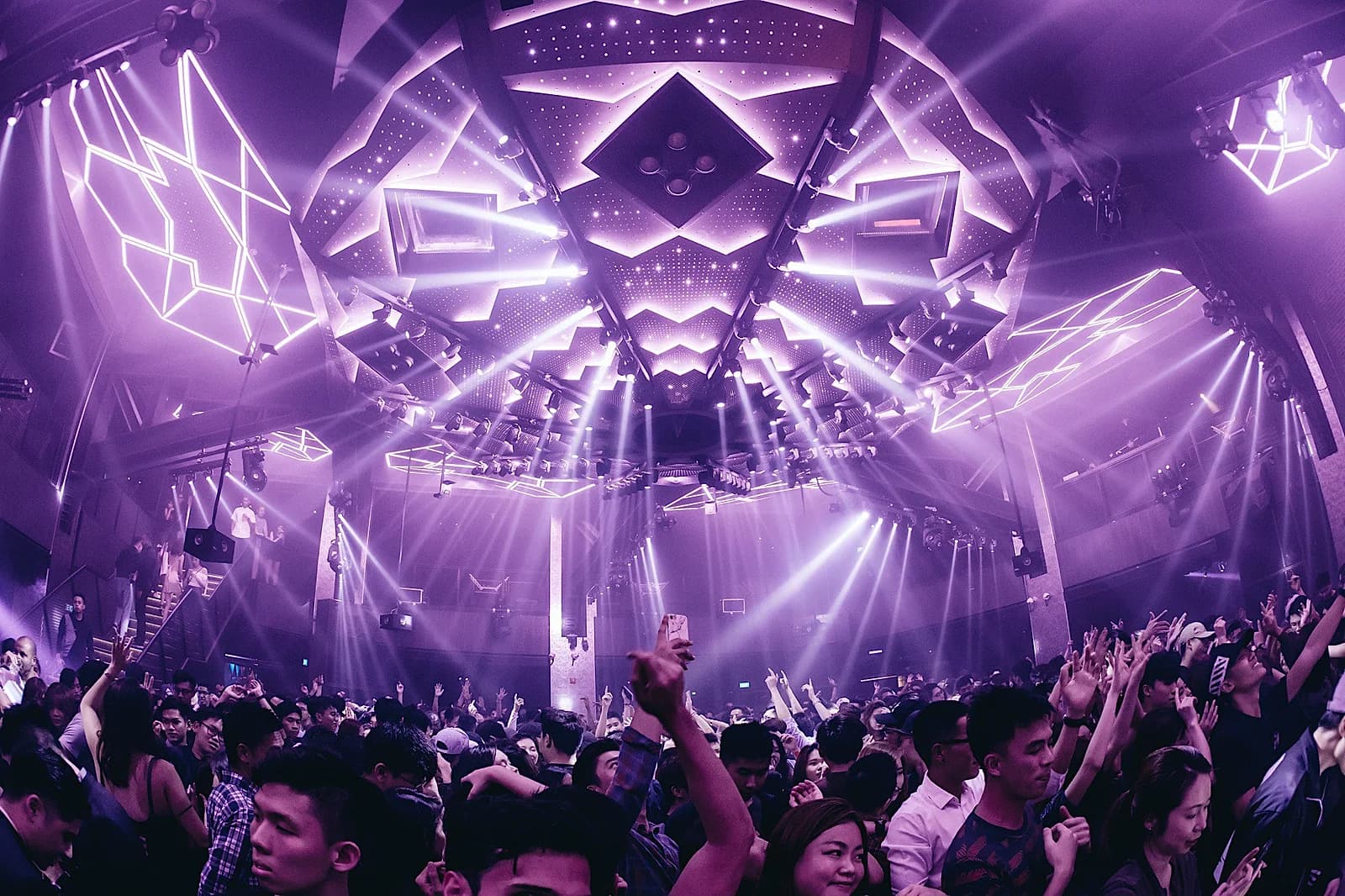
Singapore's Zouk, at The Cannery on River Valley Road, runs three rooms under one roof with three different rules, confirmed on the club's own site: Zouk and Phuture allow 18+ and tolerate shorts with closed-toe shoes, while Capital requires men 21+, women 19+ and a proper smart dress code. All three ban cut-offs, singlets, sandals and slippers, and an expired ID gets you turned away with no refund. Tuff Club, also in Singapore, skips the dress-code question entirely by being reservation-only via text, with effectively no walk-ins. A table booking improves your odds everywhere, but it's not an absolute guarantee anywhere; promoters can still enforce a capacity limit on the night. The full door-policy breakdown is worth reading before you pick an outfit.
What It Actually Costs
Cover charges are modest by international standards: Elsewhere runs about 400 baht, Savaya's door roughly 250,000 to 400,000 rupiah. What catches visitors out is tipping, because the rules change at the border. Thailand, Singapore, Malaysia and Indonesia bake a 10% service charge into the bill by default; Singapore stacks a 9% GST on top, printed as "10++." Vietnam is the exception: a printed service charge there often doesn't reach staff, so a direct cash tip is more reliable. Bottle service hosts are worth a cash tip beyond the minimum spend regardless of country, roughly IDR 50,000 to 100,000 in Bali, a few hundred baht in Bangkok. The rule that helps at the table: read the receipt first, because if a service charge is already printed on it, you've likely already tipped.
House or Techno? Reading the Room
The two genres share a four-on-the-floor kick drum and not much else in practice. House is the slower, groove-heavy half of the pairing, built on basslines and often a vocal or sample hook, the kind of music that invites you to sing along by the second chorus. Techno runs faster and harder, stripped of vocals, built from loops and built to be relentless rather than catchy. Southeast Asian venues increasingly program for both without picking a side: Mustache runs house and techno under one roof, while Subwerk next door exists specifically for the harder, faster version of the same night. If a flyer lists both genres for the same evening, expect the room, and the crowd, to shift noticeably as the night goes on.
Getting Home Without the 3am Panic
Bangkok's public transport shuts down well before the clubs do. BTS trains run from 5am to roughly 1am, with the last Siam Square departure around 00:02 and limited extended service to a handful of stations until 00:15; the MRT Blue Line stops around 12:30am. There's no night bus to fill the gap. Standard club hours in Bangkok run midnight to 2am, but the extended zones, RCA, Thonglor and Khao San, push to 4am, which means the transport cutoff and the party's actual end rarely line up.
Grab is the recommended fallback: GPS trip sharing, an in-app emergency button and background-checked drivers, though fares and wait times both spike around 2am when every nearby venue closes at once, so book before last call rather than after. Street taxis are legally required to run the meter; if a driver won't use it, find another one. Motorbike taxis are cheap for short, sober hops, 20 to 60 baht, but a bad idea after a heavy night, since passenger helmets are often the bare legal minimum. Thailand's tourist police take English-language calls 24 hours a day at 1155, worth saving before you need it. Loopliner's guide to getting home after clubbing in Bangkok covers the full transport breakdown.
Five Things Nobody Tells First-Timers
Eat dinner before 9pm; kitchens attached to clubs and late bars stop serving well before midnight. Withdraw cash early too, since not every venue open past 2am takes cards. Screenshot your hotel's address in the local script, rather than trusting an address bar at 3am. Keep your phone charged past midnight, not just past dinner. And don't expect one venue to carry the whole night: closing times stagger on purpose, so the plan is to move, not to camp.
FAQ
Do I need to dress up for a house or techno club in Southeast Asia?
It depends entirely on the venue, not the city. Savaya in Bali enforces smart casual or "beach chic" and bans cut-offs and athletic wear, Zouk's Capital room in Singapore requires a proper smart dress code, while Zouk and Phuture next door allow shorts with closed-toe shoes. Check the specific club's policy before you decide what to wear.
What time should I actually show up?
Later than feels right. Southeast Asian club floors routinely don't fill until close to midnight even when doors open at 9 or 10pm, and sets regularly run to 3am, 3:30am or later on weekends. Arriving at opening usually means dancing alone for an hour.
Is tipping expected at clubs in Southeast Asia?
Thailand, Singapore, Malaysia and Indonesia generally bake a 10% service charge into the bill already, so check the receipt first. Vietnam is the exception: service charges there often don't reach staff, so a direct cash tip is more reliable. Bottle service hosts are worth tipping in cash everywhere, regardless of what's already on the bill.
How do I get home safely after a club closes?
Book a Grab before last call rather than after, since fares and wait times spike once every nearby venue closes around the same time. Insist street taxis use the meter, treat motorbike taxis as a sober-only option, and save Thailand's 24-hour English-language tourist police line, 1155, before you need it.
Do I need a reservation to get in?
Sometimes, and it varies by venue rather than by country. Tuff Club in Singapore is reservation-only by text with effectively no walk-ins, while Savaya in Bali offers a free guest list that doesn't guarantee entry and can be cancelled without notice. A table booking improves your odds almost everywhere, but it isn't an absolute guarantee anywhere.
Cover photo and figures: Zouk Singapore, via the club's own site.
Read Next
Stay in the loop
Asian electronic music, weekly